Imagine transforming your garden into a thriving ecosystem without spending a dime on soil amendments or expensive mulches. Many gardeners overlook the incredible value hidden right in their own yards—and often, in their neighbors’ too! Building healthy, vibrant soil is the cornerstone of successful gardening, leading to more resilient plants, fewer pests, and better harvests. The secret? Harnessing nature’s generosity and learning to see everyday yard waste as precious resources.
This guide will show you how to identify, collect, and effectively use six common, free yard materials that your soil is literally waiting for. From improving soil structure and retaining moisture to suppressing weeds and feeding beneficial microbes, these materials offer a sustainable, cost-effective path to a more productive garden. Get ready to turn what you once considered waste into garden gold!
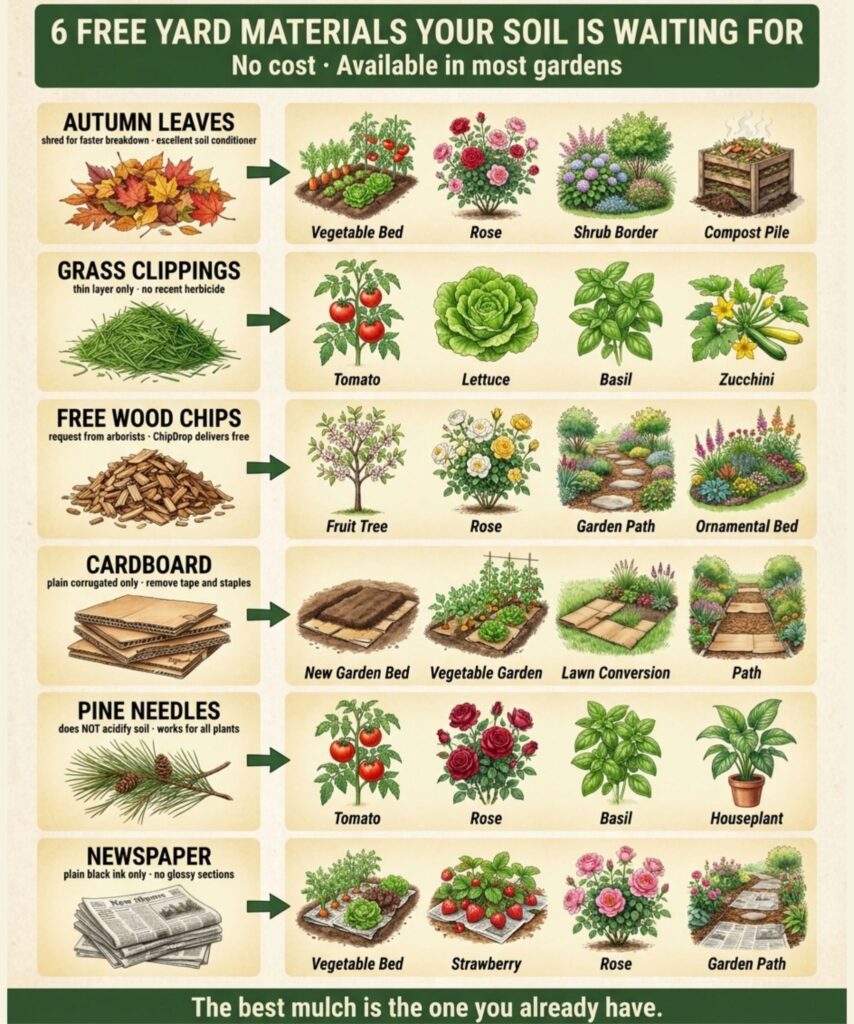 Turn common yard materials into valuable garden resources.
The Power of Recycling Nature’s Bounty
At its heart, sustainable gardening is about working with nature, not against it. This means minimizing waste, conserving resources, and fostering a healthy living environment for plants and soil organisms. Utilizing free yard materials is a prime example of this philosophy in action. These organic amendments feed your soil, encourage a robust soil food web, and reduce the need for synthetic fertilizers and chemical weed killers. By embracing these materials, you’re not just saving money; you’re actively building a more resilient, self-sustaining garden.
Six Free Materials to Enrich Your Garden
1. Autumn Leaves: Garden Gold
As deciduous trees shed their leaves in fall, they offer one of the most valuable resources for gardeners. These fallen leaves are packed with minerals and organic matter. When properly used, they enrich the soil, improve drainage, retain moisture, and suppress weeds.
- How to Use: Collect leaves after they fall. For faster breakdown and more versatile use, shred them with a lawnmower, leaf shredder, or even a string trimmer in a trash can. Shredded leaves can be applied directly as mulch (2-4 inches deep) around plants, added to compost piles as a carbon-rich ‘brown’ material, or piled up separately to create nutrient-rich ‘leaf mold’ over 1-2 years.
- Benefits: Excellent soil conditioner, adds vital nutrients, retains moisture, regulates soil temperature, and provides habitat for beneficial insects.
- Practical Tip: Avoid piling unshredded leaves too thickly directly around plant stems, as they can mat down, impede airflow, and retain too much moisture, potentially leading to rot. Shredding is key for direct mulching.
2. Grass Clippings: A Nitrogen Boost
The byproduct of a freshly mown lawn, grass clippings are a fantastic source of nitrogen, which is essential for lush, green growth. Using them in the garden reduces landfill waste and provides a slow-release nutrient boost.
- How to Use: Always use fresh, untreated grass clippings. If your lawn has been treated with herbicides or pesticides, avoid using the clippings in edible gardens for at least a month, or ideally, compost them first. Apply clippings in thin layers (no more than 1-2 inches) around plants. Thicker layers can compact, heat up, and create an anaerobic, slimy mess. Allow them to dry slightly before adding another layer if needed. They are excellent for mulching vegetable beds or adding to compost.
- Benefits: Adds nitrogen, smothers weeds, helps retain soil moisture, and cools the soil surface.
- Practical Tip: If you have a large amount, spread them thinly in the sun for a day or two to dry partially before applying to prevent matting and odor.
3. Free Wood Chips: Long-Lasting Mulch
Arborists and tree service companies often have an abundance of wood chips. These are a superb, long-lasting mulch that can significantly benefit your garden and pathways.
- How to Use: Wood chips are ideal for pathways, perennial beds, shrub borders, and around trees. They break down slowly, so they offer extended weed suppression and moisture retention. Websites like ChipDrop connect homeowners with arborists for free delivery of wood chips. When applying, use a layer 3-6 inches deep for effective weed control and moisture retention. Avoid mixing fresh wood chips directly into your garden soil, as their decomposition can temporarily tie up nitrogen needed by plants. As a top dressing, this isn’t an issue.
- Benefits: Excellent for pathways, long-term weed suppression, significant moisture retention, moderates soil temperature, improves soil structure as they decompose over time, and provides habitat for beneficial soil fungi.
- Practical Tip: Spread wood chips over newspaper or cardboard for an extra layer of weed control, especially when establishing new beds or pathways.
4. Cardboard: Your Ultimate Weed Barrier
Got moving boxes or delivery packaging? Cardboard is an invaluable tool for sheet mulching, creating new garden beds, and suppressing stubborn weeds.
- How to Use: Remove all tape, labels, and shiny coatings from the cardboard. Lay flat pieces directly over the area you want to convert or suppress weeds in. Overlap the edges by several inches to prevent weeds from growing through the seams. Wet the cardboard thoroughly after laying it down to help it stay in place and begin decomposition. Cover with a layer of compost, soil, or other organic mulch (like wood chips or leaves) at least 4-6 inches thick. This creates a ‘no-dig’ garden bed or an effective weed barrier under paths.
- Benefits: Effectively smothers weeds and grass, attracts earthworms, gradually breaks down into the soil, and improves soil structure.
- Practical Tip: For tough perennial weeds, consider adding another layer of cardboard or soaking it for a longer period before covering.
5. Pine Needles: Light & Lasting Groundcover
Pine needles, often called pine straw, provide a beautiful, light, and airy mulch, especially valued in regions with conifer forests.
- How to Use: Collect fallen pine needles and apply them as a 2-4 inch layer around plants. They are particularly popular for mulching acid-loving plants like blueberries, rhododendrons, and azaleas, but they work well in most ornamental beds. While fresh pine needles are acidic, their impact on soil pH when used as a surface mulch is minimal and temporary. Over time, as they break down, they contribute organic matter without significantly altering the soil’s acidity.
- Benefits: Excellent moisture retention, weed suppression, aesthetically pleasing, does not compact easily, and provides good air circulation around plant bases.
- Practical Tip: Pine needles are very lightweight, so they can blow away in windy conditions. Consider lightly watering them after application to help them settle, or use them in more sheltered areas.
6. Newspaper: The Humble Weed Blocker
Another common household item that can be repurposed for the garden, newspaper is a thin yet effective weed barrier and soil amendment.
- How to Use: Use plain black and white newspaper only, avoiding glossy inserts or colored pages. Most modern newspaper inks are soy-based and safe for gardening. Lay down 4-8 sheets thick, overlapping edges to create a solid barrier. Wet the layers thoroughly to hold them in place and begin decomposition. Cover with at least 2-3 inches of soil, compost, or other mulch. It can be used under other mulches, in sheet mulching, or as a component in your compost pile.
- Benefits: Biodegradable weed suppression, adds organic matter, retains moisture, and provides a habitat for earthworms.
- Practical Tip: If using under a thinner layer of mulch, ensure the newspaper is thoroughly wet and weighted down to prevent it from blowing away before covering.
Maximizing Your Free Yard Materials: Best Practices
Layering for Success
The magic of these materials often lies in how you combine and layer them. For example, a base layer of cardboard or newspaper topped with wood chips or leaves creates a powerful weed barrier and a long-lasting, beneficial mulch. In vegetable beds, consider a thin layer of grass clippings followed by straw or shredded leaves to provide nutrients and retain moisture effectively.
Avoiding Common Mistakes
- Applying Too Thickly: Especially with grass clippings and unshredded leaves, overly thick layers can become anaerobic, producing foul odors, inhibiting water penetration, and encouraging fungal growth. Always apply these in thinner layers.
- Using Treated Materials: Never use grass clippings or leaves from lawns treated with herbicides or pesticides, particularly in edible gardens. These chemicals can persist and harm your plants or soil organisms.
- Ignoring Aeration: While mulching is great, ensure good air circulation around plant stems to prevent rot and disease. Keep mulch a few inches away from the base of trunks and stems.
Regional Considerations for Mulching
The best time and depth for applying mulch can vary across USDA zones and climates. In colder zones (3-5), a thick layer of mulch in late fall can insulate perennial roots from harsh freezes and heaving. In warmer zones (9-11), mulch is crucial year-round to conserve moisture, cool the soil, and suppress weeds in extended growing seasons. Always consider your local frost dates, typical rainfall, and soil temperature. Local extension services are excellent resources for tailored advice.
Start Building a Richer Garden Today
Your garden’s health is directly linked to the vitality of its soil, and achieving that vitality doesn’t have to be expensive. By understanding and utilizing these six free yard materials—autumn leaves, grass clippings, wood chips, cardboard, pine needles, and newspaper—you can dramatically improve your soil’s structure, fertility, and moisture retention. Embrace these sustainable practices, and you’ll not only save money but also create a more resilient, productive, and beautiful garden that truly thrives. Look around your yard with new eyes; the best mulch, and the best soil builder, is often the one you already have!