Imagine your garden bursting with color and fragrance as winter’s chill finally recedes. While tulips and daffodils are beloved harbingers of spring, a whole world of stunning fall-planted bulbs waits to transform your landscape. The secret to this dazzling display lies in a bit of foresight, as these botanical treasures require the cool embrace of autumn soil to establish their roots and undergo a critical chilling period. This preparation ensures they emerge vibrant and strong when warmer days arrive.
Preparing your garden in the fall for these spring spectacles is one of the most rewarding steps you can take as a gardener. It’s a promise to your future self, a commitment to beauty and life that pays off when the world needs it most. This guide will walk you through 11 captivating bulb varieties, offering practical insights and essential care tips to help you cultivate a truly unforgettable spring garden, expanding your horizons beyond the usual suspects.
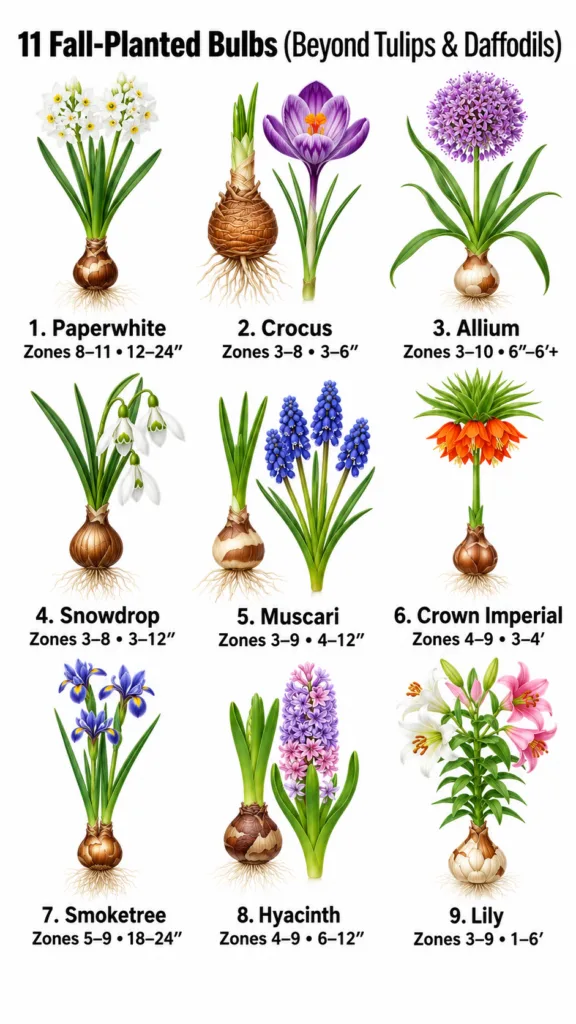 Discover a spectrum of spring beauty by planting these diverse bulbs in the fall.
The Magic of Cold Stratification: Why Fall Planting Works
Most spring-blooming bulbs, native to regions with cold winters, have a built-in need for a period of cold dormancy. This process, known as cold stratification, signals to the bulb that winter has passed and it’s time to sprout. When you plant bulbs in the fall, they establish a healthy root system before the ground freezes, then experience the necessary chilling temperatures during winter. This natural timing prepares them to emerge vigorously and bloom beautifully as spring arrives.
Discovering Your New Favorite Spring Blooms
Let’s delve into these fantastic fall-planted options, each offering its own unique charm and contribution to your garden’s early season display.
1. Crocus (Crocus vernus)
- Hardiness: USDA Zones 3-8
- Plant type: Perennial bulb
- Exposure: Full sun to partial shade
- Height: 4-6 inches
- Spread: 2-4 inches
Crocus are among the earliest flowers to announce spring, often peeking through lingering snow. Their vibrant cups of purple, white, yellow, or striped colors bring immediate cheer to dormant landscapes. They are excellent for naturalizing in lawns, rock gardens, or under deciduous trees.
Practical Tip: Plant crocus bulbs 3-4 inches deep and 2-3 inches apart. For a natural look, gently toss the bulbs onto the ground and plant them where they fall.
2. Snowdrop (Galanthus nivalis)
- Hardiness: USDA Zones 3-7
- Plant type: Perennial bulb
- Exposure: Partial shade to full sun
- Height: 6-8 inches
- Spread: 3-6 inches
True to their name, snowdrops are resilient beauties, often blooming while snow is still on the ground. Their delicate white, bell-shaped flowers with green markings are a welcome sight in late winter. Plant them in drifts under trees or along pathways for a stunning early display.
Practical Tip: Plant snowdrop bulbs 2-3 inches deep and about 3 inches apart. They establish best when planted ‘in the green,’ meaning while still actively growing, but fall-planted dry bulbs can also succeed.
3. Paperwhite (Narcissus tazetta)
- Hardiness: USDA Zones 8-11 (typically forced indoors elsewhere)
- Plant type: Perennial bulb
- Exposure: Full sun to partial shade (outdoors); bright indirect light (indoors)
- Height: 12-18 inches
- Spread: 6-8 inches
Known for their intensely fragrant, pure white blooms, paperwhites are a popular choice for forcing indoors to enjoy during winter. In warmer climates (USDA Zones 8 and above), they thrive outdoors, naturalizing readily and providing a stunning display.
Practical Tip: For outdoor planting, bury bulbs 4-6 inches deep. For indoor forcing, place bulbs in a shallow container with pebbles or potting mix, covering only the bottom third of the bulb. Keep them in a cool, dark place for a few weeks before bringing them into light.
4. Muscari (Muscari armeniacum – Grape Hyacinth)
- Hardiness: USDA Zones 4-8
- Plant type: Perennial bulb
- Exposure: Full sun to partial shade
- Height: 6-10 inches
- Spread: 3-6 inches
These charming little bulbs produce dense spikes of tiny, bell-shaped flowers resembling miniature bunches of grapes, typically in shades of blue or purple. Muscari are excellent for mass plantings, edging, or naturalizing, and they are generally deer-resistant.
Practical Tip: Plant muscari bulbs 3 inches deep and 3-4 inches apart. They are ideal for planting in drifts at the front of borders or under taller spring bulbs.
5. Crown Imperial (Fritillaria imperialis)
- Hardiness: USDA Zones 5-8
- Plant type: Perennial bulb
- Exposure: Full sun to partial shade
- Height: 24-36 inches
- Spread: 10-12 inches
Crown Imperials are dramatic and stately, featuring a ring of bell-shaped, often orange or red, flowers topped with a tuft of leafy bracts. Their commanding presence makes them a focal point in the late spring garden. They are also known to deter rodents, making them a useful companion plant.
Practical Tip: Plant these large bulbs 6-8 inches deep. The bulbs have a central hollow; plant them on their side to prevent water from collecting and causing rot. Be aware that the bulbs and foliage have a somewhat musky odor, so place them away from high-traffic areas if this might be an issue for you.
6. Allium (Allium giganteum)
- Hardiness: USDA Zones 3-8
- Plant type: Perennial bulb
- Exposure: Full sun
- Height: 12-48 inches (depending on species)
- Spread: 6-12 inches
Alliums, or ornamental onions, offer unique globe-shaped flower heads that appear to float on tall, slender stems. They come in various sizes and shades of purple, pink, and white, providing architectural interest and excellent cut flowers. They are also deer and rodent resistant.
Practical Tip: Plant allium bulbs 2-3 times as deep as the bulb is tall, usually 4-8 inches deep, and 6-10 inches apart. Plant them in groups for the most striking visual impact.
7. Hyacinth (Hyacinthus orientalis)
- Hardiness: USDA Zones 4-8
- Plant type: Perennial bulb
- Exposure: Full sun to partial shade
- Height: 8-12 inches
- Spread: 4-6 inches
Famous for their intoxicating fragrance and dense spikes of star-shaped flowers, hyacinths are spring classics. They come in a breathtaking array of colors, from rich blues and purples to vibrant pinks, whites, and yellows. They make excellent container plants or front-of-the-border features.
Practical Tip: Plant hyacinth bulbs 6 inches deep and 4-6 inches apart. Wear gloves when handling the bulbs, as they can sometimes cause skin irritation.
8. Lily (Lilium spp.)
- Hardiness: USDA Zones 4-9 (varies by species/hybrid)
- Plant type: Perennial bulb
- Exposure: Full sun to partial shade (ideally ‘feet in shade, heads in sun’)
- Height: 24-72 inches
- Spread: 12-18 inches
Lilies are the epitome of elegance, offering large, often fragrant flowers in a spectacular range of colors, shapes, and patterns. Varieties like Asiatic, Oriental, and Trumpet lilies provide successive blooms throughout summer, making them garden mainstays.
Practical Tip: Plant lily bulbs 6-8 inches deep, ensuring good drainage. Taller varieties may benefit from staking to prevent them from flopping over in strong winds or heavy rain.
9. Dutch Iris (Iris hollandica)
- Hardiness: USDA Zones 5-9
- Plant type: Perennial bulb
- Exposure: Full sun
- Height: 18-24 inches
- Spread: 4-6 inches
Dutch irises bring a touch of exotic elegance to the late spring garden. Their distinct orchid-like flowers, typically in shades of blue, purple, white, or yellow, emerge on sturdy stems, making them superb for cutting. They bridge the gap between early spring bulbs and summer perennials.
Practical Tip: Plant Dutch iris bulbs 4-5 inches deep and 3-4 inches apart in well-drained soil. They perform best in a sunny location.
10. Winter Aconite (Eranthis hyemalis)
- Hardiness: USDA Zones 3-7
- Plant type: Perennial tuber/rhizome
- Exposure: Partial shade to full sun
- Height: 3-6 inches
- Spread: 3-4 inches
These diminutive yet delightful plants are among the very first to bloom, often alongside snowdrops. Their cheerful, cup-shaped bright yellow flowers emerge from a ruff of green, looking almost like tiny buttercups. They are perfect for naturalizing in woodland settings or under deciduous trees.
Practical Tip: Soak the dry, irregularly shaped tubers in lukewarm water for a few hours (or even overnight) before planting to rehydrate them. Plant 2-3 inches deep and about 3-4 inches apart.
11. Anemone blanda (Grecian Windflower)
- Hardiness: USDA Zones 4-8
- Plant type: Perennial tuber
- Exposure: Full sun to partial shade
- Height: 4-8 inches
- Spread: 6-12 inches
Grecian windflowers create a charming carpet of daisy-like blooms in early to mid-spring. Available in lovely shades of blue, pink, and white, they naturalize beautifully and are excellent for rock gardens, borders, or underplanting taller bulbs and shrubs.
Practical Tip: Like winter aconites, soak the small, flattened tubers overnight before planting. Plant them 2-3 inches deep and 4-6 inches apart for a continuous blanket of color.
Essential Fall Planting Tips for Success
Preparing Your Soil and Site
The key to healthy bulbs is well-draining soil. Most bulbs will rot in soggy conditions. Amend heavy clay soils with organic matter like compost or aged manure to improve drainage. If your soil remains waterlogged, consider planting in raised beds or containers. Choose a site that receives the recommended sunlight for your chosen varieties.
Planting Depth and Spacing
A general rule of thumb for most bulbs is to plant them at a depth of two to three times their height. Larger bulbs will go deeper than smaller ones. Spacing is equally important; overcrowding can lead to poor airflow and diminished blooms. Always check specific recommendations for each bulb, but generally, give them enough room to grow and multiply.
Watering After Planting
After planting, water thoroughly to settle the soil around the bulbs and kickstart root growth. If autumn rains are scarce, continue to water occasionally until the ground freezes. Once winter sets in, the bulbs will enter dormancy and won’t need further watering until spring.
Protecting Your Investment
In colder regions (USDA Zones 3-5), applying a layer of mulch (such as straw or shredded leaves) after the ground freezes can help insulate the soil and provide consistent temperatures, preventing bulbs from heaving out of the ground. While some bulbs are deer and rodent resistant (like Alliums and Crown Imperials), others may be attractive to pests. If you have persistent issues, consider planting in wire cages or using deterrents.
Common Mistakes to Avoid
- Planting Too Late: Bulbs need time to establish roots before the ground freezes solid. Aim to plant 6-8 weeks before your average first hard frost.
- Poor Drainage: This is the number one killer of bulbs. Always ensure your planting site drains well.
- Planting Upside Down: While some bulbs are forgiving, most have a clear top (where the shoot emerges) and bottom (where roots grow). Plant with the pointed end up.
- Forgetting to Water: While bulbs don’t need constant watering, a good soak after planting is crucial for root development.
- Not Planning for Successive Blooms: Mix early, mid, and late-spring bloomers to ensure continuous color in your garden.
Regional Planting Considerations in the U.S.
The timing of your fall planting largely depends on your specific USDA Hardiness Zone and local climate. Generally:
- Zones 3-5 (Northern US): Begin planting as early as late September to mid-October. The ground freezes sooner here, so early establishment is key.
- Zones 6-8 (Mid-Atlantic/Mid-West): Mid-October through November is typically ideal.
- Zones 9-11 (Southern US, Pacific Northwest): Planting can extend from November into December. In very warm climates, some bulbs might need a period of artificial chilling in the refrigerator before planting to simulate winter.
Always consult your local extension service or a trusted garden center for precise planting dates based on your area’s average first frost date and soil temperature.
A Spring Worth Waiting For
Planting bulbs in the fall is an act of hope and a testament to the cycles of nature. By taking the time to prepare your garden now, you’re setting the stage for a spring that will delight your senses and lift your spirits. Embrace these wonderful bulb varieties, experiment with their placement, and look forward to a breathtaking display that truly goes beyond the familiar. Happy planting!