Are you looking for simple yet powerful ways to enhance your health? Look no further than Vitamin C! This essential nutrient is a true powerhouse, playing a vital role in everything from bolstering your immune system to keeping your skin radiant and healthy. Incorporating Vitamin C-rich foods into your daily diet is an easy and delicious strategy for overall wellness.
In this article, we’ll dive into the incredible benefits of Vitamin C and highlight some of the top foods that pack a significant punch. You’ll learn how this vitamin works in your body, discover practical tips for adding these superfoods to your meals, and get answers to common questions. Get ready to boost your health, naturally!
Why Vitamin C Matters for Your Body
Vitamin C, also known as ascorbic acid, is a water-soluble vitamin that our bodies cannot produce on their own. This means we must get it from our diet. Its importance spans many bodily functions:
- Immune System Support: Vitamin C is well-known for its role in immunity. It helps stimulate the production and function of white blood cells, which are crucial for fighting off infections.
- Powerful Antioxidant: It’s a strong antioxidant that helps protect your cells from damage caused by free radicals, which are unstable molecules that can contribute to chronic diseases and aging.
- Collagen Production: Vitamin C is essential for synthesizing collagen, a protein vital for healthy skin, hair, nails, bones, joints, and blood vessels. This is why it’s often linked to youthful skin.
- Iron Absorption: It significantly enhances the absorption of non-heme iron (iron from plant-based sources) in the body, which is particularly beneficial for individuals following vegetarian or vegan diets.
- Wound Healing: Due to its role in collagen formation, Vitamin C is critical for the repair of tissues and the healing of wounds.
Top Vitamin C Foods to Add to Your Diet
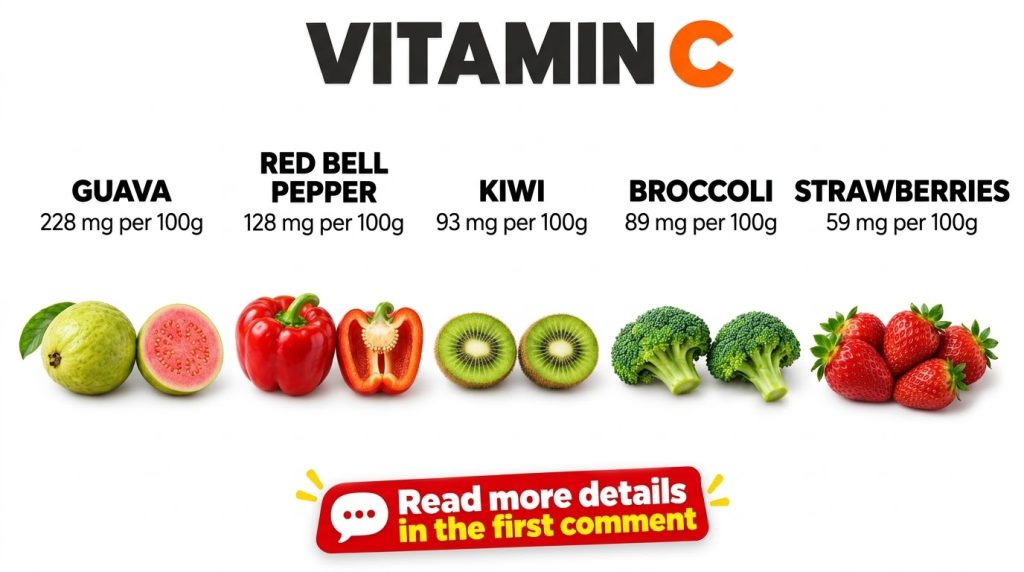
While oranges often get all the credit, many other delicious foods are packed with even more Vitamin C. Here are some of our favorites:
| Food (100g) | Calories | Protein | Carbs | Fat | Fiber | Main Nutrients | Best Benefit |
|---|---|---|---|---|---|---|---|
| Guava | ~68 | ~2.6g | ~14g | ~1g | ~5.4g | Vitamin C, A, folate | Immune support, digestive health |
| Red Bell Pepper | ~31 | ~1g | ~6g | ~0.3g | ~2.1g | Vitamin C, A, B6, folate | Powerful antioxidant, vision health |
| Kiwi | ~61 | ~1.1g | ~15g | ~0.5g | ~3g | Vitamin C, K, E, potassium | Collagen production, digestive aid |
| Broccoli | ~34 | ~2.8g | ~7g | ~0.4g | ~2.6g | Vitamin C, K, folate, fiber | Detoxification, bone health |
| Strawberries | ~32 | ~0.7g | ~7.7g | ~0.3g | ~2g | Vitamin C, manganese, antioxidants | Skin health, anti-inflammatory |
Understanding Vitamin C’s Role in the Body
When you consume Vitamin C, it gets absorbed into your bloodstream and travels throughout your body. Because it’s water-soluble, it doesn’t get stored in large amounts. Instead, any excess is typically excreted through urine. This means a regular intake is important to maintain optimal levels.
Vitamin C works at a cellular level, acting as a cofactor for several enzymatic reactions, most notably those involved in collagen synthesis. It also helps regenerate other antioxidants, like Vitamin E, further boosting your body’s defense against oxidative stress. Essentially, it’s a tireless worker, protecting your cells and keeping your systems running smoothly.
Easy Ways to Incorporate More Vitamin C
Adding these vibrant, nutrient-rich foods to your meals can be simple and delicious:
- Snack Smart: Enjoy a handful of fresh strawberries or a sliced kiwi as a quick, healthy snack.
- Add to Salads: Dice red bell peppers into your salads for a crunchy, colorful, and nutritious boost.
- Smoothie Power: Blend guava or strawberries into your morning smoothie for a tropical twist.
- Stir-fries & Roasts: Toss broccoli florets into stir-fries or roast them with a drizzle of olive oil for a tasty side dish.
- Breakfast Boost: Top your oatmeal or yogurt with fresh berries.
- Salsas & Sauces: Use bell peppers as a base for fresh salsas or incorporate them into homemade pasta sauces.
Potential Risks and Considerations
While Vitamin C is incredibly beneficial, it’s always good to be aware of your intake. Deficiency can lead to symptoms like fatigue, gum inflammation, joint pain, and poor wound healing. Severe, long-term deficiency can result in scurvy, though this is rare in developed countries.
On the other hand, consuming very high doses of Vitamin C, especially from supplements, may lead to mild side effects in some individuals, such as digestive upset, nausea, or diarrhea. However, getting too much Vitamin C from food sources alone is very unlikely because your body naturally regulates absorption. Stick to food-first approaches for the safest and most beneficial way to get your Vitamin C.
Practical Tips for Maximizing Vitamin C Intake
- Eat Fresh: Vitamin C can degrade with heat and light. Enjoy fruits and vegetables raw or lightly cooked to preserve their nutrient content.
- Store Properly: Keep produce in a cool, dark place, like your refrigerator’s crisper drawer, to extend its freshness and nutrient value.
- Variety is Key: Don’t just stick to one source! Explore a wide range of Vitamin C-rich foods to ensure you get a broad spectrum of nutrients.
- Combine with Iron: Pair Vitamin C-rich foods with iron-rich plant foods (like spinach or lentils) to enhance iron absorption.
FAQs About Vitamin C Foods
Q: Can cooking destroy Vitamin C?
A: Yes, Vitamin C is sensitive to heat, light, and water. Prolonged cooking methods like boiling can reduce its content. Steaming or quick stir-frying can help preserve more of the vitamin.
Q: How much Vitamin C do I need daily?
A: The recommended daily allowance (RDA) for adults is typically around 75-90 mg, though needs can vary based on age, gender, and lifestyle factors like smoking. Always check with a healthcare professional for personalized advice.
Q: Are supplements better than food for Vitamin C?
A: While supplements can be useful in specific cases of deficiency or increased need, getting Vitamin C from whole foods is generally preferred. Foods offer a synergistic blend of vitamins, minerals, fiber, and antioxidants that supplements often lack.
Q: Can Vitamin C prevent colds?
A: Research suggests that Vitamin C may not prevent colds in the general population, but it could potentially reduce the duration and severity of cold symptoms if taken regularly before illness strikes.
Q: Which fruit has the most Vitamin C?
A: While oranges are famous, foods like guavas, red bell peppers, and kiwis often contain significantly more Vitamin C per serving than oranges.
Q: Can I get too much Vitamin C from food?
A: It’s extremely difficult to consume excessive amounts of Vitamin C purely from food sources. Your body is efficient at regulating absorption and excreting any surplus.
Conclusion
Embracing Vitamin C-rich foods is a delicious and effective strategy for vibrant health. From supporting your immune system and enhancing skin health to aiding iron absorption, this vital nutrient plays a multifaceted role in your well-being. By incorporating colorful fruits and vegetables like guavas, red bell peppers, kiwis, broccoli, and strawberries into your daily meals, you’re making a powerful investment in your health.
Start experimenting with these fantastic foods today and feel the difference! Explore more healthy food content on our website to continue your journey toward a healthier, happier you.
This content is for educational purposes only and should not be considered medical advice. Consult a qualified healthcare professional for personalized dietary recommendations.