Macadamia vs. Cashew: The Ultimate Nutritional Showdown!
Welcome to the ultimate nut showdown! In the world of healthy snacking, macadamia nuts and cashews often steal the spotlight. Both are incredibly delicious and packed with nutrients, but they offer distinct nutritional profiles. Are you curious about which nut might be a better fit for your dietary goals?
You’re in the right place! We’ll dive deep into the nutritional differences between macadamia nuts and cashews. We’ll explore their calorie count, protein content, fat profiles, and crucial vitamins and minerals. By the end of this comparison, you’ll have a clearer idea of which nut truly rules your healthy plate.
Nutritional Comparison Table
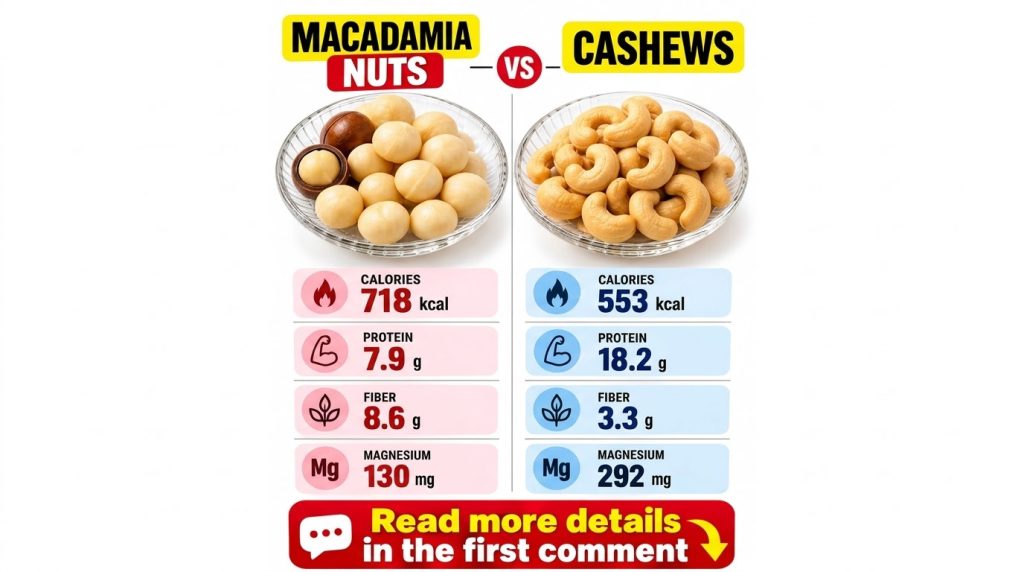
Let’s kick things off with a quick look at how these two popular nuts stack up nutritionally. The values below are approximate for a 1-ounce (28-gram) serving.
| Nutrient (per 1 oz / 28g) | Macadamia Nuts | Cashews |
|---|---|---|
| Calories | 204 kcal | 157 kcal |
| Protein | 2.2g | 5.2g |
| Carbohydrates | 4g | 9g |
| Fat (Total) | 21g | 12g |
| Fiber | 2.4g | 1g |
| Magnesium | 37mg | 83mg |
| Manganese | 1.2mg (60% DV) | 0.4mg (20% DV) |
| Copper | 0.2mg (20% DV) | 0.6mg (70% DV) |
| Iron | 1.1mg (6% DV) | 1.9mg (10% DV) |
Calories
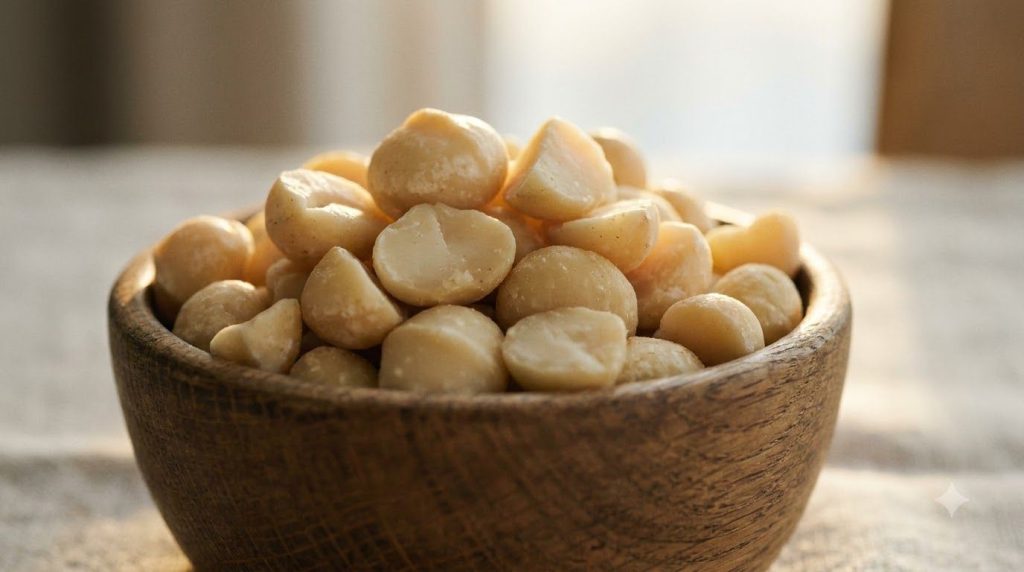
When it comes to calories, macadamia nuts are denser than cashews. A one-ounce serving of macadamias contains about 204 calories, while the same serving of cashews has approximately 157 calories. This difference is mainly due to their fat content.
If you’re mindful of your calorie intake, cashews might seem like the lighter option. However, both nuts are calorie-dense, so portion control is key regardless of your choice.
Protein
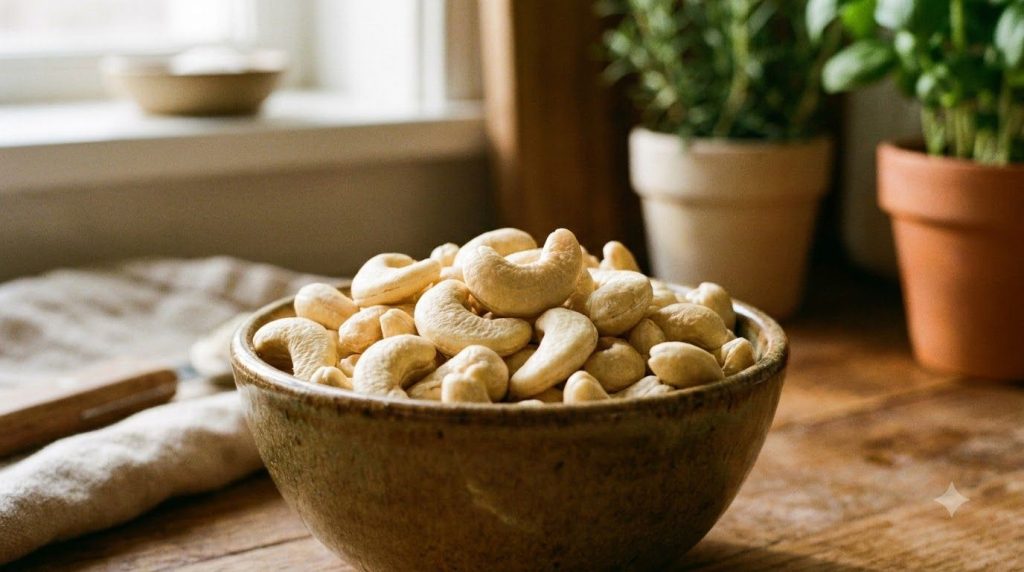
For those looking to boost their protein intake, cashews take the lead. A one-ounce serving of cashews provides about 5.2 grams of protein, making them a great plant-based source. Macadamia nuts, while still contributing, offer less at around 2.2 grams per serving.
Protein is essential for muscle repair, satiety, and overall body function. If you’re vegetarian, vegan, or just trying to get more protein, cashews can be a valuable addition to your diet.
Fat Content
Here’s where macadamia nuts truly shine. They are significantly higher in total fat, with about 21 grams per ounce, compared to cashews’ 12 grams. However, it’s the *type* of fat that matters most.
Monounsaturated Fats (MUFAs)
Macadamia nuts are exceptionally rich in monounsaturated fats, particularly oleic acid and palmitoleic acid. These healthy fats are associated with heart health and may help lower bad cholesterol levels. Cashews also contain monounsaturated fats but in lesser amounts.
Saturated Fats
While cashews have less total fat, they contain a slightly higher percentage of saturated fat compared to macadamias. Both are still relatively low in saturated fat when consumed in moderation, but it’s a point to consider if you’re monitoring your intake closely.
Carbohydrates
Cashews have a higher carbohydrate content, providing about 9 grams per ounce, whereas macadamia nuts have around 4 grams. This makes macadamia nuts a popular choice for those following lower-carb diets like keto.
Fiber
Fiber is crucial for digestive health and helps you feel full longer. Macadamia nuts offer more fiber, with about 2.4 grams per ounce, compared to cashews’ 1 gram. Incorporating fiber-rich foods can support gut health and aid in weight management.
Vitamins & Minerals
Magnesium
Cashews are an excellent source of magnesium, providing about 83mg per ounce, nearly double that of macadamia nuts (37mg). Magnesium is vital for muscle and nerve function, blood sugar control, and blood pressure regulation.
Copper
Cashews also stand out for their copper content, offering about 70% of the daily value per ounce. Copper is important for energy production, iron metabolism, and brain health. Macadamia nuts provide about 20% of the daily value.
Manganese
Macadamia nuts are a powerhouse of manganese, delivering about 60% of the daily value per ounce. Manganese plays a role in bone health, metabolism, and antioxidant defense. Cashews contain a smaller amount, around 20% of the daily value.
Iron
While neither is a primary source, cashews offer slightly more iron (1.9mg) than macadamia nuts (1.1mg), which is beneficial for red blood cell formation and preventing fatigue.
Taste and Texture
Macadamia Nuts
- Taste: Rich, buttery, slightly sweet, often described as creamy.
- Texture: Very smooth, soft, and melt-in-your-mouth.
Cashews
- Taste: Mildly sweet, creamy, less intense than macadamias.
- Texture: Firm yet tender, with a satisfying crunch.
Best For: Which Nut is Right for You?
Choose Macadamia Nuts If:
- You’re following a low-carb or ketogenic diet due to their lower carb and higher healthy fat content.
- You prioritize heart-healthy monounsaturated fats.
- You enjoy a rich, buttery flavor and creamy texture in your snacks or cooking.
- You want a good source of manganese and fiber.
Choose Cashews If:
- You’re looking for a good plant-based protein source.
- You need a significant boost of magnesium and copper.
- You prefer a milder, slightly sweeter nut with a firmer texture.
- You’re mindful of calorie density, as they are slightly lower in calories per serving.
Practical Tips for Enjoying Both Nuts
- Portion Control: Both nuts are calorie-dense. Measure out a serving to avoid overeating. A small handful is usually enough.
- Snack Smart: Enjoy them raw or lightly roasted as a convenient and satisfying snack.
- Add to Meals: Sprinkle chopped nuts over salads, oatmeal, yogurt, or stir-fries for added crunch and nutrition.
- Baking & Cooking: Use them in healthy homemade granola, energy bites, or even as a base for creamy sauces (cashews work wonderfully for this!).
- Nut Butter: Make your own nut butter for a fresh, preservative-free spread.
FAQs
Are macadamia nuts good for weight loss?
Macadamia nuts, high in healthy fats and fiber, can contribute to satiety, potentially helping with weight management when consumed in moderation as part of a balanced diet. Their lower carb content may also be beneficial for some weight loss approaches.
Can I eat cashews every day?
Yes, eating cashews every day in moderation (e.g., a small handful) can be a healthy addition to your diet. They provide essential minerals like magnesium and copper. Always consider your overall dietary needs.
Which nut has more fiber?
Macadamia nuts generally contain more fiber per serving than cashews, which is beneficial for digestive health.
Are macadamia nuts anti-inflammatory?
Macadamia nuts contain monounsaturated fats and antioxidants, which may have anti-inflammatory properties, contributing to overall health.
Which nut is better for heart health?
Both nuts can support heart health. Macadamias are particularly rich in monounsaturated fats known to benefit cholesterol levels, while cashews offer magnesium, which is also important for heart function. Variety is key for a heart-healthy diet.
Can I substitute cashews for macadamia nuts in recipes?
While both are nuts, their distinct flavors and textures mean they aren’t always perfect substitutes. Cashews can be creamier when soaked and blended, while macadamias offer a unique buttery richness. Consider the recipe’s desired outcome.
Are there any risks to eating too many nuts?
Eating too many nuts, including macadamias and cashews, can lead to excessive calorie intake, potentially causing weight gain. Some individuals may also experience digestive discomfort due to the fiber content or have allergies. Moderation is essential.
Conclusion
So, who wins the ultimate nutritional showdown between macadamia nuts and cashews? The truth is, there’s no single winner. Both nuts are incredibly nutritious, offering unique benefits that cater to different dietary needs and preferences.
Macadamia nuts stand out for their high content of heart-healthy monounsaturated fats, lower carbs, and good fiber. Cashews shine with their impressive protein, magnesium, and copper levels. The best choice depends on your individual health goals and what you enjoy.
The smartest approach is to enjoy both! Incorporating a variety of nuts into your diet ensures you get a broader spectrum of vitamins, minerals, and healthy fats. So go ahead, enjoy a handful of macadamias one day and cashews the next!
This content is for educational purposes only and should not be considered medical advice. Consult a qualified healthcare professional for personalized dietary recommendations.
Explore More Healthy Eating Content:
- The Benefits of Healthy Fats: A Complete Guide
- Top 10 High-Protein Snacks to Boost Your Energy
- Foods Rich in Magnesium: Boost Your Health Naturally
- Anti-Inflammatory Foods: Your Guide to a Healthier Diet