In our fast-paced world, finding moments of calm can feel like a luxury. Yet, carving out time to decompress is essential for both our physical and mental well-being. An evening yoga flow is a wonderful practice that can help you shed the day’s stresses, improve sleep, and foster a deeper connection with your body. It’s not about intense sweat or pushing your limits, but rather about mindful movement and gentle stretching.
Why an Evening Yoga Flow?
The benefits of incorporating a gentle yoga practice into your evening routine extend far beyond physical flexibility. It’s a holistic approach to preparing your body and mind for restorative rest.
Stress Reduction and Mental Clarity
- Calms the Nervous System: Gentle movements and conscious breathing activate the parasympathetic nervous system, promoting relaxation and reducing the fight-or-flight response.
- Releases Tension: Holding stress often leads to physical tension in the shoulders, neck, and back. Yoga helps release these knots, easing discomfort.
- Mindfulness Practice: Focusing on your breath and body in the present moment can quiet a busy mind, helping you let go of worries and mental chatter from the day.
Improved Sleep Quality
- Prepares for Rest: A relaxing yoga session signals to your body that it’s time to wind down, creating a natural transition from activity to rest.
- Reduces Insomnia: Regular evening yoga may help alleviate symptoms of insomnia, making it easier to fall asleep and stay asleep.
- Deepens Relaxation: Gentle stretches can release physical restlessness, allowing for a more profound sense of relaxation before bed.
Enhanced Physical Well-being
- Increases Flexibility: Evening is an excellent time to gently stretch and improve your range of motion after a day of activity or prolonged sitting.
- Soothes Sore Muscles: Light stretching can ease muscle stiffness and promote circulation, aiding recovery.
- Body Awareness: Moving mindfully helps you listen to your body’s signals, fostering a greater understanding of its needs.
The Core of a Mindful Practice
It’s important to remember that more sweat doesn’t necessarily mean better results. When it comes to fitness and well-being, consistency and proper form are far more important than intensity every single session. Listen to your body and focus on quality, intentional movements. Small, steady steps lead to lasting change and help prevent injuries. Embrace the journey of self-discovery and well-being with patience and kindness.
Creating Your Evening Yoga Routine
An evening flow should be gentle and restorative. Here’s a simple structure you can adapt:
- Start with Centering (5 minutes): Begin by sitting comfortably, focusing on your breath. Close your eyes and take a few deep inhales and exhales, allowing your body to settle.
- Gentle Warm-up (5-10 minutes): Incorporate slow, deliberate movements like cat-cow stretches, gentle neck rolls, and shoulder circles to awaken your body.
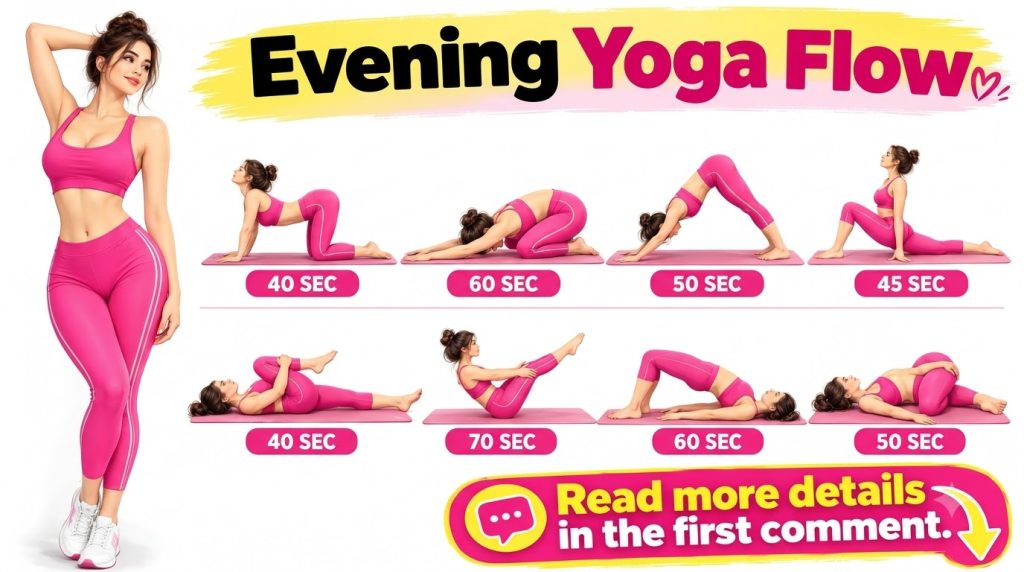
- Restorative Poses (15-20 minutes): Focus on stretches that open the hips, hamstrings, and spine. Examples include:
- Child’s Pose (Balasana): Calms the brain and helps relieve stress and fatigue.
- Supine Spinal Twist (Supta Matsyendrasana): Gently massages the back and can help release tension.
- Legs-Up-the-Wall Pose (Viparita Karani): Soothes the nervous system, eases tired legs, and promotes relaxation.
- Forward Fold (Uttanasana): Stretches the hamstrings and spine while calming the mind.
- Cool Down and Savasana (5-10 minutes): End your practice with a few minutes of Savasana (Corpse Pose), allowing your body to fully integrate the benefits of the practice. Lie flat on your back, arms by your sides, palms up, and simply breathe.
Important Considerations
- Listen to Your Body: Never force a stretch. Pain is a sign to back off.
- Use Props: Blankets, pillows, or yoga blocks can enhance comfort and support in restorative poses.
- Consistency is Key: Even 10-15 minutes of gentle yoga each evening can make a significant difference over time.
- Hydrate: Drink water after your practice, but avoid heavy meals right before bed.
An evening yoga flow is a beautiful ritual to cultivate peace and prepare for a restful night. It’s a testament to the power of mindful movement and a gentle reminder that true well-being comes from listening to your body and honoring its needs. Embrace this practice as a valuable tool for your daily self-care.
Disclaimer: The information provided in this article is for educational purposes only and is not intended as a substitute for professional medical advice, diagnosis, or treatment. Always seek the advice of your physician or other qualified health provider with any questions you may have regarding a medical condition.