Imagine a garden where every plant contributes to the health and vitality of its neighbors, a harmonious ecosystem buzzing with life and productivity. This isn’t just a gardener’s dream; it’s the natural magic of companion planting. By strategically placing certain plants together, you can enhance growth, deter pests, attract beneficial insects, and even improve flavors – all without relying on harsh chemicals. It’s a time-honored practice that taps into the inherent wisdom of nature, transforming your garden into a more resilient and bountiful space. Ready to discover the powerful partnerships that will help your plants thrive?
The Art and Science of Companion Planting
Companion planting is more than just placing plants next to each other; it’s about understanding how different species interact. These interactions can be physical, like a tall corn stalk providing a natural trellis for climbing beans, or biochemical, where one plant’s aroma or root exudates deter pests from its neighbor. Other benefits include attracting pollinators and beneficial predatory insects, improving soil health through nitrogen fixation or breaking up compacted earth, and creating beneficial microclimates that offer shade or wind protection.
This natural synergy reduces the need for interventions like pesticides and fertilizers, leading to a more sustainable and organic garden. While specific results can vary by region, soil type, and climate, the underlying principles offer a robust framework for healthier plant communities.
Your Essential Companion Planting Guide
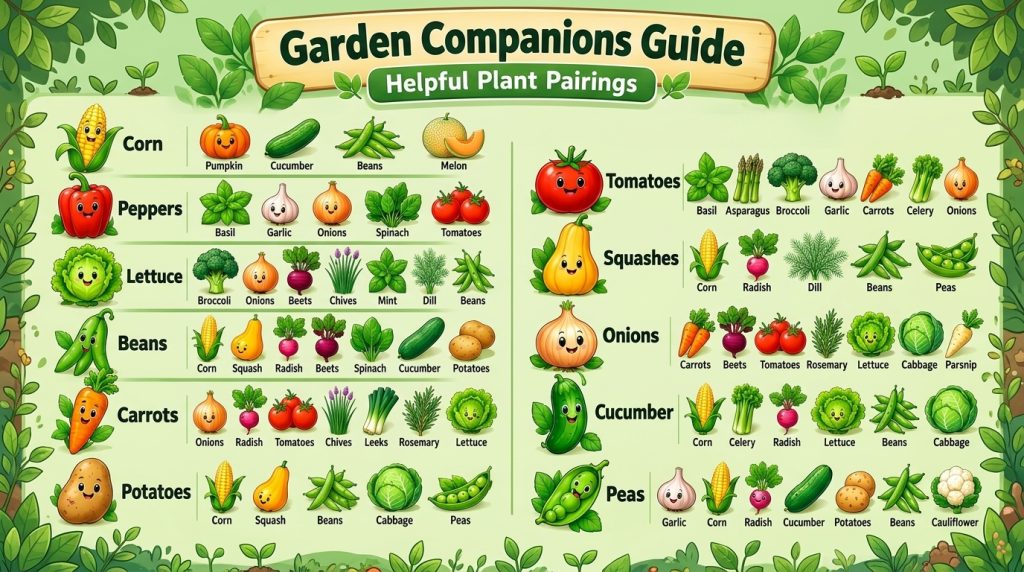
Let’s dive into some powerful plant pairings that can transform your garden. Remember that ‘full sun’ typically means 6+ hours of direct sunlight, and ‘well-drained soil’ prevents waterlogging, which is crucial for most vegetables.
Tomatoes (Solanum lycopersicum)
Tomatoes are classic garden favorites, but they often benefit greatly from good neighbors.
- Carrots: Planting carrots near tomatoes can help loosen the soil, making it easier for tomato roots to expand.
- Onions: The strong scent of onions (and other alliums) can deter common tomato pests like aphids and spider mites.
- Nasturtiums: These cheerful flowers act as a trap crop, luring aphids away from your tomatoes. They can also deter whiteflies and squash bugs.
- Marigolds: Specifically French marigolds (Tagetes patula) are renowned for deterring nematodes and other soil-borne pests.
- Basil: A classic pairing, basil is believed to improve the flavor of tomatoes and deter flies and hornworms.
- Borage: Attracts beneficial pollinators and predatory insects like bees and wasps, which can help control pests. It’s also thought to improve tomato growth and disease resistance.
Care Tip: Tomatoes are heavy feeders and love rich, well-drained soil with consistent moisture. Provide strong support like stakes or cages as they grow.
Beans (Phaseolus vulgaris)
Most beans (bush and pole varieties) are excellent soil improvers, fixing nitrogen into the soil.
- Corn: A classic ‘Three Sisters’ companion, corn provides a natural trellis for pole beans to climb, lifting them off the ground and improving air circulation.
- Radishes: Fast-growing radishes can be planted to break up heavy soil, creating better conditions for bean roots. They’re harvested long before beans need the space.
- Rosemary: The strong aroma of rosemary can help deter bean beetles and other insect pests.
- Carrots: Like radishes, carrots help loosen the soil, benefiting bean root development.
- Cabbage (and other Brassicas): Beans fix nitrogen, a vital nutrient for leafy greens like cabbage. This pairing can improve soil fertility for the cabbage, though care should be taken with spacing to ensure both thrive.
Care Tip: Avoid planting beans near members of the allium family (onions, garlic) as they can stunt bean growth. Ensure consistent watering during flowering and pod development.
Peppers (Capsicum annuum)
Whether hot or sweet, peppers appreciate warm conditions and beneficial neighbors.
- Carrots: Loosens soil for better root penetration and drainage around pepper plants.
- Basil: Believed to enhance pepper flavor and deter common pepper pests like flies and thrips.
- Spinach: Acts as a living mulch, suppressing weeds, retaining soil moisture, and keeping soil temperatures cooler around pepper roots.
- Radishes: Can be interplanted to break up soil and provide an early harvest.
- Marigolds: Deters nematodes and other garden pests that might target peppers.
- Onions: The pungent aroma of onions can help deter aphids and other insects from pepper plants.
Care Tip: Peppers thrive in full sun and well-drained soil. They appreciate consistent moisture but dislike soggy feet. Consider mulching to regulate soil temperature and moisture.
Carrots (Daucus carota subsp. sativus)
For straight, sweet carrots, good soil and the right companions are key.
- Rosemary: Helps deter the carrot rust fly, a common pest that damages carrot roots.
- Lettuce: Provides ground cover, helping to keep the soil cool and moist around carrot roots and suppressing weeds.
- Radishes: Plant radishes with carrots; they germinate quickly, mark the rows, and are harvested before carrots need the space, leaving the soil looser.
- Tomatoes: Some gardeners report improved growth when carrots are grown near tomatoes, possibly due to shade provided by the taller tomato plants during hot periods.
- Beans: As nitrogen-fixers, beans enrich the soil, which benefits the nutrient-hungry carrots.
Care Tip: Sow carrot seeds thinly in loose, stone-free soil to prevent forked roots. Keep the soil consistently moist until germination.
Cucumbers (Cucumis sativus)
Cucumbers are prolific vining plants that enjoy rich soil and warmth.
- Marigolds: Help deter cucumber beetles and nematodes, protecting the roots and foliage.
- Radishes: Loosen the soil, making it easier for cucumber roots to establish.
- Corn: Provides a sturdy, tall structure for vining cucumbers to climb, a practical use of vertical space.
- Nasturtiums: Acts as a trap crop for aphids and squash bugs, drawing them away from your cucumber plants.
- Beans: Fix nitrogen in the soil, providing a beneficial nutrient boost for the heavy-feeding cucumbers.
Care Tip: Cucumbers are heavy water drinkers, especially when fruiting. Ensure consistent moisture and provide a trellis or cage for vining varieties to improve air circulation and fruit quality.
Corn (Zea mays)
The iconic corn plant is a garden staple, often forming the backbone of companion planting systems.
- Beans: The ‘Three Sisters’ staple, beans fix nitrogen, replenishing the nutrients corn needs, and use corn stalks for support.
- Cucumbers: Vining cucumbers can spread along the ground beneath corn, acting as a living mulch to suppress weeds and retain soil moisture.
- Radishes: Quick to germinate and harvest, radishes help loosen the soil for corn roots.
- Tomatoes: While some competition for nutrients can occur, tomatoes and corn are often grown successfully together, with corn potentially offering some shade to tomatoes in hot climates.
- Nasturtiums: These serve as an excellent trap crop for aphids and other pests, diverting them from corn stalks.
Care Tip: Corn is a heavy feeder. Plant in blocks rather than single rows to ensure good pollination. Keep the soil consistently moist, especially during tasseling and silking.
Cabbage (Brassica oleracea)
Members of the Brassica family, including cabbage, broccoli, and kale, are often targeted by specific pests.
- Rosemary: The strong scent of rosemary can confuse and deter cabbage moths and other common Brassica pests.
- Mint: Can deter flea beetles and cabbage worms. However, mint is very aggressive and should be planted in a contained pot near the cabbage bed to prevent it from taking over.
- Lettuce: Provides ground cover, suppresses weeds, and keeps the soil cool and moist for cabbage roots.
- Nasturtiums: A superb trap crop for aphids and cabbage worms, drawing them away from your leafy greens.
- Carrots: Helps to loosen the soil around cabbage plants, improving root health.
- Radishes: Can be interplanted to break up soil and provide an early harvest before cabbage needs the full space.
Care Tip: Cabbage needs consistent moisture and rich soil. Use row covers early in the season to protect young plants from pests like cabbage moths.
Potatoes (Solanum tuberosum)
Potatoes require loose soil for tuber development and can benefit from strategic companions.
- Beans: As nitrogen fixers, beans can replenish soil nutrients that potatoes deplete, benefiting overall soil health.
- Corn: Taller corn plants can provide some shade to potato plants during the hottest parts of the day, helping to keep the soil cooler.
- Marigolds: French marigolds are particularly effective at deterring nematodes and other soil pests that can damage potato tubers.
- Nasturtiums: Act as a trap crop for aphids and Colorado potato beetles, helping to protect your potato foliage.
- Cabbage: While some gardeners avoid this pairing due to differing nutrient needs, a diverse planting including cabbage can contribute to overall garden biodiversity and soil health.
Care Tip: Hill your potatoes regularly to protect developing tubers from sunlight (which turns them green and toxic) and encourage more tuber formation. Maintain consistent soil moisture.
Radishes (Raphanus sativus)
Radishes are rapid growers, making them excellent companions for many longer-season crops.
- Nasturtiums: Acts as a trap crop for aphids, drawing them away from radishes and other nearby vegetables.
- Lettuce: Can provide some shade for radishes in warmer weather, helping to prevent them from bolting.
- Carrots: Planting radishes with carrots helps to mark the rows and loosen the soil, creating a better environment for both root crops.
- Cucumbers, Corn, Beans, Cabbage, Peppers, Tomatoes: Radishes are generally beneficial with most garden vegetables because they are harvested quickly, loosen the soil, and don’t compete for long-term resources. They can also deter some pests with their pungent aroma.
Care Tip: Radishes grow best in cool weather and loose soil. Plant them in succession every 1-2 weeks for a continuous harvest.
Lettuce (Lactuca sativa)
Cool-season lettuce benefits from companions that offer shade and deter common pests.
- Carrots: Helps loosen the soil, which benefits the shallow roots of lettuce.
- Radishes: Can be interplanted with lettuce, providing an early harvest and helping to break up the soil.
- Mint: The strong scent of mint can deter slugs and snails, common lettuce pests. Remember to plant mint in a container to prevent it from spreading aggressively.
- Marigolds: Deters nematodes and other soil-dwelling pests that might affect lettuce roots.
- Cabbage: Taller Brassicas can provide partial shade to lettuce during the heat of late spring and early summer, helping to prevent bolting.
Care Tip: Lettuce thrives in cool, moist conditions. In warmer climates, plant in partial shade or succession sow to ensure continuous harvest before bolting.
Common Companion Planting Mistakes to Avoid
While companion planting offers many benefits, a few missteps can hinder your success:
- Overcrowding: Even good companions need space. Too many plants too close together lead to competition for light, water, and nutrients, negating any benefits.
- Ignoring Plant Needs: Companion planting is an addition to good gardening practices, not a replacement. Ensure each plant receives appropriate sunlight, water, and soil conditions.
- Aggressive Growers: Herbs like mint are fantastic pest deterrents but are notoriously invasive. Always plant them in pots or containers, even when placing them in a garden bed, to keep them contained.
- Incompatible Plant Families: Some plants genuinely don’t get along. For instance, plants in the allium family (onions, garlic) can stunt the growth of beans and peas. Research specific plant families before pairing.
- Expecting Miracles: Companion planting is a powerful tool, but it’s not a magic bullet. It supports a healthy garden ecosystem but won’t solve severe pest infestations or poor growing conditions entirely. Integrated pest management, proper watering, and healthy soil remain foundational.
Regional Considerations and Garden Setup
The success of your companion planting efforts will also depend on your local climate and specific garden conditions. For instance, a plant that needs full sun in a northern climate (USDA Zones 3-5) might appreciate some afternoon shade in hotter southern regions (Zones 9-11). Always consider your average last and first frost dates when planning planting times. Soil composition, rainfall patterns, and even localized microclimates within your yard will influence growth.
Don’t be afraid to experiment with container gardening for some companion pairings, especially for aggressive herbs like mint or if you have limited space. Raised beds also offer excellent control over soil conditions, which can be advantageous for creating ideal environments for specific plant groups.
Cultivate a Harmonious Harvest
Embracing companion planting is a rewarding journey that deepens your connection to the natural world and elevates your gardening skills. By understanding how plants interact, you can create a resilient, vibrant ecosystem that reduces maintenance and increases your yields. Start with a few of these proven pairings, observe how your garden responds, and don’t be afraid to experiment. With each successful pairing, you’ll gain confidence and watch your garden flourish, brimming with life and yielding bountiful, healthier harvests.