A thriving garden begins not with a perfect seed or a fancy tool, but beneath your feet: in the soil. Healthy soil is the very foundation of a vibrant garden, teeming with life and rich in the nutrients your plants need to flourish. It’s an intricate ecosystem that supports everything from tiny microbes to towering trees, ensuring bountiful harvests and beautiful blooms. But how do we truly nurture this vital component of our gardens?
Many traditional gardening methods, while seemingly effective in the short term, can actually harm your soil’s long-term health. The good news is that by embracing sustainable practices, you can transform your garden into a resilient, productive, and eco-friendly haven. Let’s explore the essential dos and don’ts for maintaining optimal soil health!
Harmful Practices to Avoid for Better Soil
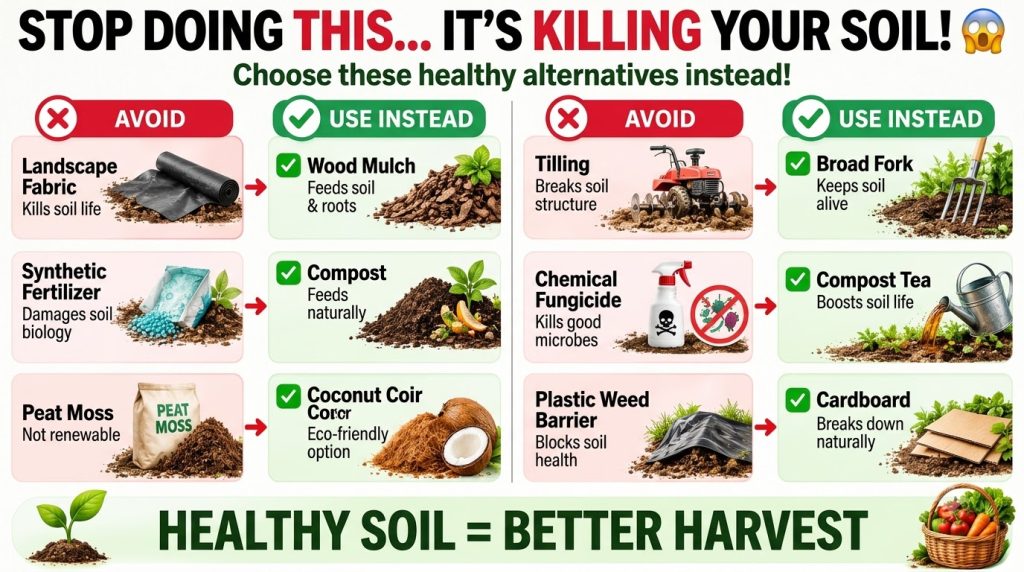
1. Excessive Tilling and Digging
While tilling might seem like a quick way to loosen compacted soil or incorporate amendments, it can be incredibly destructive. Tilling breaks down the soil structure, disrupts the intricate fungal networks that help plants absorb nutrients, and exposes beneficial microbes to the elements, leading to their demise. It also releases carbon into the atmosphere, contributing to climate change, and can bring dormant weed seeds to the surface.
2. Relying on Synthetic Fertilizers
Chemical fertilizers offer a quick boost of nutrients, but they are a temporary fix that can harm your soil in the long run. They often contain salts that can kill beneficial soil organisms and lead to a dependency where your plants constantly need more. These fertilizers can also leach into waterways, causing pollution and disrupting aquatic ecosystems.
3. Using Plastic Weed Barriers and Landscape Fabric
Though they promise weed control, plastic weed barriers prevent organic matter from breaking down and enriching the soil. They block air and water exchange, creating an unhealthy environment for soil life. Over time, they can break down into microplastics, further polluting your garden.
4. Applying Chemical Pesticides and Herbicides
These chemicals are designed to kill, and unfortunately, they don’t discriminate. They eliminate not only pests and weeds but also beneficial insects and crucial soil microorganisms, disrupting the natural balance of your garden ecosystem.
Sustainable Practices for a Thriving Garden
1. Embrace Composting and Organic Matter
The single best thing you can do for your soil is to add plenty of organic matter. Compost, well-rotted manure, and leaf mold provide a slow-release feast for soil microbes, improving soil structure, water retention, and nutrient availability. It’s like giving your soil a superfood boost!
2. Practice No-Dig or Minimal Tillage Gardening
Instead of tilling, consider a no-dig approach. By layering organic materials directly onto the soil surface, you allow worms and other organisms to do the aeration work for you. This preserves the delicate soil structure and microbial networks, leading to healthier, more resilient plants.
3. Utilize Mulch Extensively
A thick layer of organic mulch (like wood chips, straw, or shredded leaves) is a garden’s best friend. Mulch helps retain soil moisture, suppress weeds, regulate soil temperature, and slowly breaks down to add organic matter to the soil. It’s a win-win for your plants and your soil!
4. Plant Cover Crops
When garden beds are empty, plant cover crops like clover, vetch, or rye. These ‘green manures’ protect the soil from erosion, suppress weeds, add organic matter when tilled under (or left to decompose in a no-dig system), and some even fix nitrogen, enriching the soil naturally.
5. Implement Companion Planting and Natural Pest Control
Instead of chemicals, use nature’s own defense mechanisms. Companion planting can deter pests and attract beneficial insects. Encouraging biodiversity in your garden means beneficial predators can keep pest populations in check, leading to a healthier overall ecosystem.
6. Water Wisely and Deeply
Proper watering is crucial. Deep, infrequent watering encourages roots to grow deeper, making plants more resilient to drought. Overwatering can leach nutrients and deprive roots of oxygen. Consider drip irrigation or soaker hoses for efficient water delivery directly to the root zone.
The Rewards of Healthy Soil
Nurturing your soil is an investment that pays off season after season. Healthy soil leads to healthier, more robust plants that are better able to resist pests and diseases. It reduces the need for external inputs, making your gardening more sustainable and enjoyable. By focusing on building a rich, living soil, you’re not just growing plants; you’re cultivating an entire ecosystem that will reward you with beauty and bounty for years to come. Happy gardening!