Did you know that the secret to vibrant, nutrient-rich food often starts right beneath your feet? The health of your garden’s soil plays a surprisingly direct role in the nourishment your plants (and subsequently, you!) receive. Healthy soil is a living ecosystem, teeming with beneficial microorganisms, worms, and organic matter that work together to feed your plants and resist issues.
But what if your soil isn’t as lively as it should be? Unhealthy soil can lead to lackluster plants and less nutritious produce. Recognizing the signs of struggling soil is the first step toward bringing it back to life. Let’s uncover six vital signs your garden’s soil might be silently showing you and how you can revitalize it for thriving plants and better overall wellness!
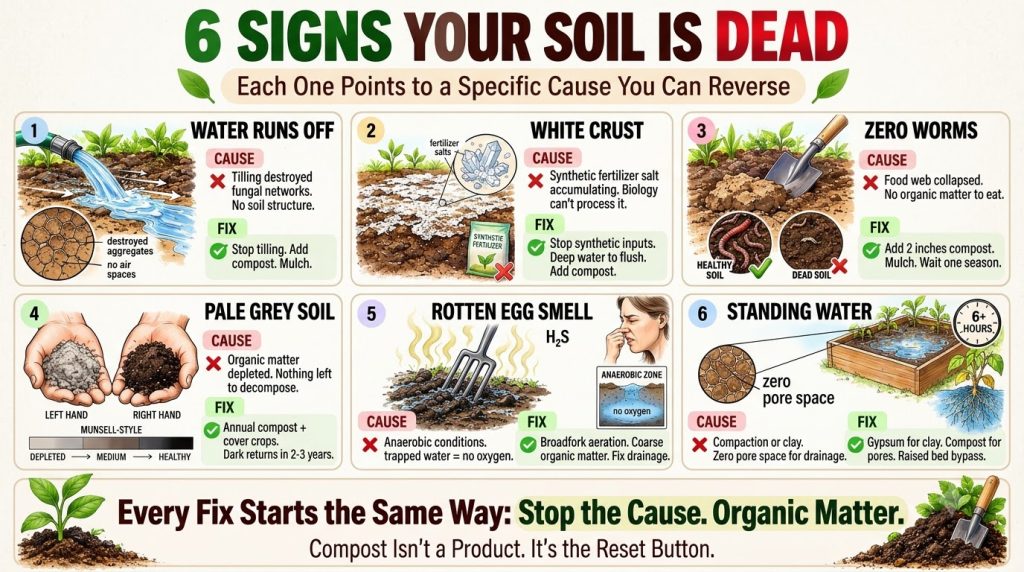
1. Water Running Off Instead of Soaking In
Have you ever watered your garden only to see the water pool on the surface or run off quickly, instead of penetrating the soil? This is a common sign of soil compaction. Compacted soil has very little space between its particles, making it difficult for water, air, and plant roots to move freely. It’s like trying to drink water through a dense, muddy sponge – it just can’t absorb much.
What to do:
- Add Organic Matter: Regularly mix in compost, well-rotted manure, or other organic materials. These help to break up compacted soil over time, creating a crumbly, well-aerated structure.
- Avoid Walking on Wet Soil: Try to minimize foot traffic in your garden beds, especially when the soil is wet, as this can worsen compaction.
- Consider Cover Crops: For larger areas, planting cover crops (like clover or vetch) in the off-season can help break up compaction with their roots and add organic matter when tilled under.
2. A White Crust on the Soil Surface
If you notice a white, powdery, or crusty layer on top of your soil, particularly in warmer, drier climates, it often indicates a buildup of salts. This can be due to over-fertilization, especially with synthetic fertilizers, or using water with high mineral content. These salts can draw moisture away from plant roots, making it hard for them to absorb water and nutrients.
What to do:
- Water Deeply and Less Frequently: This helps flush salts deeper into the soil, away from the root zone.
- Reduce Synthetic Fertilizers: Opt for organic fertilizers or compost, which release nutrients slowly and are less likely to cause salt buildup.
- Mulch: A layer of mulch can help moderate soil temperature and moisture, reducing surface evaporation that can bring salts to the top.
3. A Lack of Earthworms and Other Critters
Dig into healthy soil, and you’ll likely find a bustling community of earthworms, beneficial insects, and other tiny organisms. These creatures are vital for soil health, aerating the soil, breaking down organic matter, and making nutrients available to plants. If your soil seems lifeless, with no visible signs of these helpful inhabitants, it’s a strong indicator that something is off.
What to do:
- Embrace Organic Practices: Avoid harsh chemical pesticides and fertilizers that can harm beneficial soil life.
- Feed Your Soil: Provide a steady supply of organic matter (compost, leaves, wood chips) to give worms and microbes something to eat.
- Minimize Tilling: Excessive tilling can disrupt soil structure and harm soil organisms. Try no-dig or minimal-tillage gardening methods.
4. Soil That Smells Foul or Like Rotten Eggs
Healthy soil has a pleasant, earthy aroma. If your soil emits a foul, sour, or distinctly rotten egg smell, it’s often a sign of anaerobic conditions – meaning there’s not enough oxygen. This usually points to poor drainage or overly compacted soil, where waterlogged conditions suffocate beneficial aerobic microorganisms and encourage anaerobic ones that produce smelly gases.
What to do:
- Improve Drainage: Assess your garden for areas where water tends to sit. You might need to amend the soil with more organic matter, create raised beds, or even improve the overall landscape drainage.
- Aerate Gently: For small areas, a garden fork can be used to gently loosen compacted soil, introducing air without causing too much disruption.
- Balance Moisture: Ensure you’re not overwatering, and allow the soil to dry out slightly between waterings, especially in areas prone to sogginess.
5. Poor Soil Structure (Too Sandy or Too Clayey)
Good soil structure is all about balance. Ideally, you want a crumbly, loamy soil that retains moisture but drains well, and has a good mix of sand, silt, and clay. If your soil feels either excessively gritty and sandy (drains too fast, doesn’t hold nutrients) or dense and sticky like clay (drains poorly, hard to work with), its structure needs improvement.
What to do:
- Incorporate Lots of Organic Matter: This is the universal fix! Compost helps sandy soils retain moisture and nutrients, and it helps clay soils break up and become more workable.
- Mulch Regularly: Mulching adds organic matter to the soil surface as it breaks down, gradually improving structure.
- Avoid Compacting Clay Soil: Never work with clay soil when it’s wet, as this will make compaction much worse.
6. Standing Water in Garden Beds
Persistent puddles or standing water in your garden beds long after it has rained or you’ve watered are clear indicators of poor drainage. Besides being a sign of compaction and potentially anaerobic conditions, standing water can lead to root rot, suffocating your plants and making them vulnerable to diseases.
What to do:
- Enhance Drainage Layers: If you have raised beds, ensure there’s a good layer of coarse material (like gravel) at the bottom before adding soil, or ensure the soil mix itself is well-draining.
- Amend with Organic Material: Again, compost is your best friend! It improves both water retention in sandy soils and drainage in clay soils.
- Consider Swales or Rain Gardens: For larger landscape issues, you might explore design solutions to manage water flow more effectively.
Bring Your Garden Back to Life!
Observing these signs in your garden is the first step towards creating a healthier environment for your plants. By taking simple, natural steps to improve your soil, you’re not just helping your garden flourish; you’re also contributing to a more nutrient-dense harvest for your family. A living, breathing soil is the foundation of a healthy garden and, ultimately, a healthier you.
What signs have you noticed in your garden’s soil? Share your experiences and tips in the comments below! We’d love to hear how you’re nurturing your garden for better health.