Are you looking to boost your garden’s health without breaking the bank? The secret might be closer than you think! Many of the materials you consider ‘yard waste’ are actually gardening gold, brimming with nutrients and benefits for your soil and plants. At Garden – L. Quyên, we believe in smart, sustainable gardening that’s accessible to everyone. Today, we’re diving into how you can transform common household and yard items into powerful allies for a thriving, beautiful garden.
Using free yard materials is a fantastic way to improve soil structure, retain moisture, suppress weeds, and feed your plants naturally. It’s a win-win for your garden, your wallet, and the environment!
The Power of Sustainable Gardening with Free Resources
Sustainable gardening isn’t just a trend; it’s a mindful approach to nurturing your green space. By repurposing materials readily available around your home, you reduce waste, minimize your ecological footprint, and create a healthier ecosystem for your plants. Let’s explore six incredible, free yard materials your garden is waiting for!
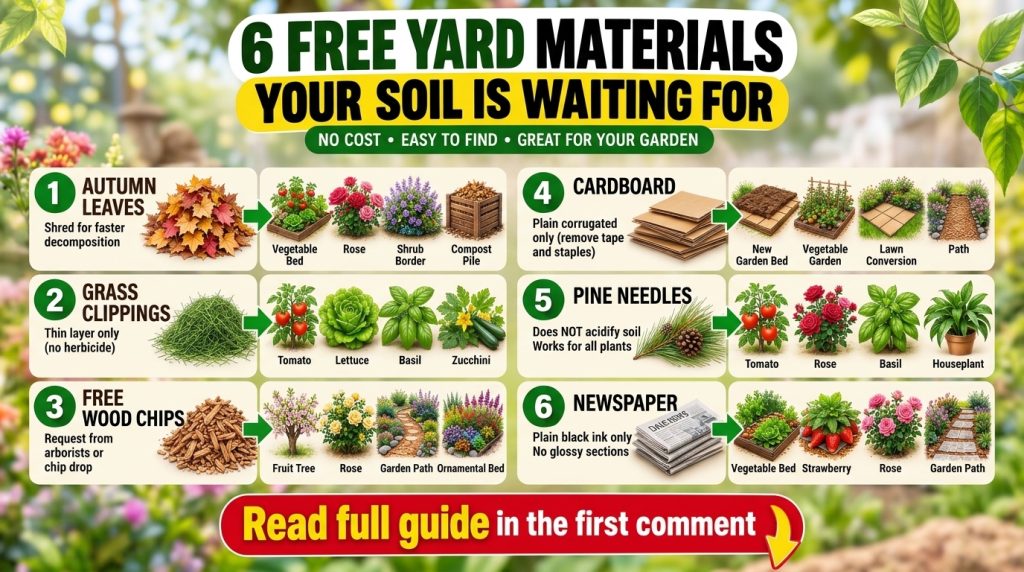
1. Autumn Leaves: Nature’s Free Mulch and Soil Builder
As the seasons change, trees shed a bounty of leaves, and many gardeners see them as a chore to rake up. But wait! Those fallen leaves are a goldmine for your garden. They act as an excellent natural mulch, suppressing weeds and conserving soil moisture. When broken down, they enrich your soil with vital organic matter, improving its structure and fertility.
- How to Use: Rake whole leaves directly onto garden beds as a thick layer of mulch. For faster decomposition and better soil amendment, shred them first (a lawnmower works wonders!). You can also add them to your compost pile for a nutrient-rich boost.
2. Grass Clippings: Green Gold for Your Garden
After mowing your lawn, don’t bag up those clippings and send them to the landfill! Fresh grass clippings are packed with nitrogen, a key nutrient for lush plant growth. They make a fantastic, fast-acting soil amendment and mulch.
- How to Use: Spread a thin layer (no more than an inch or two) of grass clippings around plants. This helps retain moisture and slowly releases nitrogen into the soil. Avoid thick layers, as they can become matted and anaerobic. You can also mix them into your compost pile to balance carbon-rich materials.
3. Wood Chips: Long-Lasting Mulch and Path Material
Often available for free from arborists or local utility companies, wood chips are a durable, attractive, and highly beneficial material for your garden. They’re particularly great for paths, perennial beds, and around trees and shrubs.
- How to Use: Apply a thick layer (2-4 inches) of wood chips around trees, shrubs, and in garden pathways. They excel at suppressing weeds, retaining moisture, and regulating soil temperature. While they break down slowly, enriching the soil over time, avoid mixing large quantities directly into annual vegetable beds as their decomposition can temporarily tie up nitrogen.
4. Cardboard: A Weed Barrier and Soil Conditioner
Got old cardboard boxes from deliveries? Don’t toss them! Cardboard is an excellent, biodegradable material for suppressing weeds, especially when establishing new garden beds using the ‘lasagna gardening’ method.
- How to Use: Lay flattened cardboard sheets directly over weedy areas or grass, overlapping edges to prevent weeds from peeking through. Wet the cardboard thoroughly, then cover with a layer of compost, soil, or other organic materials. This creates an instant, no-dig garden bed, as the cardboard smothers weeds and slowly breaks down, adding carbon to the soil. Remove any tape or labels first!
5. Pine Needles: Acid-Loving Plant’s Best Friend
If you have pine trees nearby, you have an endless supply of free, slightly acidic mulch. Pine needles are particularly beneficial for plants that thrive in acidic soil conditions, such as blueberries, rhododendrons, azaleas, and some evergreens.
- How to Use: Spread a 2-3 inch layer of pine needles around acid-loving plants. They create a beautiful, natural look, suppress weeds, and help maintain soil acidity. They are also slow to decompose, providing long-lasting mulch benefits.
6. Newspaper: A Simple, Effective Weed Suppressor
Similar to cardboard, old newspapers can be repurposed into a fantastic weed barrier. They are lightweight, easy to handle, and readily available.
- How to Use: Lay several sheets of newspaper (4-8 layers thick) directly on garden soil around plants or over areas where you want to suppress weeds. Wet them thoroughly to keep them in place, then cover with a thin layer of soil, compost, or mulch to prevent them from blowing away and to make your garden look tidy. The newspaper will decompose, adding organic matter to the soil. Avoid using glossy or color-printed pages, sticking to black and white newsprint.
Start Transforming Your Garden Today!
Embracing these free yard materials is an easy and effective way to elevate your gardening game. You’ll reduce waste, save money, and most importantly, create a healthier, more vibrant garden. It’s truly amazing what nature provides right in our own backyards!
Which free yard material will you try first in your garden? Share your sustainable gardening tips and experiences in the comments below! Happy gardening!