A healthy, thriving garden starts from the ground up, and one of the simplest yet most impactful steps you can take is applying the right mulch. Think of mulch as a protective, nourishing blanket for your soil and plants. It’s a foundational gardening practice that helps retain essential moisture, suppresses unwelcome weeds, regulates soil temperature, and enriches the earth as it breaks down. Understanding which type of mulch suits specific plants can truly transform your gardening efforts, leading to more vigorous growth and a more resilient landscape.
If you’ve ever wondered which mulch to choose for your vegetable patch, your ornamental shrubs, or your acid-loving berries, you’re in the right place. This guide will walk you through four popular types of mulch, detailing their unique benefits and perfect plant companions. By the end, you’ll be equipped with the knowledge to make smart, sustainable choices that will help your garden flourish season after season.
Why Mulch Matters for a Thriving Garden
Mulching is more than just aesthetics; it’s a critical component of sustainable gardening. A good layer of mulch works wonders by dramatically reducing water evaporation from the soil, meaning you’ll water less frequently. It acts as a barrier against weeds, saving you countless hours of weeding. Furthermore, mulch helps stabilize soil temperatures, protecting roots from extreme heat in summer and harsh cold in winter. As organic mulches decompose, they slowly release nutrients, improving soil structure, fertility, and fostering a healthy microbiome. This creates a balanced environment where your plants can truly flourish.
1. Wood Chips: The Long-Lasting Protector
Wood chips are a classic choice for many gardeners, offering a durable and aesthetically pleasing ground cover. They are typically sourced from shredded trees and branches, making them a readily available and often affordable option.
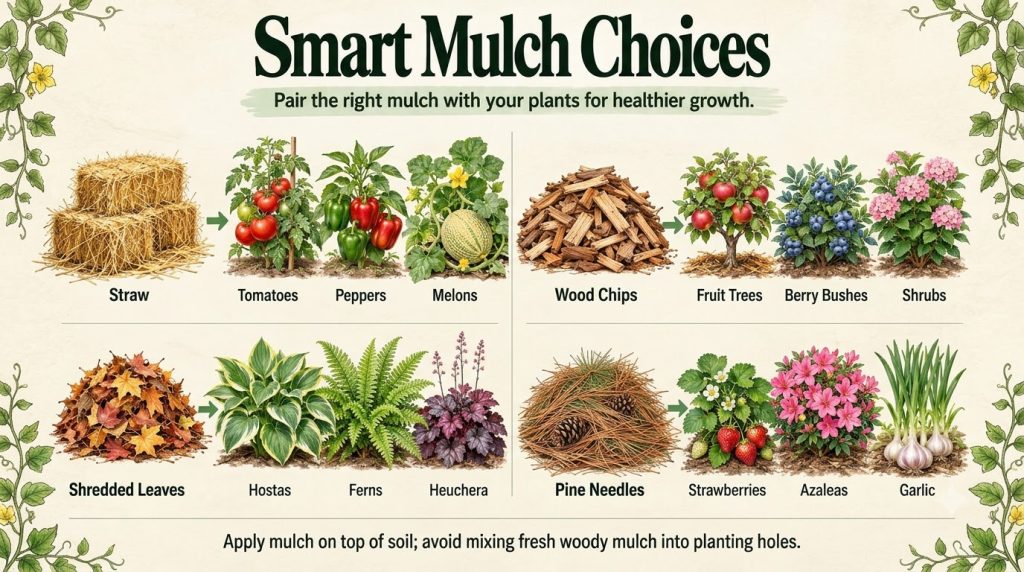
- Best Pairings: Trees, Shrubs, Perennials
- Characteristics: Wood chips break down slowly, providing long-term benefits. They are excellent for retaining moisture, suppressing weeds, and preventing soil compaction in established beds. Their neutral pH makes them suitable for a wide range of plants.
- Application: Apply a 2-4 inch layer around trees, shrubs, and perennial beds, keeping the mulch a few inches away from the plant stems or tree trunks to prevent moisture buildup and potential rot (avoid ‘volcano mulching’).
- Practical Tip: Replenish wood chips every 1-3 years as they slowly decompose. Using aged wood chips is often preferable as fresh wood chips can temporarily tie up nitrogen in the soil as they break down, which can sometimes be a concern for young or very hungry plants.
2. Pine Needles: The Acid-Loving Ally
Pine needles, or pine straw, are a lightweight and effective mulch, particularly favored for specific plant communities. They interlock, creating a stable layer that resists washing away and allows water to penetrate easily.
- Best Pairings: Blueberries, Rhododendrons, Azaleas, Conifers, and other acid-loving plants
- Characteristics: Pine needles slowly acidify the soil as they decompose, which is highly beneficial for plants that thrive in a lower pH environment. They provide excellent weed suppression and moisture retention, and their light weight makes them easy to spread.
- Application: Spread a 2-4 inch layer around plants. Their natural weight helps them stay in place, making them a good choice for sloped areas.
- Practical Tip: Monitor your soil pH every few years, especially if growing plants with specific pH requirements. Pine needles are ideal for USDA Zones 3-9 where these acid-loving plants are commonly grown.
3. Straw Mulch: The Vegetable Garden Essential
Straw mulch, typically from wheat, oat, or barley, is a fantastic choice for annual plantings, especially in vegetable gardens. It’s light, airy, and decomposes relatively quickly, adding organic matter to the soil.
- Best Pairings: Vegetables, Strawberries, Annuals
- Characteristics: Straw is excellent for keeping fruits like strawberries and tomatoes clean by preventing contact with soil. It helps regulate soil temperature, protects against soil splash (reducing disease transmission), and conserves moisture. Its light color also reflects some sunlight, keeping the soil cooler in intense heat.
- Application: Apply a 3-6 inch layer around established plants. For seeds or small seedlings, wait until they are a few inches tall before mulching to prevent smothering.
- Practical Tip: Always use weed-free straw, not hay, which often contains weed seeds. This is particularly crucial in vegetable beds where weed competition can significantly impact yields. Reapply as needed throughout the growing season, typically once or twice.
4. Leaf Mulch: The Natural Soil Builder
Leaf mulch, made from shredded or whole leaves, is a gardener’s gold. It’s often free, readily available in autumn, and mimics the natural decomposition processes found in forests. Leaves are a rich source of organic matter, returning vital nutrients to the soil.
- Best Pairings: Shade Plants, Hostas, Ferns, woodland gardens, perennial borders
- Characteristics: Leaf mulch decomposes relatively quickly, enriching the soil with nutrients and improving its structure. It’s excellent for suppressing weeds and retaining moisture, and its natural appearance blends seamlessly into the garden.
- Application: Shredded leaves are ideal as they break down faster and are less likely to mat and repel water. Apply a 2-4 inch layer around plants. If using whole leaves, a slightly thicker layer (up to 6 inches) can be used, especially in beds where they can gradually settle.
- Practical Tip: Collect and shred leaves in the fall to create a valuable resource for your garden. This is a sustainable gardening practice that reduces waste and builds healthy soil.
Common Mulching Mistakes to Avoid
Even with the best intentions, it’s easy to make mulching errors that can harm your plants rather than help them. Being aware of these common pitfalls can save you a lot of trouble:
- Volcano Mulching: Piling mulch high against the trunk of a tree or the stem of a shrub creates a ‘mulch volcano.’ This traps moisture against the bark, leading to rot, encourages pest infestations, and can choke the plant’s roots. Always keep mulch a few inches away from the main stem or trunk, creating a donut shape.
- Too Thick a Layer: While mulch is good, too much can be detrimental. Layers exceeding 4-6 inches can suffocate roots, prevent water from reaching the soil, and create anaerobic conditions. Aim for a consistent 2-4 inch layer for most applications.
- Using Untreated Wood Products: Avoid using wood products from diseased trees or those treated with chemicals, as these can introduce pathogens or harmful substances into your garden.
- Ignoring Soil Conditions: Don’t just apply mulch without considering your existing soil. If your soil is heavily compacted, address that first, or the mulch won’t help with water penetration.
- Mulching Wet Soil: Applying mulch over overly wet soil can trap excessive moisture, leading to fungal issues and root rot, especially for plants that prefer well-drained conditions.
Tailoring Mulch Choices Across US Climates
While the general principles of mulching remain consistent, regional climates and USDA Hardiness Zones (which indicate winter cold tolerance) can influence your choices and application times. In colder zones (e.g., Zones 3-5), a thicker layer of mulch in fall can provide crucial insulation for perennial roots, protecting them from deep freezes and frost heave. In warmer zones (e.g., Zones 9-11), mulch is vital year-round for moisture retention and keeping soil temperatures cool during scorching summers. Gardeners in areas with heavy rainfall might opt for mulches that allow for good water penetration, like pine needles, while those in drier climates will prioritize materials excellent at moisture retention.
Always consider your local microclimate, typical rainfall, and specific plant needs. Consulting your local extension office can provide invaluable, tailored advice for your region.
Cultivate a Healthier Garden, One Layer at a Time
Mulching is a simple yet powerful technique that every gardener can master. By understanding the unique properties of different mulches and pairing them with the right plants, you’re not just covering the soil; you’re actively building a healthier, more productive, and more resilient garden ecosystem. From suppressing weeds to conserving water and enriching your soil, the benefits are clear and long-lasting. So, take a moment to assess your garden’s needs, choose your mulch wisely, and get ready to enjoy the rewards of your thoughtful efforts.