Is Your Kitchen Full of Grease and Grime?
Dealing with stubborn grease and cooked-on grime in the kitchen can be a real headache. Many commercial cleaners promise results but often come with harsh chemicals and strong fumes. What if your kitchen’s best cleaner was already in your pantry?
This simple DIY mix uses everyday household ingredients to become a secret weapon for tackling tough messes, leaving surfaces sparkling without the need for harsh chemicals. It’s a practical and affordable way to give your kitchen that fresh, natural clean you’ve been looking for.
What You’ll Need
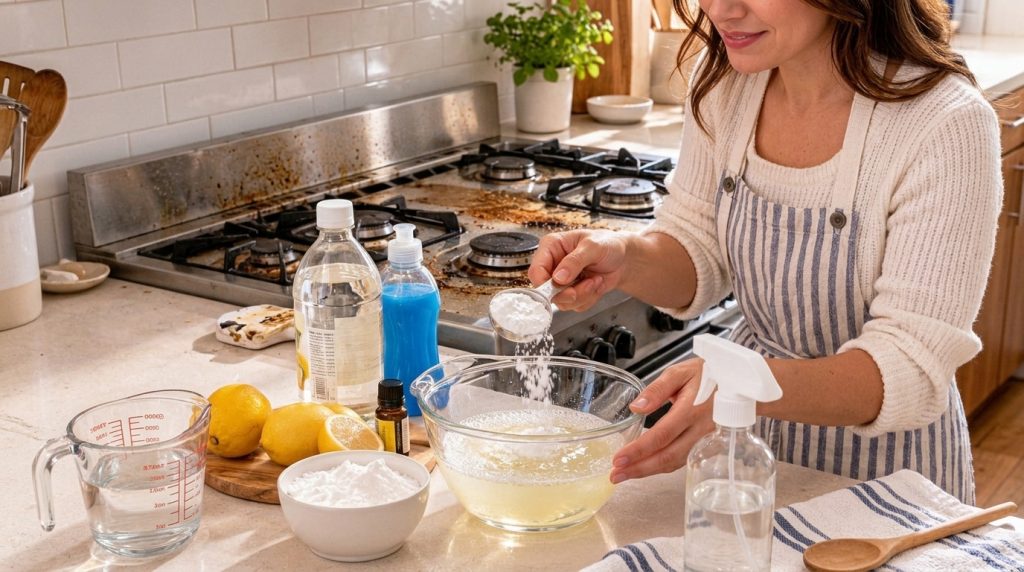
Ingredients:
- 1 cup white vinegar
- ½ cup baking soda
- 1 tablespoon liquid dish soap (biodegradable is a great choice)
- 10-15 drops essential oil (lemon, tea tree, or orange are excellent for cleaning and scent)
- 1 fresh lemon (optional, for extra juice or scrubbing)
Tools:
- Medium glass or plastic mixing bowl
- Measuring cups and spoons
- Stirring utensil (spoon or whisk)
- Sponge or scrub brush
- Clean cloths (one for wiping, one for buffing dry)
- Spray bottle (optional, for diluting for lighter cleaning)
Why This DIY Can Be Useful
This natural cleaning solution leverages the power of common household items:
- White Vinegar: An excellent acid that helps cut through grease, dissolve mineral deposits, and acts as a natural disinfectant.
- Baking Soda: A mild abrasive that gently scrubs away grime without scratching surfaces, and it’s fantastic for deodorizing. When combined with vinegar, the fizzing reaction helps lift dirt.
- Liquid Dish Soap: A surfactant that breaks down oils and grease, allowing them to be easily wiped away.
- Essential Oils: Provide a pleasant, natural scent and some, like tea tree or lemon, have additional antibacterial or antiviral properties.
- Lemon: Adds natural acidity for cutting grease and leaves behind a fresh, clean citrus aroma.
How to Make It
- Pour the 1 cup of white vinegar into your mixing bowl.
- Add 1 tablespoon of liquid dish soap to the vinegar.
- Gradually add the ½ cup of baking soda to the mixture. Be aware that it will fizz and bubble up when combined with the vinegar. Stir gently as you add to keep it from overflowing.
- Once the fizzing calms down, add 10-15 drops of your chosen essential oil. If using, squeeze the juice from half of a fresh lemon into the bowl.
- Stir all ingredients until you have a smooth, spreadable paste. If it’s too thick, add a tiny bit more vinegar; if too thin, a pinch more baking soda.
How to Use It
This versatile cleaner can tackle various kitchen messes:
- For Tough Grease & Grime: Apply the paste directly to the soiled surface (like stovetops, oven doors, or greasy backsplash areas). Use your fingers, a spoon, or a brush to spread an even layer.
- Let it Work: Allow the paste to sit for 5 to 10 minutes, giving the ingredients time to break down the grime. For very stubborn, baked-on stains, you might extend this to 15-20 minutes.
- Scrub: Using a damp sponge or scrub brush, gently scrub the area in circular motions. You should see the grime lifting away. For extra scrubbing power, you can use the cut half of a fresh lemon as a scrubber.
- Wipe Clean: Use a clean, damp cloth to wipe away the paste and loosened grime. Rinse your cloth frequently.
- Finish: Follow up with a dry cloth or microfiber towel to buff the surface for a streak-free shine.
- For Lighter Cleaning: For general wiping of countertops or inside the microwave, you can dilute a small amount of the paste with water in a spray bottle. Shake well before each use, spray, and wipe.
What to Expect
You can expect this DIY cleaner to effectively cut through everyday grease, food splatters, and light-to-moderate baked-on grime, leaving your kitchen surfaces noticeably cleaner and smelling fresh. While it’s highly effective for many tasks, extremely old or deeply ingrained stains might require a bit more elbow grease or multiple applications. It provides a natural, pleasant clean without the strong chemical odors.
Helpful Tips
- Patch Test: Always test the cleaner on an inconspicuous area first, especially on new or delicate surfaces, to ensure no discoloration or damage occurs.
- Warm Surfaces: Applying the cleaner to slightly warm (but not hot) surfaces can sometimes enhance its effectiveness.
- Dedicated Cloths: Keep a set of cloths specifically for cleaning to avoid cross-contamination.
- For Shine: A final buff with a dry microfiber cloth can leave surfaces gleaming and streak-free.
Important Notes / Safety
- Ventilation: Although natural, it’s always good practice to ensure proper ventilation when cleaning.
- Surface Compatibility: Be cautious when using vinegar on natural stone surfaces like granite, marble, or quartz, as the acidity can etch or dull the finish over time. This cleaner is best suited for stainless steel, laminate, sealed tiles, and porcelain.
- Storage: Store any leftover paste in an airtight container in a cool, dark place. Due to its natural ingredients, it’s best to use it within a week or two for maximum effectiveness. If you’ve diluted it in a spray bottle, use it within a few days, as the essential oils can lose potency and the solution may separate.
- Do Not Mix with Bleach: Never combine this or any other cleaner containing vinegar with bleach, as it can create dangerous chlorine gas.