Are you dreaming of a vibrant garden bursting with healthy plants and abundant harvests? The secret often lies beneath your feet: in the soil! Healthy soil is the foundation of a thriving garden, but many of us struggle with common issues like compaction, nutrient depletion, and pesky weeds. What if we told you there’s a natural, easy-to-implement solution that can transform your garden’s foundation? Enter cover crops!
Cover crops are non-cash crops grown primarily to benefit the soil and the ecosystem, rather than for harvest. They’re nature’s unsung heroes, working tirelessly to improve soil structure, fertility, and overall health. Let’s dive into how these green marvels can help you overcome common soil challenges and set the stage for your best harvests yet.
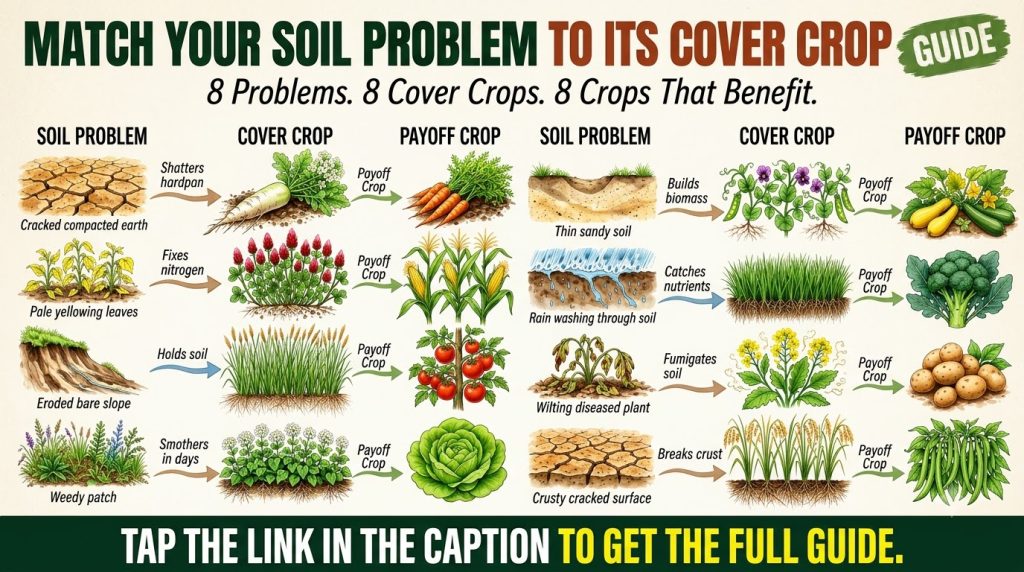
The Magic of Cover Crops: Solving 8 Common Soil Problems
Cover crops are like a natural renovation crew for your garden. They address a wide range of issues, preparing your soil to nourish your main crops beautifully. Here are 8 common soil problems they can help you conquer:
1. Battling Soil Compaction
Problem: Hard, dense soil makes it difficult for plant roots to grow and for water and air to penetrate. This often leads to poor drainage and stunted plant growth.
Cover Crop Solution: Deep-rooted crops like tillage radishes (also known as daikon radishes) are champions at breaking up compacted soil. Their strong taproots bore deep into the earth, creating natural channels that improve aeration and water infiltration. When they decompose, they leave behind these pathways, making it easier for your subsequent crops’ roots to thrive.
2. Boosting Low Nitrogen Levels
Problem: Nitrogen is a vital nutrient for lush, green plant growth, but it’s often depleted in garden soil.
Cover Crop Solution: Legumes such as clover (crimson, white, or red) and peas (field peas) are incredible nitrogen fixers. They host special bacteria in their root nodules that convert atmospheric nitrogen into a form plants can use. When these cover crops are tilled into the soil, they release this stored nitrogen, enriching the soil naturally and reducing the need for synthetic fertilizers.
3. Suppressing Pesky Weeds
Problem: Weeds compete with your garden plants for light, water, and nutrients, diminishing your harvest.
Cover Crop Solution: Densely growing cover crops like cereal rye or other grain varieties act as a living mulch. They outcompete weeds for resources and sunlight, effectively smothering them before they can establish. Some cover crops even release compounds that inhibit weed seed germination, offering a natural form of weed control.
4. Preventing Soil Erosion
Problem: Exposed soil is vulnerable to erosion by wind and rain, leading to loss of valuable topsoil and nutrients.
Cover Crop Solution: Grassy cover crops like cereal rye, oats, or wheat establish extensive fibrous root systems that hold the soil in place. Their dense foliage also provides a protective barrier against the elements. This living blanket prevents soil particles from being washed or blown away, preserving your garden’s precious topsoil.
5. Increasing Organic Matter
Problem: Soil lacking organic matter can be lifeless, with poor structure and nutrient retention.
Cover Crop Solution: Almost any cover crop, when grown and then incorporated back into the soil, contributes significant amounts of organic matter. As the plant material decomposes, it enriches the soil, creating a healthier environment for beneficial microbes, improving soil structure, and increasing its capacity to hold water and nutrients.
6. Scavenging Essential Nutrients
Problem: Nutrients can leach deep into the soil profile, becoming unavailable to shallow-rooted garden plants.
Cover Crop Solution: Deep-rooted cover crops, including many grasses and radishes, act as nutrient scavengers. They can pull up leached nutrients from lower soil layers, storing them in their plant tissue. When these cover crops are turned into the soil, those nutrients are released back into the topsoil, making them available for your next round of cash crops.
7. Enhancing Soil Structure and Water Infiltration
Problem: Poor soil structure leads to issues like waterlogging or rapid drying out, both detrimental to plant health.
Cover Crop Solution: A diverse mix of cover crops, with varying root depths and types (fibrous, taproot), works synergistically to improve overall soil structure. They create a network of channels and aggregates that enhance water penetration, retention, and drainage. This leads to a more balanced moisture environment for your plants.
8. Managing Pests and Diseases
Problem: Certain soil-borne pests and diseases can devastate garden plants year after year.
Cover Crop Solution: Specific cover crops, particularly brassicas like mustard, can act as biofumigants. When these plants are chopped and incorporated into the soil, they release compounds that can suppress soil-borne pathogens and nematodes, naturally reducing the incidence of certain diseases and pests for your subsequent crops.
Reap the Rewards: Benefits for Your Payoff Crops
By investing in cover crops, you’re not just improving your soil; you’re directly investing in the success of your future harvests. Your ‘payoff crops’—whether they’re carrots, corn, tomatoes, cabbage, squash, broccoli, potatoes, or beans—will enjoy:
- Stronger Root Development: Thanks to improved soil structure and reduced compaction.
- Increased Nutrient Availability: With nitrogen fixation and nutrient scavenging in action.
- Less Competition from Weeds: Allowing your crops to get all the resources they need.
- Better Water Management: Ensuring plants get the right amount of moisture.
- Healthier Growth: Due to a balanced, microbe-rich soil environment and reduced pest pressure.
Getting Started with Cover Crops
Ready to try cover crops in your garden? It’s easier than you think! Consider planting them in vacant garden beds during off-seasons, or even as an understory crop with certain plants. Research which cover crops are best suited for your specific soil issues and climate, and watch your garden transform into a thriving oasis.
Embrace the power of cover crops and unlock the full potential of your garden. Your soil, and your future harvests, will thank you!