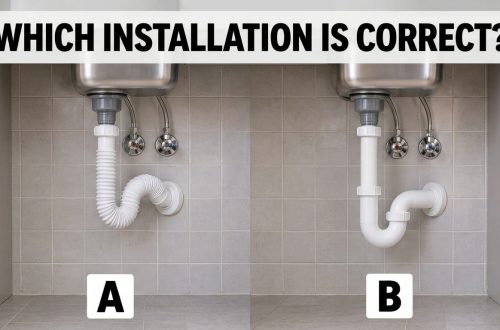
Can You Spot the Correct Kitchen Sink Drain Installation?
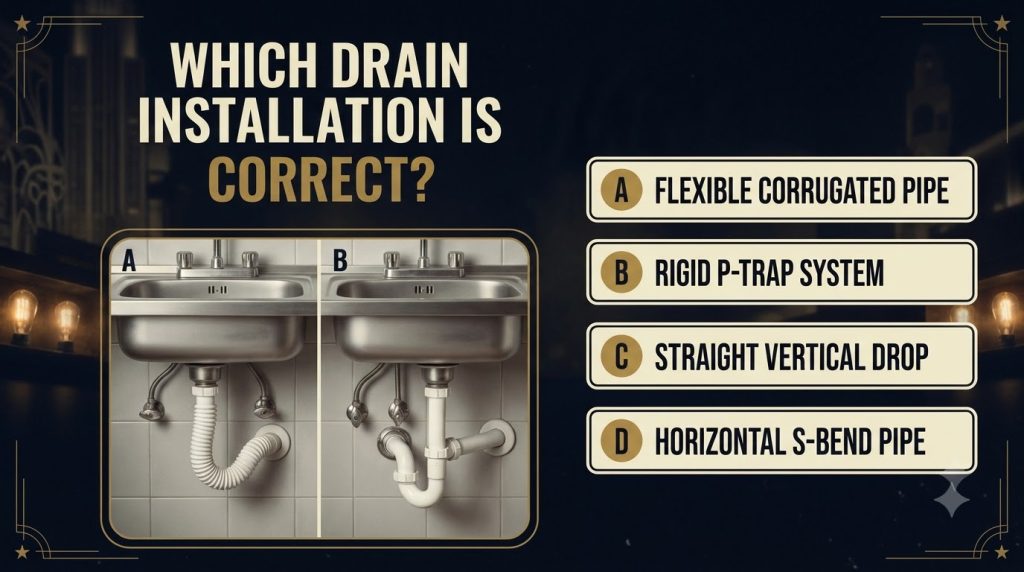
Time to test your home improvement knowledge with this common plumbing challenge! If you picked option B, you’re absolutely right! The correct installation for a kitchen sink drain is **B — the rigid P-trap pipe**! 🎉
Why the Rigid P-trap Is the Right Answer
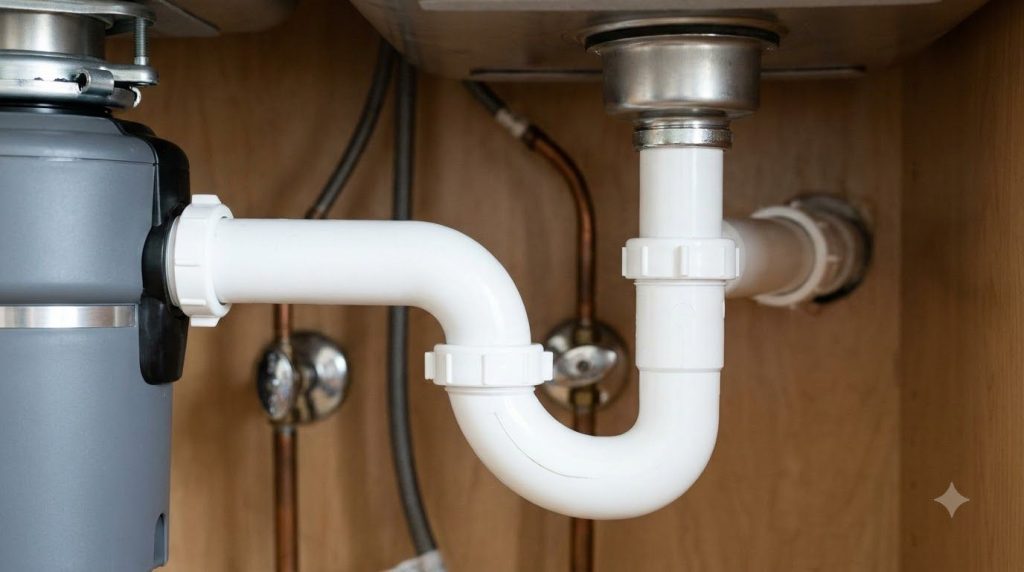
Option B, showcasing a rigid P-trap pipe, represents the standard and correct plumbing practice for a kitchen sink. The P-trap is a critical component that serves several vital functions in your home’s drainage system. Its unique U-bend design always retains a small amount of water, creating a crucial barrier that prevents unpleasant sewer gases and odors from entering your home through the drain.
Quick Facts About Proper Drain Installation
Essential for Health and Safety
The water seal in a P-trap is not just for odors; it’s a critical health safeguard. Without it, harmful gases and even insects from the sewer system could easily enter your living space. A properly installed rigid P-trap ensures this barrier remains intact, protecting your household.
Designed for Efficiency and Durability
Rigid pipes with smooth interior surfaces, like those used in a P-trap system, are far less prone to clogging than flexible, corrugated alternatives. The smooth walls allow waste and debris to flow freely, minimizing buildup and blockages. Their sturdy construction also means greater longevity and fewer leaks over time compared to flimsy flexible pipes.
Easier Maintenance and Compliance
While P-traps are designed to prevent clogs, they are also built for easy access when blockages do occur. The trap can be easily removed and cleaned, or a plumber’s snake can be fed through. Moreover, rigid P-trap installations meet most plumbing codes, ensuring your home’s systems are up to standard and safe.
Why This Quiz Was Tricky
Many people might be tempted by option A, the flexible, corrugated drain pipe, because it appears easier to install or seems like a convenient solution for tight spaces. However, these flexible pipes are plumbing headaches waiting to happen. Their ribbed interior surfaces easily trap food particles, grease, and hair, leading to frequent clogs and bacterial growth. They also don’t maintain a consistent water seal as effectively as rigid P-traps, making them unreliable for blocking sewer gases.
More Context Behind the Answer
Proper plumbing is essential for any home, influencing everything from hygiene to structural integrity. While DIY solutions can be appealing, understanding basic principles like the function of a P-trap is crucial. Always prioritize systems that adhere to local plumbing codes, as these standards are designed to ensure safety, efficiency, and long-term reliability for your home.
Final Answer
The correct installation is **B. the rigid P-trap pipe**.
Did you guess correctly? 👀 What’s one common home repair task you always try to DIY?