Everyone dreams of that soft, bright, youthful glow. The good news is that you do not need a crowded shelf of expensive products to start caring for your skin. Many home beauty staples are already sitting in your bathroom or kitchen, and a few simple, consistent habits can make your skin look fresher and more even over time.
What Really Makes Skin Look Youthful
Before you try any homemade recipe, it helps to understand what actually supports younger-looking skin. Skin tends to look more youthful when it stays well hydrated, protected from sun damage, and gently cared for. Fine lines and dullness often become more noticeable when the skin barrier is dry, irritated, or exposed to UV light day after day.
This means the most effective anti-aging habits are often the simplest ones: daily sunscreen, a gentle cleanser, a moisturizer that suits your skin type, and enough sleep. A homemade treatment can be a pleasant addition to this foundation, but it works best as a supporting step rather than a miracle fix.
Common Home Ingredients and How They Are Used
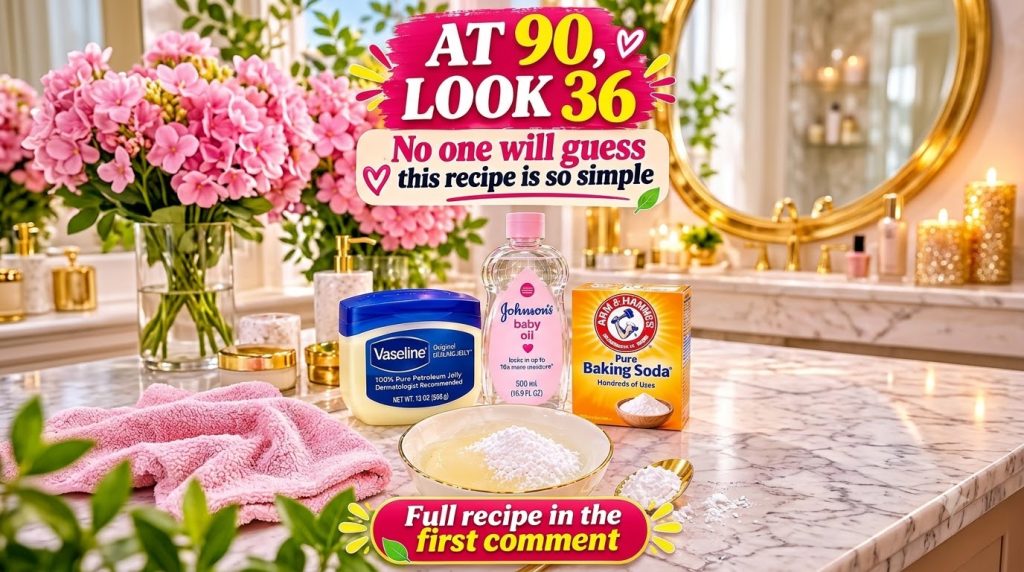
Many DIY beauty recipes circulating online use the same few ingredients, and each one behaves very differently on the skin.
- Petroleum jelly (Vaseline): This is an occlusive, meaning it helps seal in moisture. It is often used on dry patches, lips, and heels, and it can be a useful finishing layer over a hydrating routine.
- Baby oil: Most baby oils are mineral oil based. They can soften the skin, but some people find they feel heavy or clog pores, especially on oily or acne-prone skin.
- Baking soda: This is alkaline and can be quite harsh. It may disrupt the skin’s natural acid mantle and cause redness, stinging, or dryness, particularly on the face and on mature or sensitive skin.
Important Safety Tips Before You Start
Trying a new home recipe should always be done with care. Following these simple steps can help you avoid irritation:
- Patch test any mixture on a small area, such as the inner forearm or behind the ear, and wait at least 24 hours.
- Avoid applying baking soda mixtures to the face, around the eyes, or on broken skin.
- Keep mixtures clean, use fresh tools, and store leftovers properly, or simply make small amounts each time.
- Stop using any product that causes burning, persistent redness, itching, or swelling, and consult a dermatologist if symptoms continue.
If you have a skin condition such as eczema, rosacea, or active acne, check with a healthcare professional before using home remedies on your face.
A Gentle Everyday Routine to Support Glowing Skin
Instead of relying on one dramatic recipe, consider a calm and consistent routine. In the morning, cleanse gently, apply a light moisturizer, and finish with a broad-spectrum sunscreen. In the evening, cleanse again, apply a nourishing moisturizer, and if your skin tolerates it, add a simple occlusive layer on dry areas to lock in hydration. Give your routine several weeks before judging results, because skin renews slowly.
Hydration from within also matters. Drinking enough water, eating colorful fruits and vegetables, and getting adequate protein all support overall skin health.
Final Thoughts
The real secret to youthful-looking skin is not a single viral ingredient. It is steady care, sun protection, gentle habits, and realistic expectations. Use everyday ingredients thoughtfully, listen to your skin, and enjoy the process of building a routine that feels good to you. If you would like to explore more simple and safe beauty ideas, keep following along for practical tips you can try at home.