Container plants depend entirely on the soil you give them. Unlike plants growing in a garden bed, potted plants cannot send roots deep into the ground to find water and nutrients, so the mix in the pot has to do most of the work. Many gardeners find that plain garden soil becomes compacted, drains poorly, and struggles to support healthy growth in a container. A thoughtfully built potting mix can make a noticeable difference.
Why Garden Soil Often Falls Short in Pots
Garden soil is dense by nature. Once it is packed into a container, it holds too much water, leaves little room for air, and can become waterlogged after heavy watering. Roots need oxygen just as much as they need moisture, so poor aeration can slow growth and make plants more vulnerable to root problems. Garden soil may also carry weed seeds, pests, or disease organisms that you would rather keep out of your containers.
What Makes a Good Potting Mix
Most successful container blends share a few key qualities:
- Drainage: Excess water should flow through the pot freely so roots do not sit in soggy soil.
- Aeration: Light materials create air pockets that help roots breathe.
- Moisture retention: The mix should hold enough water to keep roots hydrated between waterings.
- Nutrition: Compost or slow-release organic amendments provide nutrients over time.
Tailoring the Blend to Each Plant
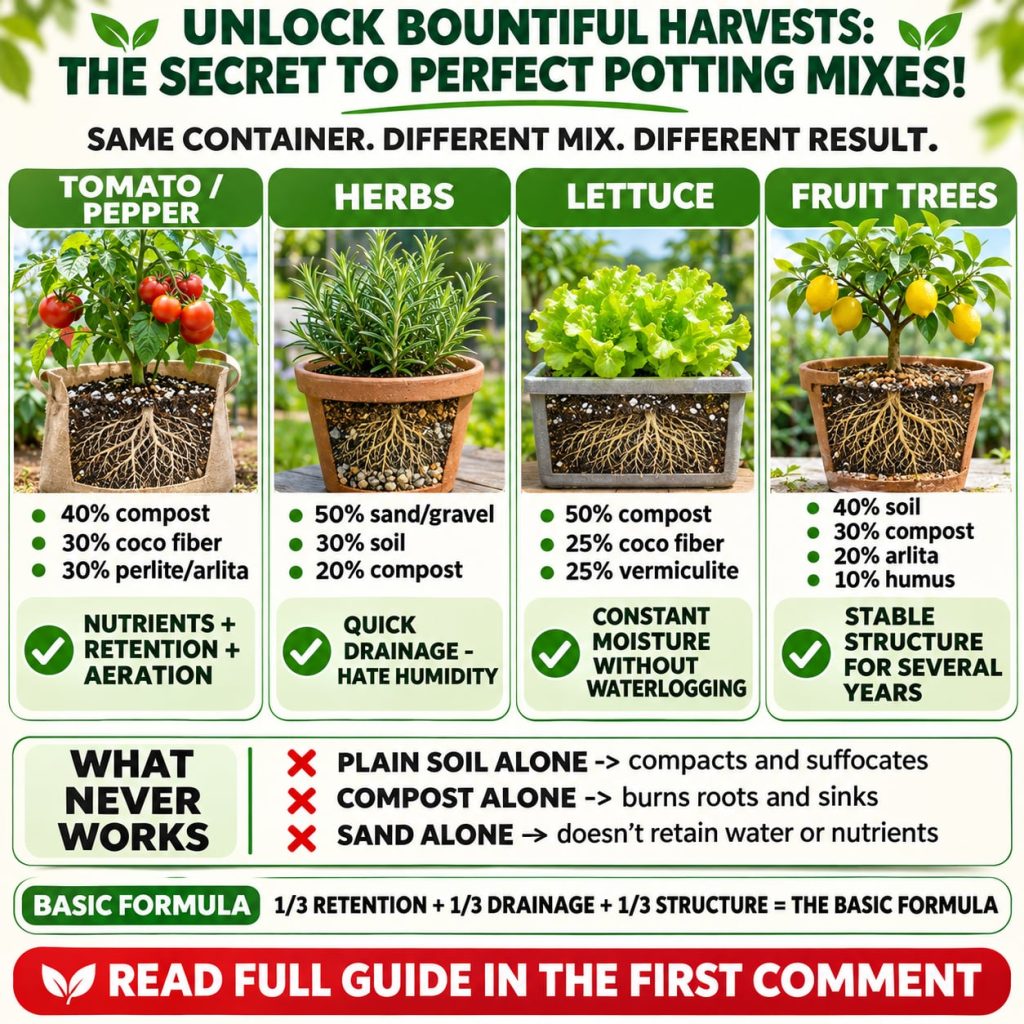
Different plants have different needs, so a single recipe rarely suits everything in your garden. Adjusting the mix to the plant can help each one settle in and grow well.
Tomatoes
Tomatoes are heavy feeders and grow large root systems. They do best in a rich, well-draining mix with plenty of compost, which supplies steady nutrition through the growing season. Adding a little extra perlite or coarse material can help prevent compaction in larger pots.
Herbs
Many herbs, such as thyme, rosemary, and lavender, prefer leaner, fast-draining mixes. Too much compost can make them grow soft and leggy. Herbs like basil and parsley, on the other hand, usually enjoy a moisture-retentive blend with moderate fertility.
Lettuce
Lettuce has shallow roots and grows best in a loose, evenly moist mix. A blend with good organic matter helps keep the surface from drying out too quickly, which is useful in shallow trays or window boxes.
Fruit Trees
Container fruit trees need a stable, well-aerated mix that can support a larger root ball for many years. Using a sturdier blend with good structure and slow-release nutrition helps the tree stay healthy as it grows. Repotting or refreshing the top layer of mix every season or two is often recommended.
A Simple Starter Blend
If you are new to custom mixes, you can begin with a basic formula and adjust it over time. Keep in mind that the exact proportions depend on your climate, your watering habits, and the plants you grow, so treat the following as a flexible starting point:
- Start with a base of good-quality peat-free potting compost or coir.
- Add perlite or pumice for drainage and air space.
- Mix in a portion of finished compost for organic nutrition.
- Blend thoroughly and moisten lightly before filling your containers.
Observe how your plants respond over the next few weeks. If water runs straight through without wetting the mix, add more moisture-retentive material. If pots stay soggy for days, add more drainage material next time.
Tips for Better Container Results
- Choose pots with drainage holes so excess water can escape.
- Refresh the top layer of mix each season to replenish nutrients.
- Water based on the feel of the mix rather than a fixed schedule.
- Keep a simple notebook of which blends work best for each plant.
Final Thoughts
Creating a custom potting mix is one of the most practical ways to improve your container garden. By matching the mix to your plants, you give roots the air, water, and nutrition they need to grow well. Start with a simple blend, observe your results, and refine it as you learn what your garden enjoys. Happy gardening!