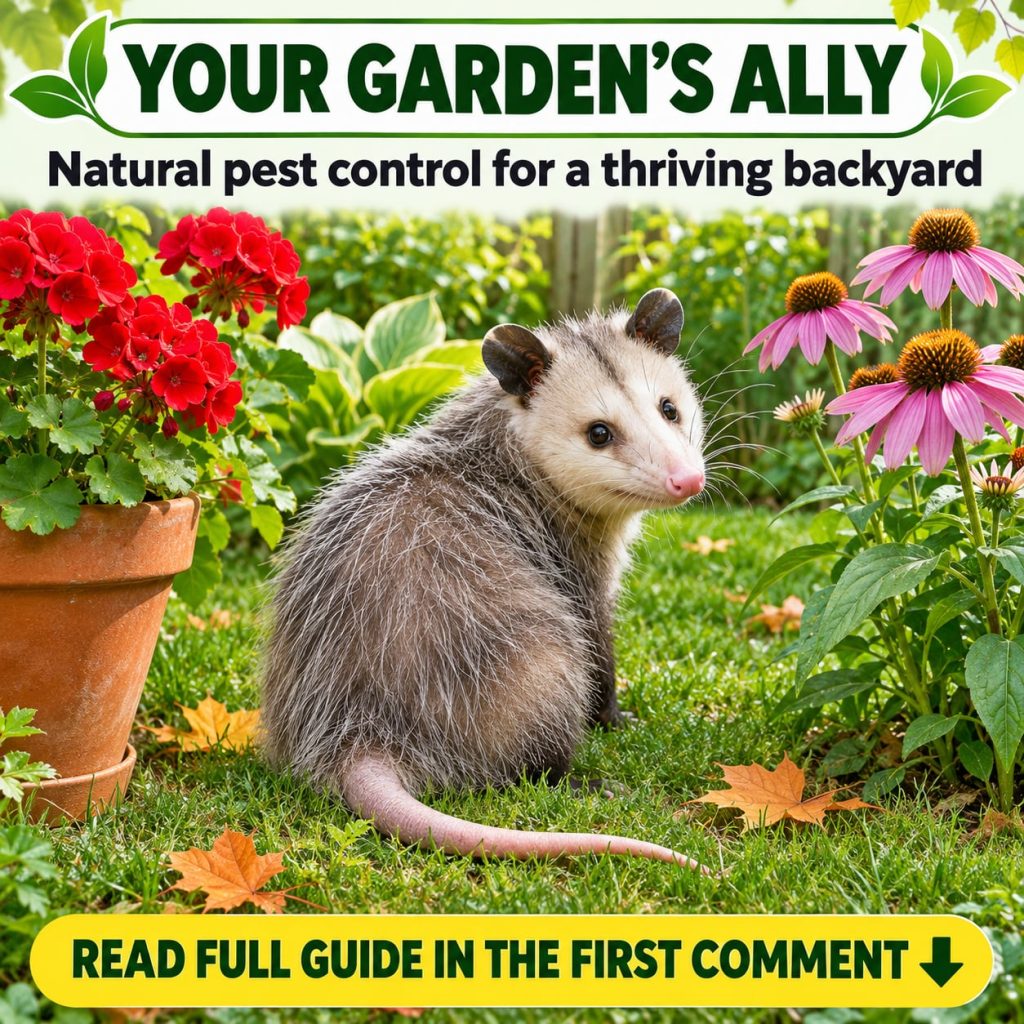
Opossums are often overlooked visitors, yet these shy, nocturnal animals can play a helpful role in a backyard ecosystem. If you have ever wondered how to reduce garden pests without relying only on sprays, learning how wildlife fits into your garden is a great place to start.
Why Opossums Visit Gardens
Opossums are omnivores, which means they eat a wide range of foods. They are most active at night and often search the ground for insects, slugs, snails, worms, fallen fruit, and other small snacks. Because they move through yards after dark, many gardeners only notice them when they spot a glimpse of a pale face or a long tail near the flower beds.
How Opossums Support Natural Pest Control
Many common garden pests are slow-moving or hide in damp places, making them easy targets for foraging wildlife. Opossums can help keep some of these populations in check in the following ways:
- Slugs and snails: These soft-bodied pests can quickly damage seedlings, leafy greens, and tender flowers. Opossums may eat them while searching the ground at night.
- Insects and larvae: Beetle grubs and other ground-dwelling insects can be part of their diet.
- Some ticks: Opossums groom their fur and may consume ticks they pick up, which is one reason they are sometimes considered helpful around homes.
It is important to be realistic, though. An opossum is not a complete pest solution, and it should not be relied on as your only method of controlling ticks or garden insects. Think of it as one small part of a balanced garden that already supports healthy soil and diverse plants.
Build a Garden That Welcomes Balance
Natural pest control works best when your garden offers a healthy environment for many living things. A few simple habits can make your backyard more welcoming to beneficial wildlife while protecting your plants:
- Keep leaf litter and compost tidy: Neat compost bins and well-maintained beds reduce hiding places for pests while still supporting soil life.
- Plant a diverse garden: Mixing flowers, herbs, and vegetables helps attract a broader range of helpful insects and wildlife.
- Use organic gardening practices: Healthy soil, mulching, and hand-picking pests can reduce the need for harsh chemicals.
- Protect pets and food sources: Store pet food indoors and use secure lids on garbage and compost containers.
Coexisting Safely With Wildlife
Opossums are generally shy and tend to avoid people, so the best approach is to observe them from a distance. Do not attempt to feed them, since food handouts can encourage them to linger near homes and may create problems for both people and animals. If an opossum seems injured, sick, or trapped, contact a local wildlife professional for safe guidance.
Final Thoughts
Opossums may not be the most glamorous garden guests, but they can be a useful part of a natural, balanced landscape. By combining healthy soil, diverse plantings, and respectful distance from wildlife, you can create a garden that thrives with less stress and more life.