Before you toss your next batch of vegetable peels or coffee grounds into the trash, consider giving them a second life in your garden. Using kitchen scraps as a gentle, homemade soil amendment is a simple, budget-friendly way to reduce household waste and add organic matter to your beds and containers. It is also a great introduction to sustainable gardening for beginners.
Why Kitchen Scraps Can Support Your Plants
Many food leftovers contain nutrients and minerals that plants use over time. As these materials break down in soil or compost, they gradually release elements such as potassium, calcium, and nitrogen. The effect is slow and mild, so think of kitchen scraps as a supporting part of a regular plant care routine rather than a quick fix.
Results depend on your soil, climate, and the plants you grow. Good soil structure, adequate watering, sunlight, and proper drainage still matter most.
Common Kitchen Scraps and How to Use Them
Coffee Grounds
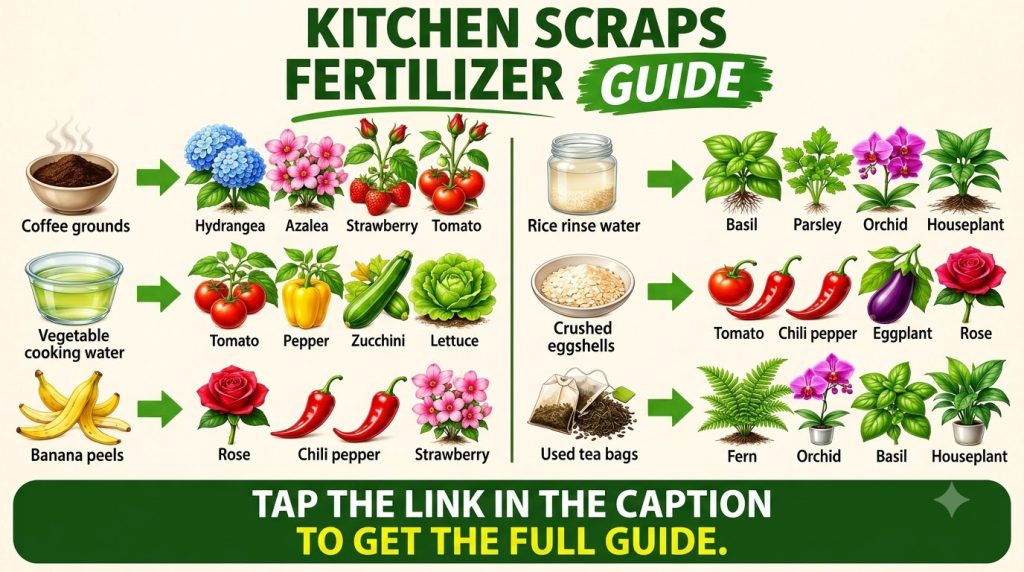
Used coffee grounds are popular with gardeners who grow acid-loving plants such as hydrangeas and blueberries. Mix them lightly into the top layer of soil or add them to your compost pile. Use a thin layer rather than a thick crust, since dense grounds can compact and slow water absorption.
Banana Peels
Banana peels are rich in potassium, which supports flowering and fruiting. Chop them into small pieces and bury them a few centimeters under the soil near tomatoes, peppers, or flowering annuals. You can also dry and grind them into a powder before mixing them into compost.
Crushed Eggshells
Eggshells provide calcium carbonate, which breaks down very slowly. Rinse the shells, let them dry completely, and grind them into a fine powder so they decompose more easily. Eggshells are a gentle addition to compost and can be worked into the soil around vegetables.
Rice Water and Cooking Water
Water left over from rinsing rice or boiling vegetables can be useful when it is plain and cooled. Avoid water that contains salt, oil, or heavy seasoning, as these can harm soil life and plant roots. Use cooled, unseasoned water to lightly water your plants, and do not overdo it.
Used Tea Bags and Tea Leaves
Used tea leaves add organic material and help improve soil texture as they decompose. Remove any staples or plastic from tea bags before adding them to compost or the soil surface. Herbal and plain black or green teas are generally the easiest to work with.
Simple Steps to Get Started
- Collect clean, unseasoned scraps in a small container with a lid in your kitchen.
- Dry or grind hard materials such as eggshells to help them break down faster.
- Add scraps to a compost bin, or bury small pieces in garden soil away from the main roots.
- Cover the material with soil or dry leaves to reduce odors and discourage pests.
- Let the material break down for several weeks before expecting noticeable changes.
Tips for Success and Safety
- Avoid meat, dairy, oily foods, and heavily salted leftovers, which can attract pests and cause odors.
- Use moderate amounts. Too much organic material in one spot can create problems for plant roots.
- Keep a balance of greens such as fruit and vegetable scraps and browns such as dried leaves and paper.
- Test your soil occasionally if you want to understand its needs more precisely.
Bringing It All Together
Turning kitchen scraps into a homemade soil boost is an easy habit that rewards both your garden and the environment. Start with one or two materials, such as coffee grounds or banana peels, observe how your plants respond, and expand from there. With patience and consistent plant care, your garden can become a greener and more productive space.