Many houseplants struggle not because of poor light or forgetful watering, but because they are sitting in the wrong container. The pot you choose affects how much water the roots receive, how much air they can breathe, and how much room they have to grow. Getting this right is one of the simplest ways to keep your indoor garden healthy.
Why Pot Choice Matters for Plant Health
Roots need a balance of moisture and oxygen. When a pot holds too much water, roots can rot. When it dries out too quickly, plants can wilt between waterings. The material, size, shape, and drainage of a pot all influence this balance.
Pot size is equally important. A container that is far too large holds excess soil that stays wet for long periods, while a container that is too small restricts root growth and leads to frequent watering.
Common Pot Types and Who They Suit
Self-Watering Pots
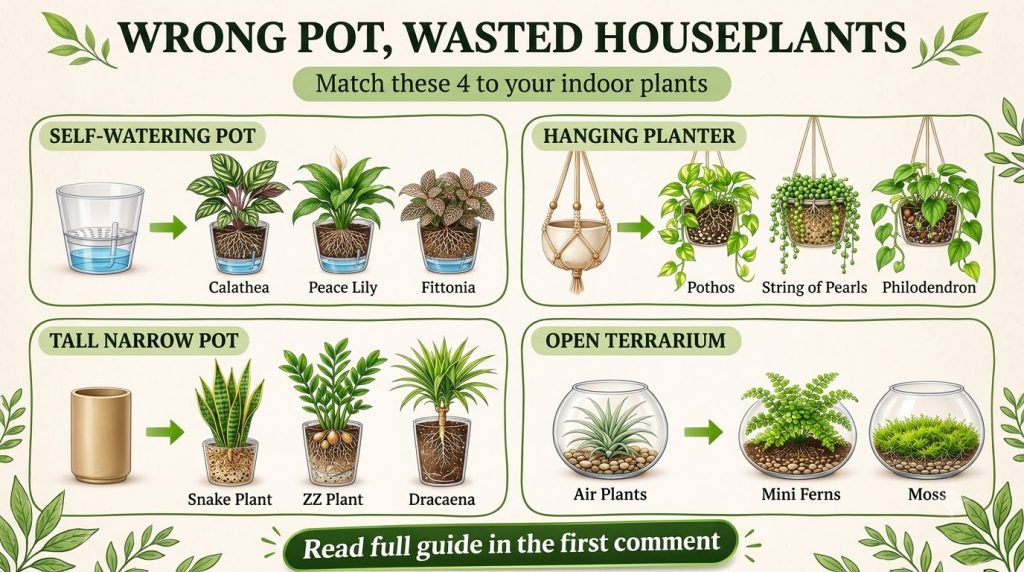
Self-watering pots include a reservoir beneath the soil that feeds moisture to the roots as needed. They work well for plants that prefer consistently moist soil, and they are helpful for busy gardeners who forget to water regularly. Use them carefully with plants that dislike soggy roots, such as many succulents.
Hanging Planters
Hanging planters save floor and shelf space and show off trailing plants beautifully. Choose one with drainage holes and a saucer or liner so water does not drip onto furniture. Trailing plants such as pothos and string of pearls often thrive in this style.
Tall Narrow Pots
Tall, narrow pots suit plants with deep root systems or upright growth habits. They fit well in small spaces and corners, and they help reduce the risk of overwatering because the soil dries more evenly from top to bottom.
Open Terrariums and Glass Containers
Open terrariums and clear containers let you see the roots and monitor moisture levels easily. They are best for humidity-loving plants and should have good airflow and a drainage layer to prevent rot. Because they can trap water, check them often.
Essential Features to Look For
-
Drainage holes so excess water can escape.
-
A size slightly larger than the root ball, with room for growth.
-
Material that matches your watering habits, such as terracotta for fast drying or glazed ceramic for moisture retention.
-
A saucer or tray that protects surfaces without letting plants sit in standing water.
Simple Tips for Repotting Success
-
Check the roots when you notice slow growth, yellowing leaves, or roots growing through drainage holes.
-
Move the plant to a pot only one to two inches wider than the current one.
-
Use fresh, well-draining potting mix suited to the plant type.
-
Water lightly after repotting and keep the plant out of harsh direct sun for a few days.
Final Thoughts
The right pot is a small decision with a big impact. By matching the container to your plant’s needs, you can reduce common problems like root rot and dehydration, and enjoy a greener, more thriving home. Start by reviewing your current houseplants and see which ones might benefit from a new pot this season.