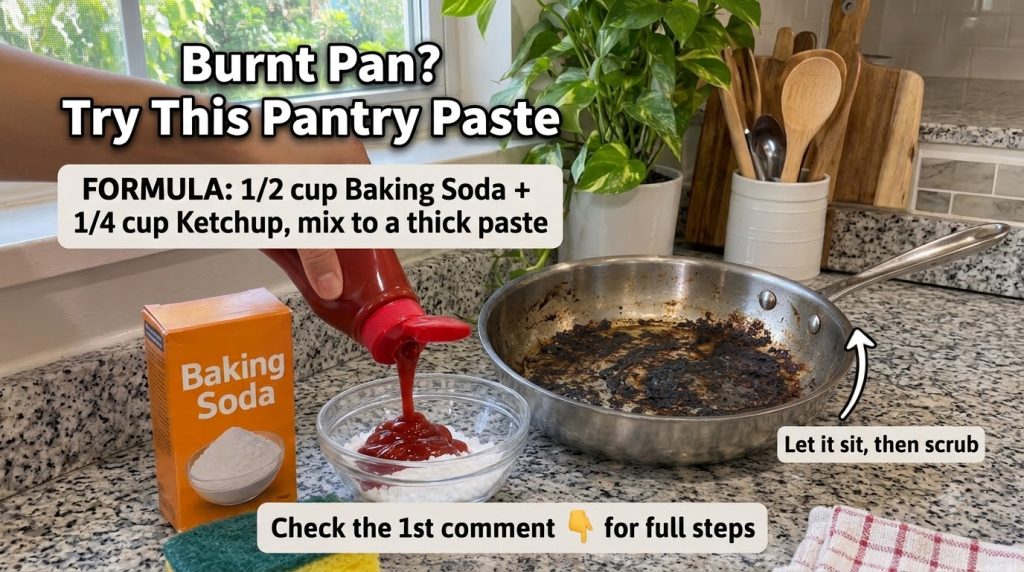
Burnt-on residue on a stainless steel pan can make good cookware look worn out. Scrubbing harder often leads to sore wrists and a pan that still has dark, stubborn marks. This simple paste made from two common kitchen staples is a practical first step to try before reaching for harsher products.
What You’ll Need
Paste Ingredients
- About 2 tablespoons baking soda
- About 1 tablespoon ketchup (adjust to get a thick, spreadable paste)
- A few drops of warm water, only if needed
Tools
- A small glass or ceramic bowl
- A spoon for mixing
- A non-scratch sponge or soft scrubbing pad
- Dish soap and warm water
- A soft cloth or towel for drying
Why This Method Can Help
Baking soda is a mild abrasive, so it can help lift loose residue when you rub it across a surface. Ketchup contains tomato and vinegar, which may help soften some of the baked-on grime so it releases more easily. Together, they form a thick paste that stays in place on the pan long enough to work. Results vary with how deep and old the burn marks are, so think of this as a gentle starting point rather than a guaranteed fix.
How to Make It
- Let the pan cool completely before you start. Hot cookware can cause injury and may react unevenly to cleaning products.
- Empty any loose food and rinse the pan with warm water to remove crumbs and grease.
- Spoon about 2 tablespoons of baking soda into the bowl.
- Add about 1 tablespoon of ketchup and stir until you have a thick paste with the texture of toothpaste. Add a few drops of water only if it is too dry.
How to Use It
- Spread a generous layer of the paste over the burnt areas, covering the scorch marks completely.
- Let it sit for 15 to 30 minutes. For heavier buildup, you can leave it for up to one hour, but do not let it dry out completely.
- Scrub gently in small circles using the non-scratch side of the sponge. Work in the direction of the grain if your pan has visible brushed lines.
- Rinse the pan well with warm water to remove all of the paste.
- Wash with a few drops of dish soap, rinse again, and dry with a soft towel to prevent water spots.
- If marks remain, repeat the process with fresh paste. Two or three rounds is usually enough to show whether the method is working for your pan.
What to Expect
You should see the dark residue loosen and lift, and many light to moderate stains may fade noticeably. Heavy, long-baked scorching may not disappear completely, and stainless steel can keep a faint tint from high heat. The goal is a cleaner-looking pan that is easier to use, not a brand-new finish.
Helpful Tips
- Soak the pan in warm water for 10 to 15 minutes before applying the paste to loosen stubborn residue.
- Test the paste on a small, hidden spot first to make sure the finish reacts well.
- Use gentle, circular motions rather than aggressive scraping, which can leave fine scratches on stainless steel.
- Make only as much paste as you need for one session.
Important Notes and Safety
- Do not use this method on nonstick, ceramic-coated, or aluminum cookware. Abrasive scrubbing can damage these surfaces.
- Do not add bleach, ammonia, or other commercial cleaners to the paste or use them in the same step. Mixing cleaning products can create harmful fumes.
- Rinse thoroughly after cleaning, since leftover residue can affect the taste of your next meal.
- Discard any unused paste rather than storing it, because it is meant for immediate use.