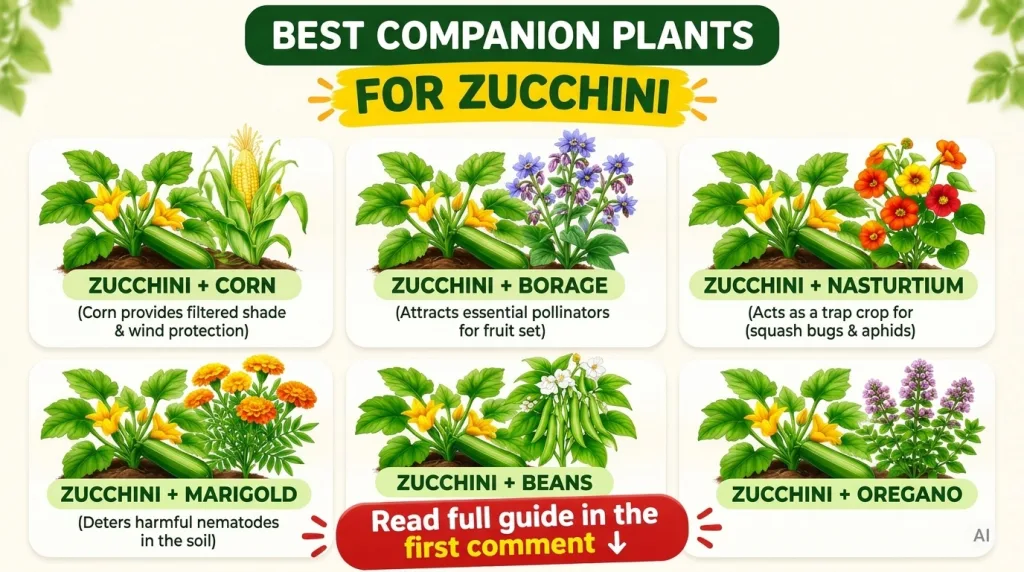
Zucchini is one of the most rewarding vegetables to grow at home. A single healthy plant can produce a generous harvest over the summer, but it also attracts pests and needs good soil and plenty of space. Companion planting, the practice of growing certain plants side by side, is a natural way to support your zucchini and make your garden more balanced.
What Is Companion Planting?
Companion planting means choosing plant partners that help each other grow. Some companions attract pollinators, some draw pests away from vulnerable crops, some add nutrients to the soil, and others simply make better use of space. When you plan your beds with these relationships in mind, you can create a garden that feels more resilient and easier to care for.
Six Helpful Companions for Zucchini
1. Corn
Corn is a classic partner for zucchini. Its tall stalks can offer partial shade during the hottest part of the day, which helps zucchini leaves stay comfortable in heat. Plant corn on the north side of your zucchini so the taller plants do not block sunlight from the squash.
2. Beans
Beans are a wonderful neighbor because they belong to the legume family. They work with soil bacteria to add nitrogen, a nutrient that supports leafy growth. Bush beans are an easy choice for smaller beds, while pole beans can climb a trellis or corn stalks.
3. Nasturtium
Nasturtiums bloom in bright shades of orange, red and yellow, and their flowers are edible with a peppery flavor. Many gardeners plant them near squash because they can attract aphids away from more valuable plants. Check them regularly so you can keep the pest population in balance.
4. Marigold
Marigolds are a cheerful addition to any vegetable bed. Their strong scent is often associated with helping to deter some insect pests, and their blooms draw in beneficial insects such as hoverflies. Plant them along the edges of your zucchini patch for both color and extra visual interest.
5. Borage
Borage produces star-shaped blue flowers that are very attractive to bees. Better pollination can lead to stronger fruit set on zucchini, which bears both male and female flowers that need insect visits to develop. Borage grows quickly, so give it room to spread.
6. Oregano
Oregano is a hardy herb that forms a low, spreading mat near the base of your plants. It can help keep the soil covered and attracts beneficial insects that feed on garden pests. You can also harvest its leaves for cooking, which makes it a practical choice for a productive garden.
Plants to Keep Away From Zucchini
Not every neighbor is helpful. Potatoes are often grown close to squash, but they can compete for nutrients and may share pest and disease problems. Aromatic herbs with strong growth habits, such as mint, can also crowd the bed if they are not contained. Planning your layout ahead of time helps you avoid these issues.
Tips for Planting a Zucchini Companion Bed
- Give zucchini plenty of space, usually at least 3 to 4 feet in each direction, to allow airflow and healthy growth.
- Use compost or well-rotted organic matter to enrich the soil before planting.
- Water at the base of the plants to keep leaves drier and reduce the risk of fungal problems.
- Inspect the undersides of leaves weekly for pests and remove them by hand when possible.
- Rotate your squash family crops to a new spot each year to support long-term soil health.
Final Thoughts
Companion planting is a gentle, practical way to support your zucchini and enjoy a more natural garden. Start with one or two companions, such as beans and nasturtiums, observe how your plants respond, and build from there. With a little planning, your garden can become a welcoming space full of color, pollinators and fresh vegetables.