June is often the moment gardeners put away their seed packets, but for many vegetables it is actually a great time to plant. Whether you cleared an early bed of spinach or lettuce, or your tomatoes are already producing, there is usually room for a second round of crops. This guide walks you through the most rewarding options for second-season planting, plus practical tips to help new seedlings thrive in summer heat.
Why June Is a Good Time for a Second Sowing
Many gardeners plant their main crops in spring and then assume the season is over once summer arrives. In reality, warm soil and longer days help many vegetables grow quickly. A second sowing can extend your harvest into late summer and autumn, and it can replace early crops that have finished producing.
June planting also gives you a chance to learn from the spring season. Notice which plants struggled, which pests appeared, and where your soil stayed wet or dried out too fast. Those observations will make your next garden plan much easier.
Vegetables to Plant in June
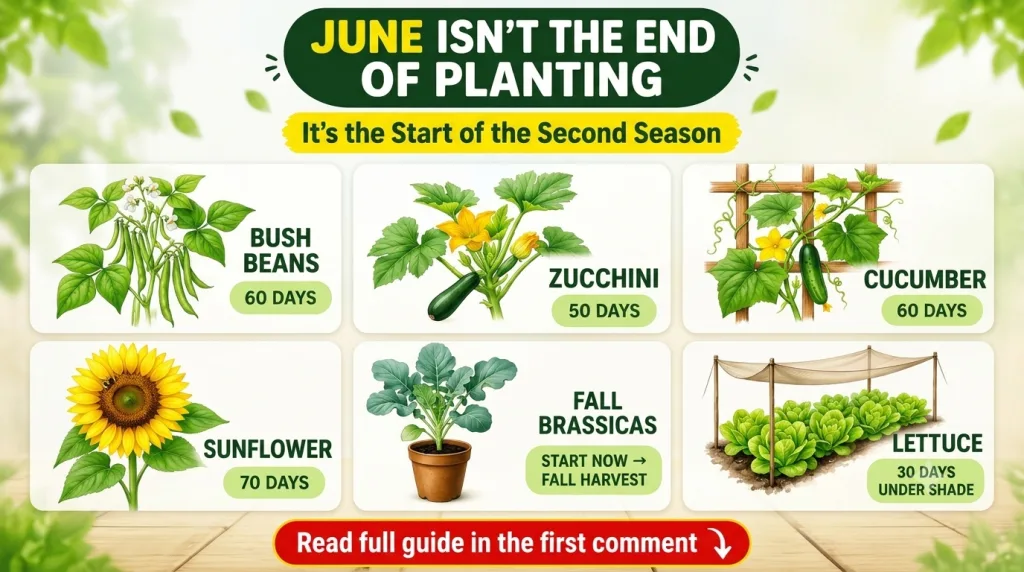
Bush Beans
Bush beans are one of the easiest crops for a mid-season sowing. They grow compactly, need no trellis, and produce a steady harvest within about eight weeks. Sow seeds directly into the soil about five centimeters deep, and water them at the base of the plant rather than over the leaves.
Zucchini and Cucumber
Summer squash and cucumbers love warm weather. A June sowing gives them enough time to set fruit before the cooler months arrive. Give them plenty of space, rich compost, and consistent moisture. Harvest zucchini when it is young and tender, since frequent picking encourages more fruit.
Sunflowers
Sunflowers are a cheerful addition to a vegetable garden. They attract pollinators like bees, which can improve pollination for nearby crops. Sow them directly outdoors in June for tall blooms later in summer, and choose a sunny spot sheltered from strong winds.
Fall Brassicas
Broccoli, cabbage, and kale can be started in June for an autumn harvest. Sowing them in a shaded nursery bed or a container helps the young seedlings handle the heat. Transplant them into their final bed once they have several true leaves, and keep the soil evenly moist during establishment.
Lettuce in Partial Shade
Lettuce often bolts, or goes to seed, when temperatures rise. Planting it in a spot with afternoon shade helps keep the leaves sweet and tender. Choose heat-tolerant varieties, sow small batches every couple of weeks, and harvest outer leaves first.
Practical Tips for Summer Planting Success
- Water deeply in the early morning so roots can absorb moisture before the day gets hot.
- Apply a layer of mulch such as straw or shredded leaves to keep soil cool and reduce evaporation.
- Check seedlings daily during the first two weeks, since young plants dry out quickly in summer sun.
- Use shade cloth for delicate crops like lettuce and spinach during heatwaves.
- Feed plants with compost or a gentle organic fertilizer rather than heavy doses of synthetic products.
Using Organic Compost Tea to Support Your Plants
Compost tea is a popular organic option for gardeners who want to support soil life and plant health. It is made by steeping well-finished compost in water for a short period, then diluting the liquid before applying it to the soil or foliage. It can be a helpful supplement, but it is not a magic solution. Healthy soil, good spacing, proper watering, and regular observation remain the foundation of a productive garden.
If you try compost tea, use mature compost, apply it to the soil around the root zone, and avoid spraying it on crops just before harvest unless you have carefully cleaned your equipment. Always follow reliable guidance for your local conditions.
Plan Your Second-Season Garden
Planting in June does not have to be complicated. Start with one or two crops that suit your space and climate, keep a simple planting journal, and note the dates you sow and harvest. Over time, you will build a clear picture of what grows best in your garden and when to plant it.
Share your June planting plans in the comments and tell us which vegetable you are most excited to grow this summer. Happy gardening, and enjoy the extra harvest that a second season can bring!