Pickling is one of the easiest ways to add bright, tangy flavor to everyday meals. These nine quick pickled vegetable recipes all use the same simple vinegar brine, and most are ready in a few hours. They taste even better after a day or two in the refrigerator.
Why You’ll Love These Quick Pickles
- Simple brine: One vinegar and water mixture works for all nine vegetables.
- Minimal cooking: Most recipes only need a quick simmer or no cooking at all.
- Bold flavor: Pickles add crunch and acidity to sandwiches, bowls, and sides.
- Flexible: Swap spices, herbs, and vegetables to suit your taste.
- Fridge-friendly: These are refrigerator pickles, so no canning equipment is needed.
Ingredients for the Basic Quick Pickling Brine
This brine makes about 2 cups (480 ml), enough for one to two medium jars. Double it for larger batches.
- 1 cup (240 ml) white vinegar
- 1 cup (240 ml) water
- 1 tablespoon (15 g) kosher salt
- 1 to 2 tablespoons (12 to 25 g) granulated sugar, optional
- 1 teaspoon black peppercorns or mustard seeds
- 2 cloves garlic, lightly smashed
Ingredient Notes
White vinegar gives a clean, sharp flavor that lets the vegetables shine. Apple cider vinegar works too, though it adds a slightly fruity note and a light amber color. Use kosher salt or another salt without iodine, since iodine can make the brine cloudy and affect flavor. Sugar balances the acidity and is optional if you prefer a sharper pickle.
Equipment You’ll Need
- Clean glass jars with tight-fitting lids, about 16 ounces (480 ml) each
- A non-reactive saucepan
- A sharp chef’s knife and cutting board
- Measuring cups and spoons
- Tongs or a fork for handling hot vegetables
How to Make Quick Pickled Veggies
- Prepare the jars. Wash the jars and lids in hot, soapy water and rinse well. Dry them completely before using.
- Make the brine. Combine the vinegar, water, salt, sugar, spices, and garlic in a saucepan. Bring to a boil over medium-high heat, stirring until the salt and sugar dissolve, about 3 to 5 minutes.
- Prepare your vegetables. Wash and trim the vegetables and cut them into even pieces so they pickle at the same rate. Pack them firmly into the jars, leaving about 1/2 inch (1 cm) of space at the top.
- Pour the brine. Carefully pour the hot brine over the vegetables until they are fully covered. Tap the jar gently on the counter to release air bubbles.
- Cool and chill. Let the jars cool to room temperature, about 1 hour, then seal and refrigerate. Most vegetables are ready in 4 to 6 hours, though overnight gives a deeper flavor.
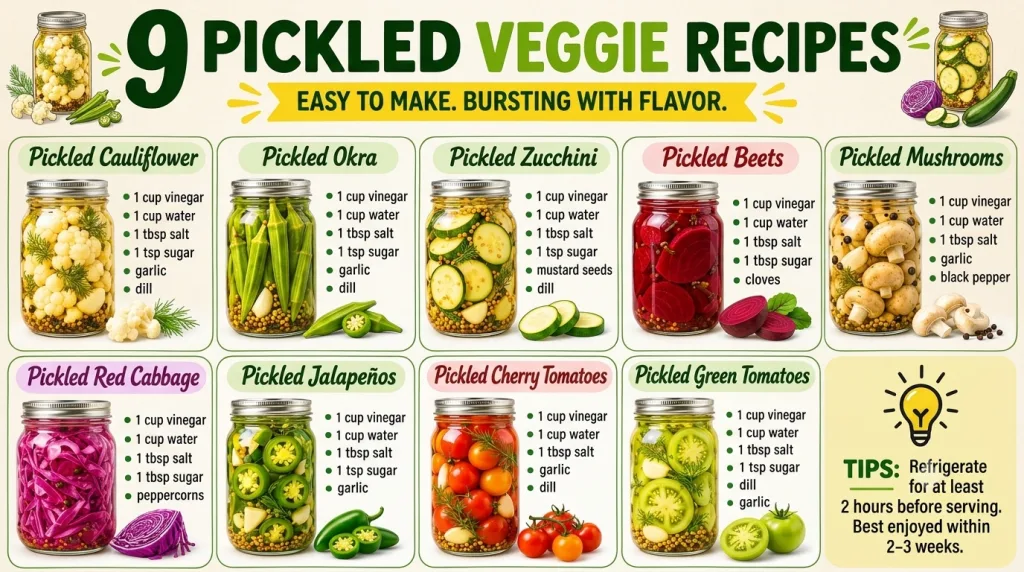
The 9 Easy Pickled Veggie Recipes
1. Pickled Cauliflower
Break a small head of cauliflower into bite-sized florets. Pack them into a jar with a few peppercorns and a sprig of dill. Cauliflower stays crisp and absorbs flavor well. Ready in about 6 hours.
2. Pickled Okra
Trim the stems from fresh okra and pack the pods whole with a few slices of garlic and a small dried chile. Pickled okra keeps a pleasant snap and works well in cocktails or on relish trays. Ready in about 1 day.
3. Quick Pickled Zucchini
Slice zucchini into thin rounds or spears. Add a little mustard seed and sliced onion for a sweet, mild pickle. Ready in about 4 hours.
4. Pickled Beets
Roast or simmer fresh beets until just tender, then peel and slice them. Pack the slices into a jar with the brine. Beets turn the brine a deep magenta, so use a plain jar you don’t mind staining. Ready in about 1 day.
5. Pickled Mushrooms
Use small button or cremini mushrooms. Simmer them briefly in the brine for about 5 minutes until just tender, then transfer everything to a jar and chill. Mushrooms are best eaten within a few days because their texture softens over time.
6. Pickled Red Cabbage
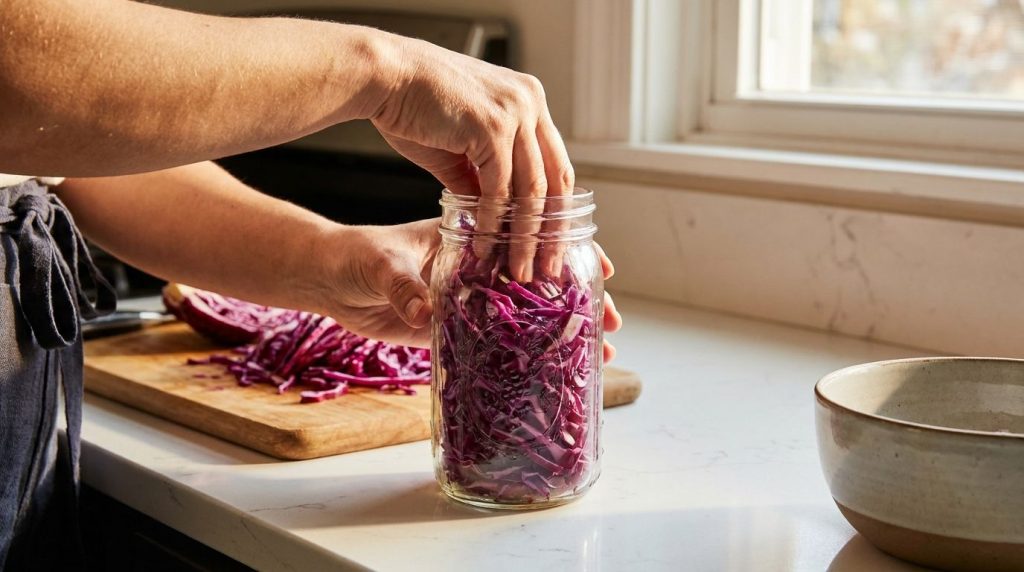
Thinly slice red cabbage and pack it tightly into a jar. The brine turns the cabbage a vivid purple-pink. Pickled red cabbage adds crunch to tacos and sandwiches. Ready in about 4 hours.
7. Pickled Jalapeños
Slice fresh jalapeños into rounds, removing seeds for less heat. Add sliced garlic and a pinch of oregano. These are great on nachos, eggs, and pizza. Ready in about 4 hours.
8. Pickled Cherry Tomatoes
Prick each tomato once with a toothpick so the brine can get inside. Add a few basil leaves or a clove of garlic. Pickled cherry tomatoes make a sweet-tart snack or salad topper. Ready in about 1 day.
9. Pickled Green Tomatoes
Slice firm green tomatoes into thick wedges or rounds. Add dill and garlic for a classic tangy flavor. Green tomatoes stay firm and make a bright addition to sandwiches. Ready in about 1 day.
Pro Tips for the Best Results
- Pack vegetables tightly so they stay submerged under the brine.
- Cut thick vegetables such as beets and green tomatoes into uniform slices for even pickling.
- Cook beets and mushrooms before pickling, since they do not pickle well raw.
- Taste the brine before pouring it over the vegetables and adjust the sugar or salt.
- Keep vegetables like cucumbers and cauliflower crisp by using fresh produce and cold brine when possible.
Common Mistakes to Avoid
The most common problem is soft or mushy vegetables. This usually happens when produce is past its prime or when mushrooms and beets are overcooked. Start with firm, fresh vegetables and check them early. Another mistake is using tap water with high mineral content, which can cloud the brine. Filtered water gives a clearer result. Finally, do not skip the cooling step before sealing, since trapped heat can soften the vegetables.
Variations and Substitutions
- Spicy version: Add red pepper flakes or a whole dried chile to any jar.
- Herb version: Try fresh dill, thyme, or bay leaves.
- Sweeter version: Increase the sugar to 3 tablespoons (38 g).
- Lighter brine: Use rice vinegar for a mild, delicate flavor.
Serving Suggestions
Serve these pickles as a side with grilled meats, sandwiches, and rice bowls. They also work well on cheese boards and in salads. Pickled jalapeños and red cabbage are excellent on tacos, while pickled beets pair nicely with soft cheese and crusty bread.
Storage and Reheating
Store pickles in the refrigerator in tightly sealed jars. For best texture, plan to eat them within about 2 weeks. Do not freeze these pickles, since freezing makes vegetables soft. Discard any jar that shows mold, has an off smell, or develops a slimy texture.
Frequently Asked Questions
Can I store these pickles at room temperature?
No. These are refrigerator pickles and are not designed for shelf-stable storage. Keep them chilled at all times.
How long do quick pickles take?
Most quick pickles are ready in about 4 to 6 hours, while beets, okra, and tomatoes benefit from about a day in the brine.
Can I reuse the brine?
It is best to make a fresh batch for each set of pickles. Reusing brine can lead to uneven flavor and a shorter shelf life.
Why are my pickles cloudy?
Cloudiness is often caused by iodized salt, hard water, or spices that release starch. Use kosher or pickling salt and filtered water to help keep the brine clear.
Which vegetable should I pickle first?
Start with cauliflower, zucchini, or red cabbage. They are forgiving, quick to prepare, and easy to season.
Which vegetable are you going to pickle first? Tell us in the comments!