Searching for houseplants that won’t demand constant attention? You’re in the right place. Many popular indoor plants actually prefer a relaxed routine, and a little neglect can be healthier than too much care. This guide walks through how to choose low-maintenance houseplants, how to water them wisely, and how to keep them thriving with minimal effort.
Why Some Houseplants Prefer Less Care
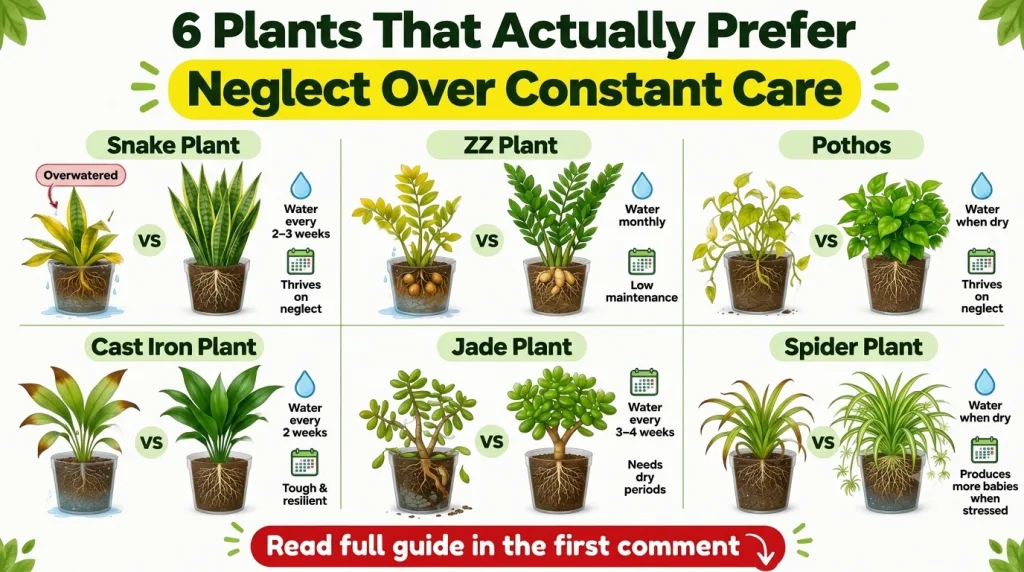
Many houseplants originate from dry, rocky, or shaded environments where water and nutrients come in irregular bursts. Their roots and leaves are adapted to store moisture and tolerate periods of drought. When these plants receive constant watering, their soil stays wet, roots can struggle to breathe, and rot may develop. That is why overwatering is one of the most common reasons indoor plants decline.
Understanding this natural adaptation helps you adjust your routine. Instead of watering on a fixed schedule, check the plant and its soil first.
Simple Low-Maintenance Houseplants to Consider
- Snake plant: Tolerates low light and infrequent watering, and does well in a range of home settings.
- ZZ plant: Stores water in its rhizomes, so it handles dry spells well and suits busy schedules.
- Pothos: Adapts to many light levels and shows clear signs, such as drooping leaves, when it needs a drink.
- Cast iron plant: Known for its sturdy, patient nature and tolerance of shade and irregular care.
- Jade plant: Prefers bright light and allowing the soil to dry out between waterings.
- Spider plant: Forgiving of minor lapses in care and produces plantlets that are easy to share.
How to Water Without Overdoing It
The most useful habit is to check before you water. Push a finger about two centimeters (roughly an inch) into the soil. If it feels dry, water thoroughly and let the excess drain away. If it still feels damp, wait a few more days.
- Choose pots with drainage holes so extra water can escape.
- Use a well-draining potting mix suited to indoor plants.
- Empty saucers after watering to prevent soggy roots.
- Water less often in winter, when growth slows and soil dries more slowly.
Light, Temperature, and Placement
Low maintenance does not mean no attention at all. Match each plant to the light it likes. Most low-care plants do well in bright indirect light, though several tolerate dimmer corners. Keep plants away from cold drafts and heating vents, and rotate pots now and then so growth stays even.
Gentle Pest Prevention
Healthy plants are naturally more resilient to pests. Inspect leaves regularly, especially the undersides, and remove dust with a damp cloth. If you spot pests, isolate the affected plant and wipe leaves gently. Many gardeners prefer mild, homemade approaches for minor issues, but it is wise to test any mixture on a small leaf first and to follow local guidance for safe use.
Signs Your Plant Needs Attention
Plants communicate through their leaves. Yellowing lower leaves, soft or mushy stems, and a constantly wet soil surface often point to overwatering. Crispy edges, shriveled foliage, and soil pulling away from the pot can signal that a plant is too dry. Adjust gradually, and give the plant a few weeks to respond.
Start Small and Enjoy the Process
You don’t need a full indoor jungle to enjoy houseplants. Begin with one or two resilient varieties, observe how they respond, and build your confidence over time. With a relaxed approach and a little attention, low-maintenance houseplants can bring lasting greenery and calm to your home.