Every time you mow the lawn, you collect a free resource that many gardeners simply bag up and throw away. Grass clippings can work as a useful mulch and a source of nutrients for your garden beds when they are used carefully. This guide explains how to use them well, which plants tend to benefit, and what to avoid so your garden stays healthy.
What Grass Clippings Bring to Your Garden
Fresh grass clippings contain nitrogen, along with moisture and organic matter that breaks down over time. As they decompose, they slowly release some of these nutrients into the soil and help support the soil life that plants depend on. They also help the soil hold moisture and keep weeds from germinating in the same spot.
Grass clippings are not a complete fertilizer, so think of them as a gentle, ongoing soil improver rather than a quick fix. Their greatest value comes from consistent use over a growing season.
How to Use Clippings as Mulch
- Let freshly cut clippings dry for a day or two on a tarp or driveway to reduce the risk of matting and bad smells.
- Spread them in a thin layer, about one inch (2–3 cm) deep, around established plants.
- Keep the mulch a few centimeters away from plant stems to prevent rot.
- Top up the layer after each mowing rather than piling on one thick batch.
- Add a layer of dry leaves or straw on top if you want a neater look and better airflow.
Plants That Often Do Well with Clippings
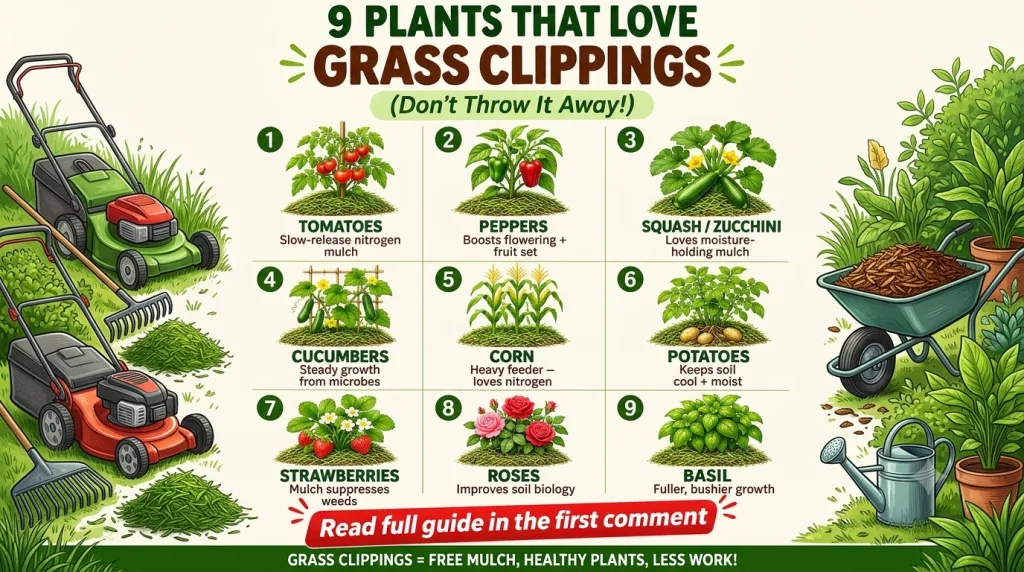
Many vegetables and flowers respond well to a light clipping mulch, especially those that enjoy nitrogen and steady moisture. Common examples include tomatoes, peppers, squash, cucumbers, and leafy greens. Many flowering perennials and annuals also appreciate the moisture retention and soil benefits. Because every garden is different, observe how your plants respond and adjust the amount you use.
Important Safety Tips
Clippings are useful, but a few precautions protect your plants and your harvest:
- Avoid clippings from lawns treated with persistent weed killers, as some residues can damage vegetables and other garden plants for a long time. Check product labels or ask your lawn service if you are unsure.
- Do not use clippings from weeds that have gone to seed, since they can spread new weeds across your beds.
- Skip clippings from lawns affected by disease or heavy pest problems.
- Avoid thick, wet heaps that can mat down, become slimy, and limit air reaching the soil.
- Rotate where you spread clippings and watch for any signs of yellowing or stress in your plants.
Adding Clippings to Your Compost
If you have more clippings than your beds can use, mix them into your compost pile. Balance them with dry, brown materials such as fallen leaves, cardboard, or shredded paper so the pile breaks down evenly and does not become smelly. This approach gives you rich compost to work into your soil later in the season.
Final Thoughts
Turning mowing waste into a garden resource is a simple, sustainable habit that suits busy gardeners and organic growers alike. Start with a thin layer around a few plants, watch how they respond over several weeks, and expand from there. With a little care, your lawn can help feed the garden that grows beside it.