Staking, caging, and trellising can make a huge difference in how well your vegetables grow. Supporting plants keeps fruit off the soil, improves airflow, and makes harvesting far easier. The right support depends on how a plant grows, so this guide walks through how to match common garden vegetables with the structures that suit them best.
Why Vegetable Supports Matter
Many garden vegetables grow tall, heavy, or sprawling. Without support, stems can bend or break, and fruit may rot after touching damp soil. Good support also helps you spot pests and disease early, because you can see every leaf and fruit clearly. A little planning at planting time saves a lot of trouble later in the season.
Understanding Growth Habits
Before choosing a support, look at how your plant grows. Vegetables generally fall into a few groups:
- Indeterminate vining plants keep growing and producing until frost, so they need tall, sturdy supports.
- Bushy or compact plants stay low and often need only a light cage or ring.
- Sprawling vines spread outward and can climb a trellis or be trained along a frame.
Matching Common Vegetables to Their Supports
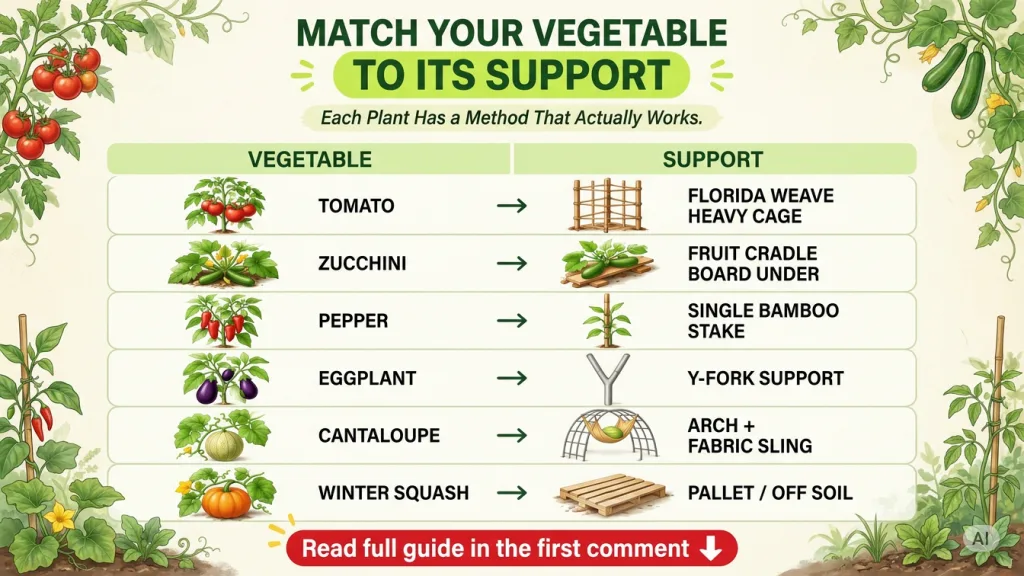
Here is a practical way to pair popular crops with suitable supports.
Tomatoes
Tomatoes benefit most from tall cages or stakes. A sturdy cage keeps the vines upright and the fruit off the ground. Tie stems loosely with soft garden twine as the plant grows.
Peppers and Eggplants
Peppers and eggplants have branching stems that can snap under the weight of fruit. Small cages or stakes placed early in the season work well. Gentle tying at the main stems keeps plants steady without damaging them.
Zucchini and Winter Squash
Zucchini is a bushy plant that usually does well without a heavy cage. Winter squash and some melons, however, are vigorous vines. Training them up a sturdy trellis or letting them spread on the ground with straw underneath helps keep fruit clean and healthy.
Cantaloupe
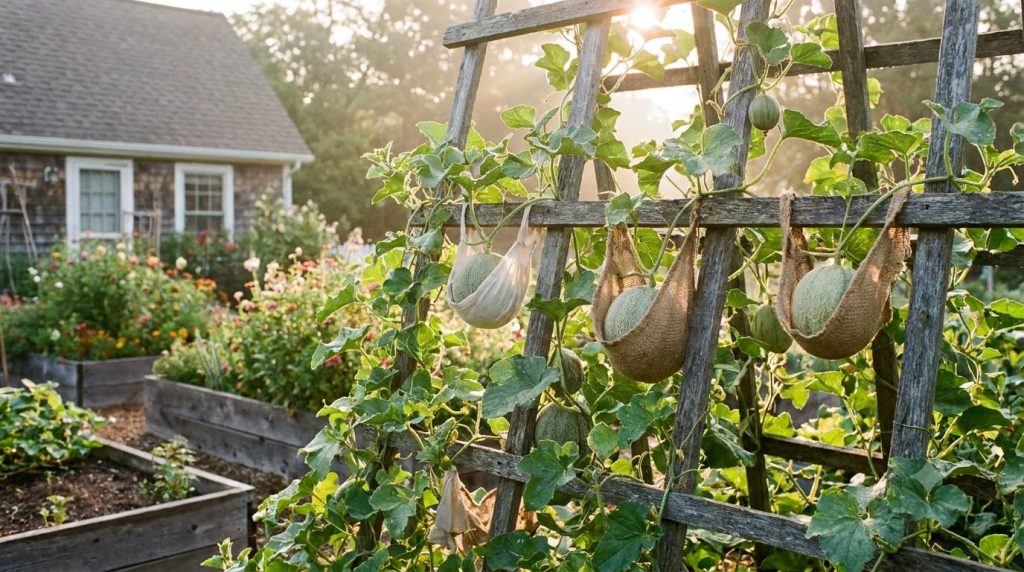
Cantaloupe vines can be trained onto a trellis, but the fruit needs slings or netting for support as it grows heavier. This protects the stem and prevents the melon from pulling away from the vine.
Simple Tips for Building Your Own Supports
- Choose materials that are strong, weather-resistant, and easy to clean.
- Install stakes or cages early, before roots and stems become large.
- Use soft ties that will not cut into stems as they thicken.
- Check supports regularly after storms or heavy harvests.
Final Thoughts
Matching each vegetable to the right support is one of the easiest ways to grow healthier plants and bigger harvests. Start with the plants you grow most often, observe how they behave, and adjust your setup each season. Happy gardening!