May is one of the most rewarding months in the vegetable and herb garden. Plants are growing quickly, the weather is warming, and a little thoughtful pruning can encourage stronger stems, better airflow, and a more generous harvest later in the season. Pinching and pruning are simple skills, and once you learn the basics, they become a natural part of your routine.
Why Pruning Matters in Spring
Pruning and pinching remove growing tips, spent flowers, or crowded shoots so the plant can direct its energy where you want it. Many gardeners notice that regular light pruning leads to bushier herbs, sturdier vegetable plants, and easier harvesting. Good airflow through the leaves also helps reduce the chance of common problems such as fungal spots in humid weather.
Herbs That Benefit from Pinching
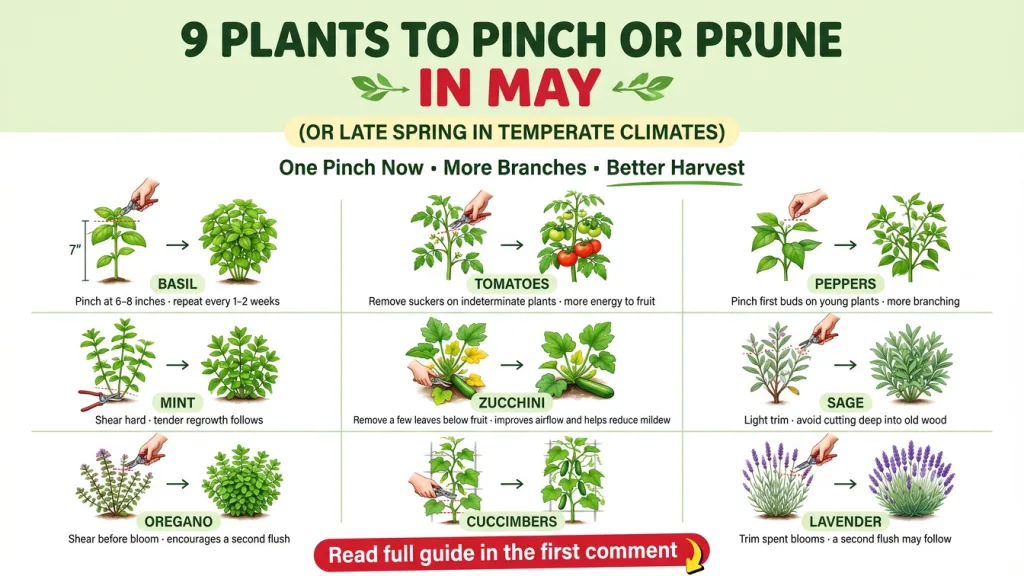
Basil, mint, sage, and oregano respond well to regular pinching. Snip the growing tips just above a leaf pair, and the plant will usually branch out below the cut. Try to harvest a little at a time rather than stripping one plant bare, and avoid removing more than about a third of the foliage at once so the herb stays healthy.
- Basil: pinch the top set of leaves to encourage a fuller shape.
- Mint: cut stems back regularly to keep the plant compact and contained.
- Sage and oregano: trim tips often to prevent woody, leggy growth.
Vegetables That Need Careful Attention
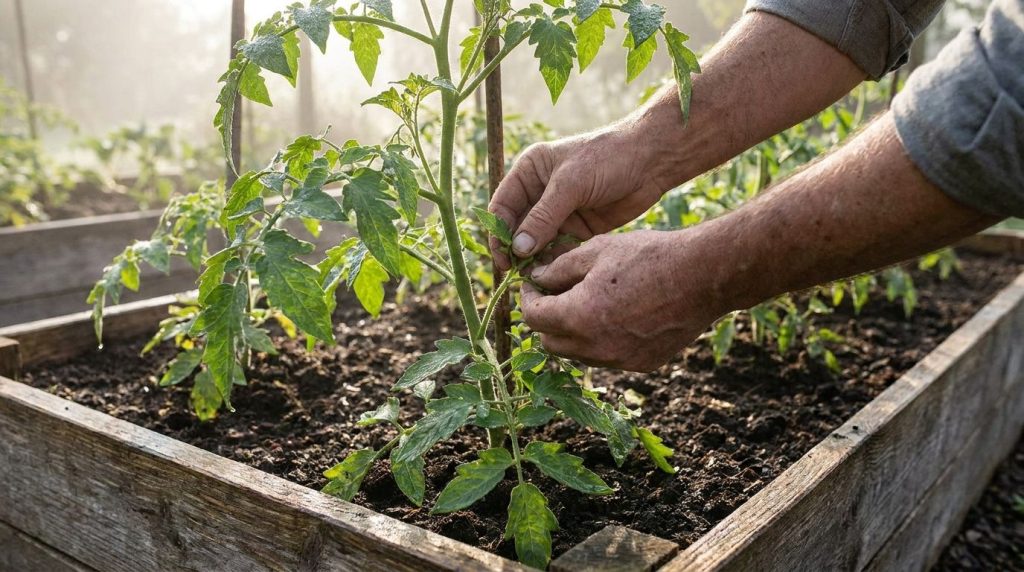
Tomatoes, peppers, zucchini, and cucumbers each have their own pruning needs. Removing suckers on indeterminate tomatoes can help direct energy into fruit and open up the plant. Pinching the tips of young pepper plants can encourage branching. For zucchini and cucumbers, removing a few older or yellowing leaves at the base improves airflow, and pinching side shoots can keep vines manageable in smaller spaces.
Tips for Clean, Safe Pruning
Healthy tools make a real difference. Use sharp, clean shears or snips, and wipe the blades between plants, especially if you suspect disease. Warm soapy water or rubbing alcohol works well for cleaning. Prune in dry weather when possible, and cut just above a leaf node or branch junction for a neat result. Keep a few extra leaves on plants so they can keep producing energy through photosynthesis.
A Simple May Pruning Checklist
- Inspect each plant and note any crowded, damaged, or yellowing growth.
- Pinch the growing tips of herbs such as basil, mint, sage, and oregano.
- Remove suckers from tomatoes and pinch young peppers to encourage branching.
- Trim older leaves on zucchini and cucumbers to improve airflow.
- Clean your tools before moving to the next plant.
- Watch your plants over the next two weeks and adjust as they grow.
Final Thoughts
Spring pruning is a gentle, practical habit that rewards patience. Start with a few plants, observe how they respond, and build your confidence over time. With a little regular attention in May, your garden can become fuller, healthier, and more productive as summer approaches.