Many home gardeners save kitchen scraps with the hope of feeding their plants, yet they are not always sure which materials suit which plants. This guide walks through the basics of natural fertilizers, explains how common household items can support a garden, and shows how to match them to roses, tomatoes, and pumpkins in a simple, practical way.
What Makes a Natural Fertilizer?
A natural fertilizer is an organic material that releases nutrients slowly as it breaks down in soil. Unlike concentrated synthetic products, most kitchen-based options work gradually, which makes them a gentle choice for beginners and for gardens where you want to keep the soil ecosystem active. Compost, well-rotted manure, and plant-based scraps are the foundation of most organic feeding routines.
Common Household Materials and What They Offer
Banana Peels
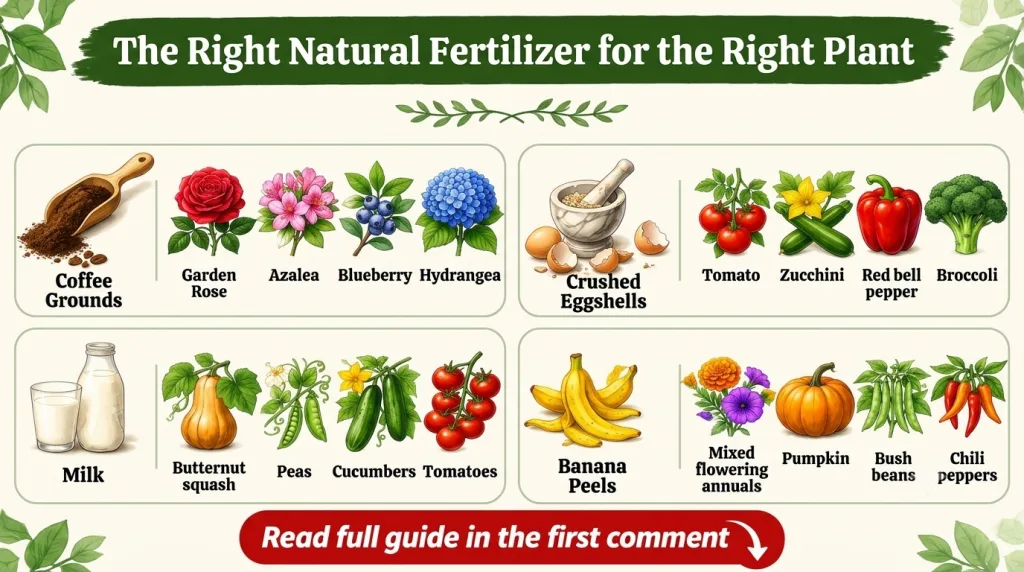
Banana peels contain potassium, along with smaller amounts of other minerals. They are often used in rose care because potassium supports general plant health. Chop the peel into small pieces or soak it in water for a few days before watering, so it breaks down more easily in the soil.
Coffee Grounds
Used coffee grounds add organic matter to the soil and can be a useful part of a compost mix. They are often suggested for acid-loving plants, but they should be used in moderation, since a thick layer can compact the soil. Mixing them into compost or spreading a thin layer works best.
Crushed Eggshells
Eggshells provide calcium over time. Rinse them, dry them completely, and grind them into a fine powder so they break down more easily. They are a popular addition for tomato beds, but they act slowly, so they are best added to compost or worked into the soil well before planting.
Milk
Diluted milk is sometimes used as a light, organic feed for certain plants. It contains protein and calcium, which can add nutrients as they break down. Because it can spoil and attract pests, dilute it well and use it sparingly, never as a replacement for good soil.
Matching Materials to Popular Plants
- Roses: Banana peel mixed into the soil or compost, combined with a thin layer of compost each season.
- Tomatoes: Crushed eggshells blended into compost, paired with regular watering and good sun exposure.
- Pumpkins: Compost enriched with plant scraps and a small amount of well-rotted material to support steady growth.
Tips for Using Natural Fertilizers Safely
- Start with small amounts and observe how your plants respond over several weeks.
- Compost kitchen scraps before adding them to edible crops, which reduces odor and pest attraction.
- Avoid cooked foods, oils, and meats, which can attract animals and create unpleasant smells.
- Keep a simple notebook of what you added and when, so you can refine your routine.
- Remember that healthy soil, adequate water, and good light matter just as much as any feeding.
Final Thoughts
Natural fertilizers are a rewarding way to reduce kitchen waste and support a thriving garden. Treat them as one part of a balanced plant care routine rather than a quick fix. With patience and a little experimentation, you can build healthier soil and enjoy stronger roses, tomatoes, and pumpkins season after season.