Every kitchen produces scraps that usually end up in the trash, yet many of them can be reused in the garden. Banana peels, rice water, potato cooking water, and apple peels are common examples. Used with care, these simple leftovers can become gentle homemade plant water that supports your houseplants and garden beds while reducing household waste.
Why Kitchen Scraps Are Worth Reusing
Organic gardening is about working with natural materials and keeping resources in circulation. Fruit and vegetable scraps contain small amounts of nutrients and organic matter, and when they are soaked or steeped in water, some of these compounds move into the liquid. This is a gentle way to offer your plants a little extra nourishment between regular feedings.
It is important to keep expectations realistic. Homemade plant water is a supplement, not a complete fertilizer. Results depend on your soil, light, plant type, and watering habits, so think of these methods as a gentle part of a balanced plant care routine.
Popular Kitchen Scraps for Plant Water
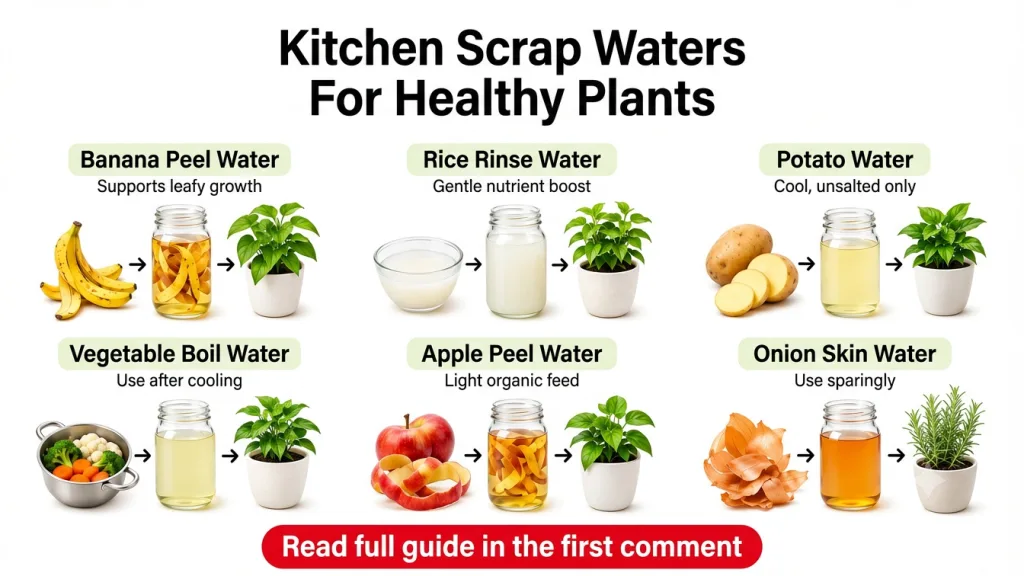
Banana Peels
Banana peels are often mentioned in gardening circles because they contain potassium, a nutrient that plays a role in overall plant health. You can soak chopped peels in water for a few days, then strain the liquid and dilute it before using it on your plants. Always use it in moderation and check how your plants respond.
Rice Water
The cloudy water left after rinsing or soaking rice is a traditional favorite among plant lovers. It carries small amounts of starch and minerals. Let it cool to room temperature, use it unsalted, and dilute it with fresh water before watering. Avoid using it in large amounts or leaving it to sit for days, as it can develop odors.
Boiled Vegetable Water
Water used to boil plain vegetables, such as potatoes or carrots, can be a useful option once it has cooled. Use only plain water without salt, oil, or seasoning. Dilute it well and water your plants with it occasionally rather than every day.
Apple Peels and Onion Skins
Apple peels and onion skins can be steeped in water to create a light infusion. These are best used as an occasional treat for plants rather than a main source of feeding. Strain the liquid well so no debris is left in the soil.
How to Make Simple Kitchen Scrap Water
-
Collect clean, unprocessed scraps and avoid anything moldy, oily, or heavily salted.
-
Chop the scraps into small pieces to help them release their natural compounds.
-
Place them in a clean jar and cover with room-temperature water.
-
Let the mixture steep for a few days in a cool, shaded spot, stirring occasionally.
-
Strain the liquid, dilute it with fresh water, and use it to water your plants.
Tips for Safe and Effective Use
-
Always dilute homemade liquids before applying them to plants.
-
Start with a small amount on one plant and observe for a couple of weeks.
-
Do not store the liquid for long periods, since it can spoil and attract insects.
-
Avoid scraps that contain meat, dairy, oil, or seasoning.
-
Combine these waters with good light, proper drainage, and regular checks for pests.
Making Your Garden More Sustainable
Turning kitchen scraps into plant water is a small habit with a meaningful impact. It encourages mindful waste reduction, sparks curiosity about how plants grow, and creates a closer connection between your kitchen and your garden. Whether you grow roses on a balcony, herbs on a windowsill, or vegetables in raised beds, reusing everyday leftovers is a practical step toward a greener home.
Start with one or two scraps that you already have on hand, observe how your plants respond, and build your routine gradually. Your garden will reward patience and consistent care, and you may enjoy discovering which kitchen scraps work best for your favorite plants.