Walk down the garden center aisle and you will see pots in every color imaginable: classic terracotta, glossy white, deep black, bright blue, and soft sage green. It is easy to choose based on looks alone, but color can quietly influence how your plants grow. The short answer is yes, pot color matters, mostly because it affects the temperature of the soil and roots inside the container.
Why Pot Color Affects Root Temperature
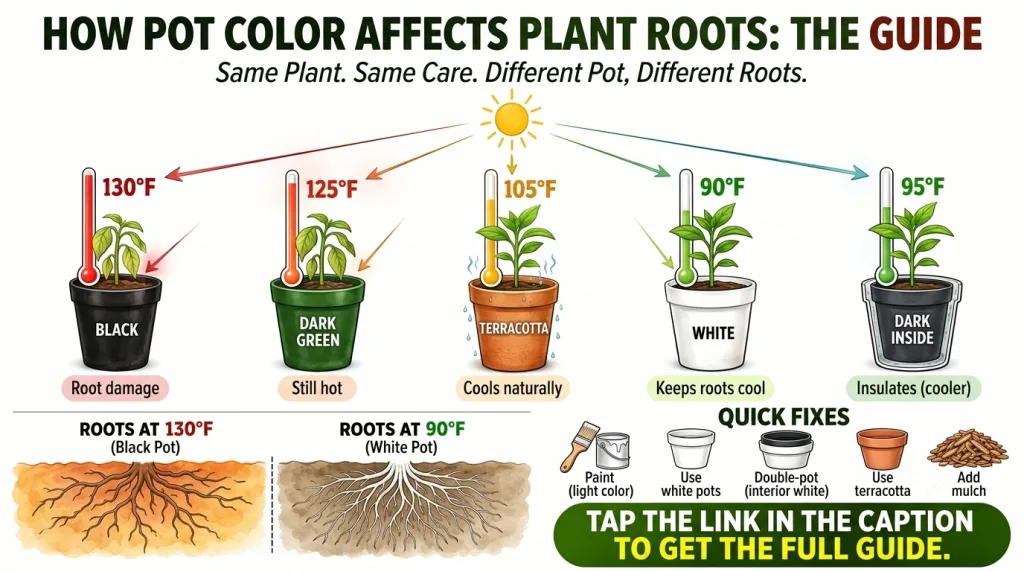
Darker colors absorb more sunlight and convert it into heat. Lighter colors reflect more light, which helps keep the soil cooler. Because container soil heats up much faster than garden soil in the ground, this difference can become noticeable during hot summer afternoons.
Roots are sensitive to temperature. When the root zone gets too hot, roots can slow their growth, dry out faster, and become stressed. Over time, this stress can show up as wilting, yellowing leaves, or a plant that never seems to thrive, even when you water and feed it regularly.
What the Temperature Difference Looks Like
An educational infographic comparing pot colors shows how much internal temperatures can vary in direct sun. Roots in a very hot container can reach temperatures far above what most plants prefer, while roots in a cooler, lighter pot stay in a more comfortable range. The comparison between roots at around 130 degrees Fahrenheit and roots at around 90 degrees Fahrenheit makes the risk easy to understand: the hotter root zone looks stressed and less healthy, while the cooler one looks full and well developed.
Choosing the Right Pot Color for Your Garden
There is no single perfect color for every situation. The best choice depends on your climate, how much sun your plants receive, and what you are growing. Here are some practical guidelines to help you decide:
- Light colors such as white, cream, or pale green reflect sunlight and are a good choice for hot, sunny spots.
- Terracotta is porous and lets soil breathe and dry out more evenly, which many gardeners love for herbs, succulents, and Mediterranean plants.
- Dark colors such as black or deep blue absorb heat, so they work better in cooler climates or in partly shaded areas.
- Glazed ceramic holds moisture longer than unglazed clay, which can help plants that prefer consistently damp soil.
Simple Ways to Keep Roots Cooler
If you already have a dark pot that sits in full sun, you do not need to replace it right away. Several easy adjustments can help protect your plants:
- Move the container to a spot with afternoon shade, such as beside a fence or under a patio cover.
- Place the pot on a plant stand or pot feet so air can circulate underneath instead of heating the base.
- Wrap the outside of the pot with a light-colored fabric sleeve or burlap, which can reduce direct heat.
- Add a layer of mulch or light gravel on top of the soil to slow evaporation and insulate the root zone.
- Water in the early morning so the soil is moist before the day heats up.
Tips for Growing Healthy Roots in Containers
Pot color is only one piece of the puzzle. Healthy container plants also depend on good drainage, quality potting mix, and the right pot size. Always make sure your pot has drainage holes, because standing water can suffocate roots no matter what color the pot is. Choose a potting mix that stays airy and moisture-balanced, and repot when roots begin circling the inside of the container.
It also helps to observe your plants closely. Wilting in the afternoon that recovers by evening may signal heat stress, while constant wilting or soggy soil may point to overwatering. Adjusting your care based on what you see is one of the most effective ways to build confidence as a gardener.
Final Thoughts
Pot color does matter, but it is one of many factors that shape plant health. By understanding how light colors and dark colors affect root temperature, you can place containers wisely, protect sensitive roots, and create a thriving garden on your patio, balcony, or windowsill. Start with a few simple changes this season and watch your plants respond.