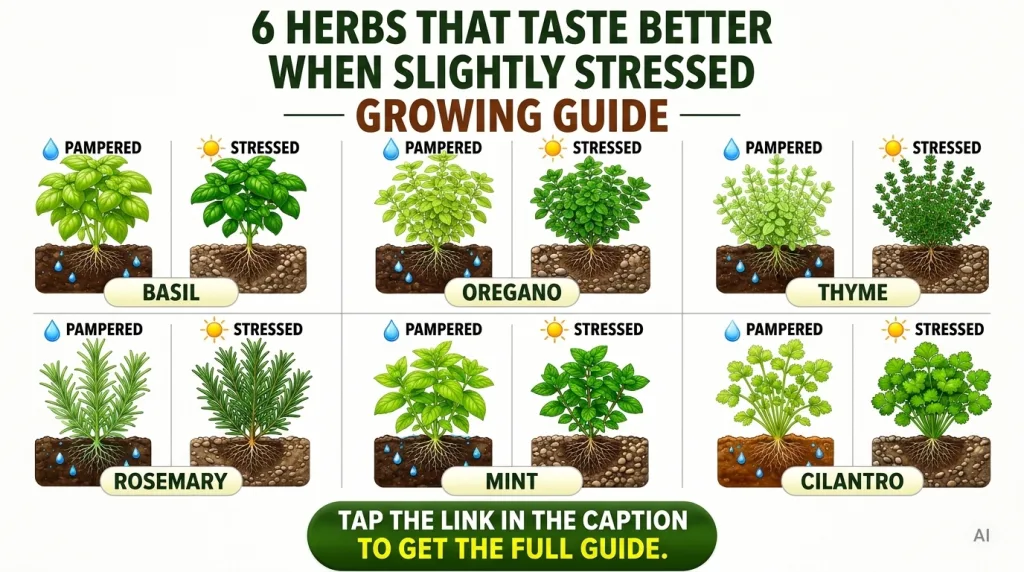
Many home gardeners have heard that herbs taste better when they are grown under a little pressure. The idea is simple: a herb that is pampered with constant water and rich feeding may grow fast and leafy, but its flavor can sometimes feel milder. A light amount of stress, such as slightly drier soil or a sunnier spot, may encourage some herbs to produce more concentrated aromatic oils. Results vary from plant to plant, so think of this as a practical experiment rather than a guaranteed trick.
What Does Stress Mean for a Herb?
In gardening, mild stress simply means the plant is not getting everything it could want at all times. For most culinary herbs, this might look like soil that dries out a little between waterings or a spot that receives strong afternoon sun. Plants respond to these conditions by adjusting how they grow and what they produce, and many aromatic herbs naturally make oils as part of their defense system.
The key word is slightly. Severe drought, scorching heat, or waterlogged roots will harm a plant and reduce both harvest and flavor. The goal is to nudge your herbs, not to punish them.
Herbs That Are Often Grown Lean
Some herbs come from dry, sunny, Mediterranean-style climates, so they usually feel at home with less frequent watering. These are the ones gardeners most often grow in a slightly leaner way:
- Rosemary: Prefers sharp drainage and tends to become woody and flavorful when not overwatered.
- Thyme: Thrives in poor to average soil and full sun, and dislikes soggy roots.
- Oregano: Often develops more pungent leaves in bright, open spots with moderate moisture.
- Sage: Benefits from a well-drained bed and room to breathe between waterings.
Herbs That Prefer More Consistent Moisture
Not every herb should be kept on the dry side. Basil, mint, and cilantro generally appreciate steady moisture and good soil. For these plants, letting them wilt repeatedly can lead to bitter leaves, bolting, or a short harvest season. Instead, focus on consistent care and protect them from extreme heat, which is often the real stress factor for leafy herbs.
Simple Ways to Try a Mild Stress Test at Home
If you want to explore this idea in your own garden, a gentle, low-risk approach works best:
- Grow two plants of the same herb in similar pots or beds.
- Water one plant on a regular schedule and let the other dry slightly more between waterings.
- Keep both in the same light conditions so the difference is easier to judge.
- Harvest small amounts from each and taste them fresh, noting aroma, intensity, and balance.
- Record your observations through the season so you can repeat what works.
Tips for Healthy, Flavorful Herbs
Whatever approach you choose, good basics matter most. Use well-draining containers or soil, give plants as much sunlight as possible, harvest regularly to encourage bushy growth, and avoid overwatering. Checking the top inch of soil before you water is a simple habit that prevents many common problems, from root rot to weak flavor.
Final Thoughts
Slightly stressed herbs may offer richer flavor for some varieties, but the most reliable path to tasty herbs is healthy, thoughtful care. Experiment with one or two plants this season, keep notes on what you notice, and enjoy the fresh results in your kitchen. Happy growing!