Turning one spider plant into a whole indoor jungle does not have to cost a dime. With a simple bent wire hairpin and a little moist soil, the small plantlets that dangle from the arching stems can root and grow into independent plants in about three weeks. It is one of the easiest ways to expand your collection for free, right on your windowsill.
Why Spider Plants Are Perfect for Free Propagation
Spider plants (Chlorophytum comosum) are one of the most forgiving houseplants you can grow. They produce long, arching stems, and at the tips of those stems grow small plantlets, often called babies or pups. Those babies already have tiny roots forming at their base, which is why they are so easy to start on their own.
Because the babies form naturally, you do not need special rooting hormones, grow lights, or expensive supplies. If your plant is healthy and bright indirect light is available, propagation is a low-effort project that fits into a busy week.
What You Will Need
- A healthy spider plant with at least one arching stem bearing plantlets
- A small pot filled with moist potting mix
- A bent wire hairpin or a small piece of bent wire shaped like a U
- A bright spot away from harsh direct sun, such as a windowsill
Step-by-Step: How to Pin a Spider Plant Baby
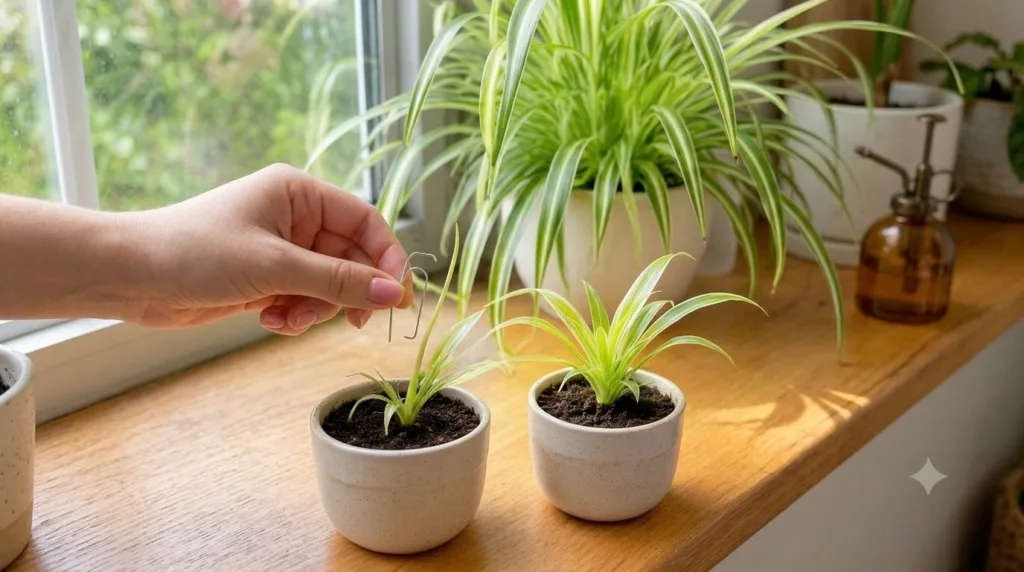
- Choose a healthy baby. Pick a plantlet that is well formed and has some green leaves. Babies that are already touching the soil or are beginning to form small roots are ideal.
- Prepare the pot. Fill a small pot with moist potting mix. The soil should feel damp, not soggy, so the baby can make contact without rotting.
- Place the baby on the soil. Let the stem arch naturally so the plantlet rests on the surface. Do not force it into a shape it does not want to take.
- Pin it in place. Push the bent wire hairpin over the base of the baby and into the soil. The hairpin holds the plantlet firmly against the surface so its roots can reach the mix.
- Press the soil firm. Use your fingertips to firm the soil around the baby. Good contact between the base and the soil helps roots form faster.
- Keep the soil lightly moist. Water when the top of the soil starts to feel dry. Keep the pot out of harsh direct sun while the roots develop.
How Long Does Rooting Take?
Most spider plant babies root within about three weeks when they stay in moist soil and bright, indirect light. You can test progress gently. When a baby resists a light tug, it has likely anchored its roots. Avoid pulling hard, because that can break fragile new roots.
Once the baby is firmly rooted and shows fresh, fanned-out leaves, you can carefully snip the stem that connects it to the mother plant. Then the new plant can stand on its own.
Common Mistakes to Avoid
- Letting the soil dry out. Dry soil stops rooting. Keep it lightly moist throughout the process.
- Overwatering. Soggy soil can cause the base of the baby to rot. Damp is the goal, not wet.
- Cutting too early. Separating the baby before it has rooted can leave it weak. Wait until it is firmly anchored.
- Pinning too loosely. If the baby lifts off the soil, it may not root. Press the soil firm around the base.
Enjoy Your Growing Collection
Propagating spider plant babies is a simple way to grow your indoor garden without spending extra money. With one healthy plant, a bit of moist soil, and a bent wire hairpin, you can turn a single spider plant into several new ones. Share your results with friends, or give a new plant to someone who would love a free houseplant.
Have you ever propagated your spider plant babies this way? Tell us about your experience in the comments below!