Choosing the right soil is one of the most important decisions you can make for your plants. Many plants that seem to struggle are not suffering from poor light or too little water. Often, the real problem lies beneath the surface, where the roots are trying to live in a mix that does not suit them. This guide explains how different soil types affect plant health and how to match a potting mix to the plants you love.
Why Soil Texture Matters for Roots
Roots need air, water, and nutrients in balance. Soil texture determines how quickly water drains away, how much air reaches the roots, and how long nutrients stay available. When the texture is wrong, roots can rot from staying too wet or dry out because water runs straight through.
Think of potting mix as the home your plant’s roots live in. A home that is too dense will feel suffocating, while one that is too loose may never hold enough comfort.
Four Common Soil Mixes and Who They Suit
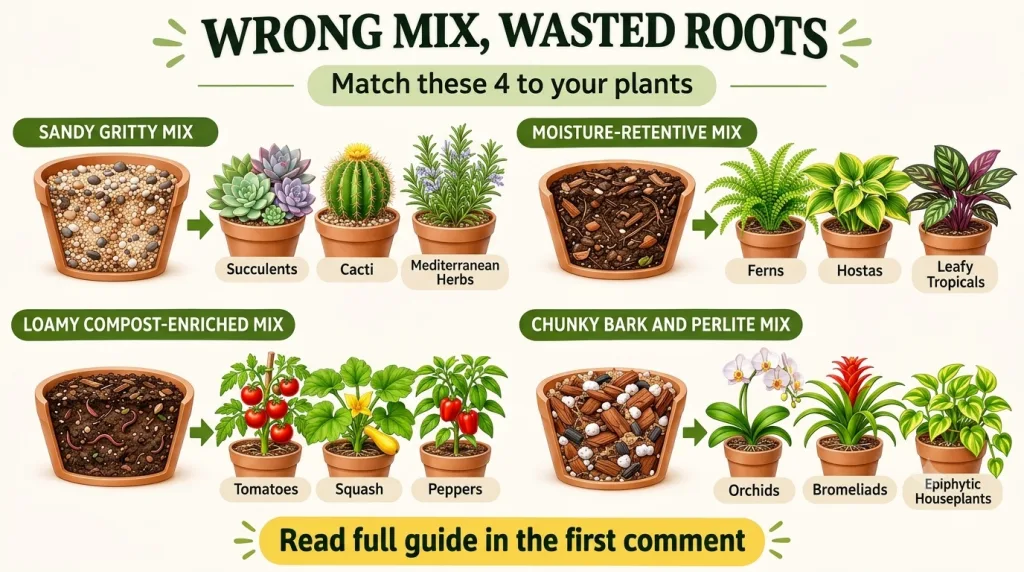
Sandy Gritty Mix
This fast-draining blend typically combines potting soil with coarse sand or grit. It is ideal for succulents, cacti, and other plants that prefer dry conditions between waterings. Because it drains quickly, it helps prevent root rot in plants that dislike soggy feet.
Moisture-Retentive Mix
A moisture-retentive blend includes peat or coco coir along with a light amount of perlite. It suits ferns, calatheas, and other plants that love consistent humidity and steady moisture. Check the top layer regularly, since this mix can stay damp for longer.
Loamy Compost-Enriched Mix
This nutrient-rich blend combines garden loam or quality potting soil with well-rotted compost. It is a great choice for vegetables such as tomatoes, peppers, and herbs, which need steady feeding and good structure. Compost also improves soil life, supporting a healthier root zone.
Chunky Bark and Perlite Mix
An airy blend of orchid bark, perlite, and a small amount of potting mix creates generous air pockets around the roots. Orchids and other epiphytic plants appreciate this open structure, which lets roots breathe and dry between waterings.
How to Mix Your Own Potting Soil at Home
Creating a custom blend is simpler than it sounds. Start with a clean container, gather your base ingredients, and mix them thoroughly until the texture looks even. Adjust proportions based on the plants you are growing, and test how quickly the mix drains before repotting.
- Choose a base of quality potting soil or coco coir.
- Add drainage materials such as perlite, pumice, or coarse sand.
- Blend in organic matter like compost for nutrients, or bark for airiness.
- Moisten the mix lightly so it holds together but does not feel soggy.
- Fill your pot, leaving space at the top for watering.
Tips for Matching Soil to Your Plants
- Check the plant’s natural habitat to understand its water and drainage needs.
- Choose a pot with drainage holes, regardless of the soil you use.
- Observe how fast the soil dries after watering and adjust your blend if needed.
- Refresh potting mix every one to two years, as organic material breaks down over time.
- Keep notes on what works, so you can refine your mixes for each season.
Common Mistakes to Avoid
One frequent error is using heavy garden soil in containers, which compacts quickly and suffocates roots. Another is filling a pot with only one type of material and expecting it to suit every plant. Finally, avoid assuming that more water always helps. Overwatering in a poorly draining mix is one of the most common causes of plant decline.
Bringing It All Together
Matching your soil to your plants is a simple step that makes a lasting difference. Start with the plant’s needs, choose a suitable base, and adjust as you learn how your plants respond. With a little practice, your indoor and outdoor containers will become healthier, more vibrant, and easier to care for.
If you would like a full printable recipe for a versatile indoor potting mix, leave a comment on our post and we will be happy to share it with you.