Planting seeds is exciting, but many gardeners lose seedlings before they ever reach the harvest. The cause is often not the seed quality or the watering schedule. It is the soil. Each soil type drains, warms, and holds nutrients differently, and each one suits a different group of plants.
Why Soil Type Matters for Seeds
Seeds need moisture, air, warmth, and nutrients to germinate, and soil is the home for all of these needs. When soil is too heavy, water pools and roots struggle for oxygen. When it is too light, water drains away before young roots can absorb it.
Common Soil Types and What Grows Best in Them
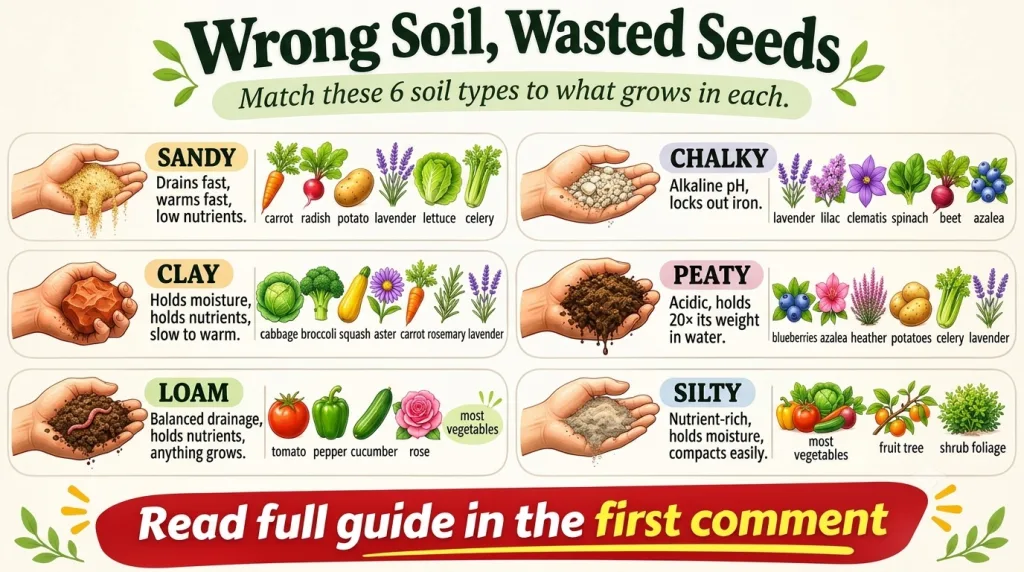
- Sandy soil: Drains quickly and warms early in spring. Carrots, radishes, potatoes, and lavender prefer its fast drainage. Add compost regularly to help it hold water and nutrients.
- Clay soil: Holds water and nutrients well but can become compacted and slow to warm. Cabbage, kale, beans, and many perennial flowers often handle it well once organic matter is added.
- Loam soil: Considered the ideal balance of sand, silt, and clay. Most vegetables, herbs, and flowers thrive here, making it a great base for a beginner garden.
- Chalky soil: Alkaline, free-draining, and often stony. Lavender, clematis, and spinach tolerate these conditions, while acid-loving plants like blueberries usually struggle.
- Peaty soil: Rich in organic matter, moisture-retentive, and acidic. Blueberries, potatoes, and many ornamental shrubs enjoy these conditions.
- Silty soil: Smooth and fertile, but it can crust and erode. Leafy greens, peas, and many herbs perform well when mulched and kept from compacting.
How to Test Your Soil Before Sowing
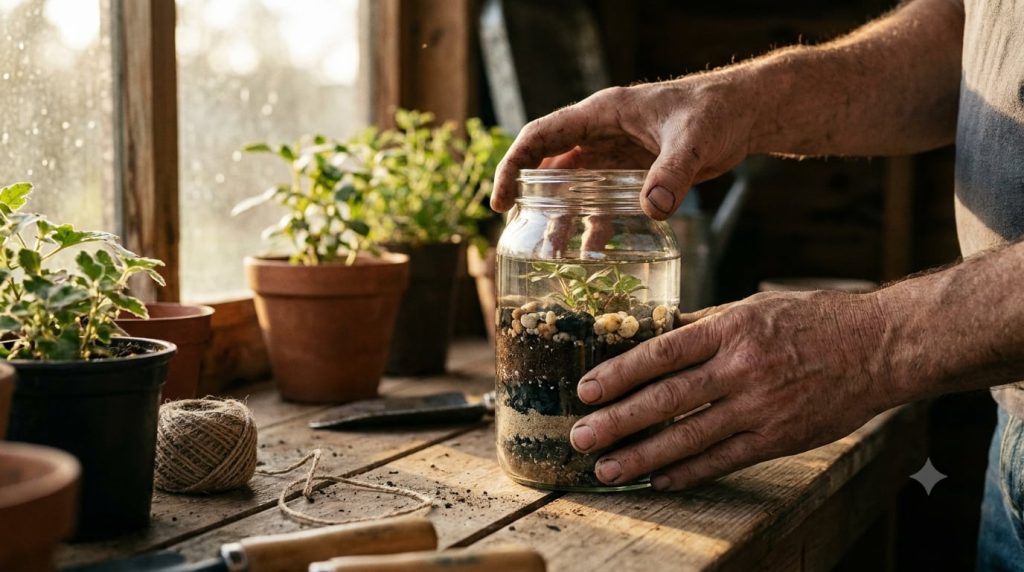
A simple jar test helps you identify your soil type. Fill a clear jar about one-third full with soil, add water until nearly full, shake well, and let it settle for 24 hours. Sand settles first, silt forms a middle layer, and clay stays suspended longest. You can also try the squeeze test: moist soil that forms a loose ball and crumbles easily is usually close to loam.
For acidity, a basic pH test kit from a garden center gives a useful reading. Knowing the pH helps you choose plants that can actually absorb nutrients from your soil.
Practical Steps to Improve Any Soil
- Mix well-rotted compost into beds each season to build soil structure.
- Mulch bare soil to reduce crusting and keep moisture in.
- Avoid working wet clay soil, since it compacts easily.
- Rotate crops each year to reduce disease and nutrient depletion.
Compost tea is one gentle option for feeding young plants. Steep finished compost in water for a day or two, then dilute it before watering. It can add nutrients and beneficial microbes, but it works best as part of a broader soil-building routine rather than a quick fix.
Matching Seeds to Your Garden
Before buying seed packets, note your soil type, sun exposure, and local climate. Choosing plants that suit your conditions saves money, time, and frustration. Local extension services and garden centers can also offer advice tailored to your region.
Final Thoughts
Healthy plants start with the right match between soil and seed. Test your soil, improve it with organic matter, and choose crops that enjoy what you already have. Tell us in the comments which soil type your garden has, and we will be happy to suggest plants that fit it.