Growing vegetables in containers is one of the most rewarding ways to enjoy fresh produce, whether you have a sunny balcony, a small patio, or a backyard with limited space. Tomatoes, peppers, lettuce, and herbs all thrive in pots. Before you plant, though, it helps to think carefully about what the container itself is made of, because the material can affect the soil, the roots, and the food you eat later.
Why Container Material Matters
Vegetables pull water and nutrients from the soil around their roots, and those roots can grow into every corner of the container. If the material breaks down, leaches substances, or holds water in a way that suffocates roots, your plants will struggle. A safe container keeps the soil stable, drains well, and avoids introducing unwanted materials into your growing space.
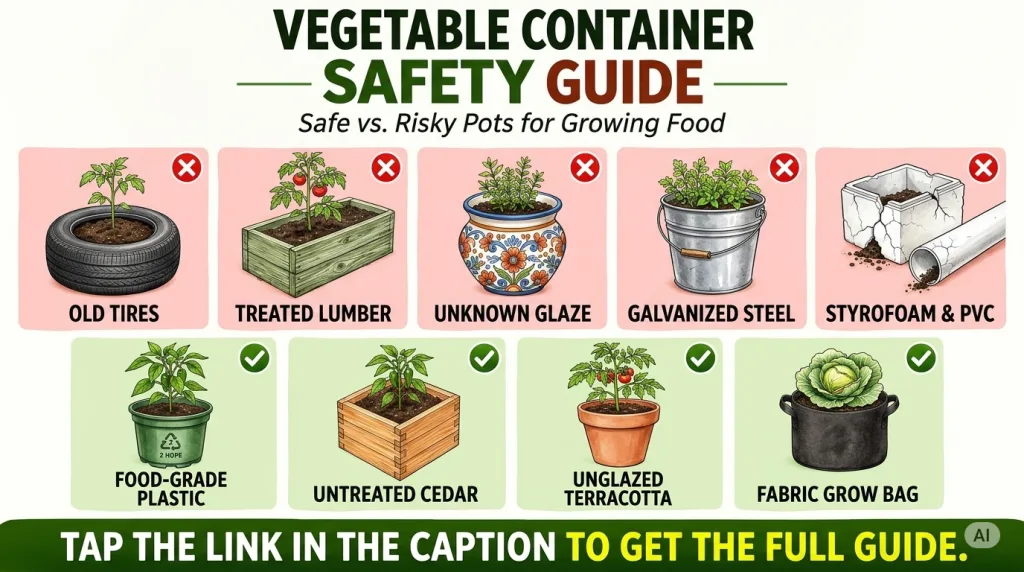
Containers to Approach with Caution
Old Tires
Tires are sometimes repurposed as planters because they are cheap and sturdy. However, rubber can release chemicals into the soil over time, especially in warm weather. For this reason, tires are generally not recommended for growing vegetables that you plan to eat.
Older Treated Wood
Wood that was pressure-treated in the past may contain preservatives that you do not want near edible plants. Modern treated lumber is widely considered safer than older formulations, but labels are not always easy to read. If you use any treated wood, check the product information carefully and consider lining the inside of the box with a food-safe barrier.
Unknown Plastics and Recycled Containers
Some plastic containers are made from materials that are not intended for food contact. If you do not know the origin of a container, such as an old chemical drum or a bucket that once held motor oil or pesticide, it is best to set it aside for ornamental use only.
Containers That Are Generally Considered Safe
- Terracotta or clay pots: Porous, breathable, and easy to find. Choose pots with drainage holes.
- Untreated wood: Cedar and redwood are popular choices for raised beds and window boxes.
- Food-grade plastic buckets: Look for a food-safe label and drill drainage holes in the base.
- Fabric grow bags: Lightweight, breathable, and good for root health.
- Ceramic or glazed pots: Choose lead-free glazes whenever possible.
Tips for Setting Up a Safe Vegetable Container
- Always make sure the container has adequate drainage holes so roots do not sit in standing water.
- Choose a size that matches the mature size of your plant. Tomatoes need larger pots than herbs.
- Use a high-quality potting mix rather than garden soil, which can compact in containers.
- Keep containers in a location that receives enough sunlight for the vegetables you are growing.
- Check containers each season for cracks, fading, or signs of wear.
Final Thoughts
Choosing the right container is a simple step that makes a big difference for your harvest. Stick with terracotta, untreated wood, food-grade materials, or breathable fabric bags, and avoid containers whose history you do not know. With a little planning, your balcony or backyard can become a productive vegetable garden that you feel good about sharing with family and friends.