Knowledge is truly power, especially when it comes to your health! Understanding the warning signs of diabetes and knowing how nutrition plays a crucial role in both prevention and management can empower you to take proactive steps towards a healthier life. Diabetes is a chronic condition that affects how your body turns food into energy, and recognizing its early signs can make a significant difference in your long-term well-being.
This comprehensive guide dives deep into the key aspects of diabetes, from identifying its subtle indicators to implementing smart food choices that support your body and help you thrive. Let’s explore together how you can safeguard your health and prevent the progression of this common condition.
Understanding Diabetes: A Quick Overview
Before we dive into the specifics, it’s helpful to understand what diabetes is. Diabetes occurs when your blood sugar (glucose) is too high. Glucose comes from the food you eat and is your body’s main source of energy. Insulin, a hormone made by the pancreas, helps glucose get into your cells to be used for energy. If your body doesn’t make enough insulin, or if it can’t use insulin effectively, glucose stays in your blood and doesn’t reach your cells. Over time, high blood glucose can cause serious health problems.
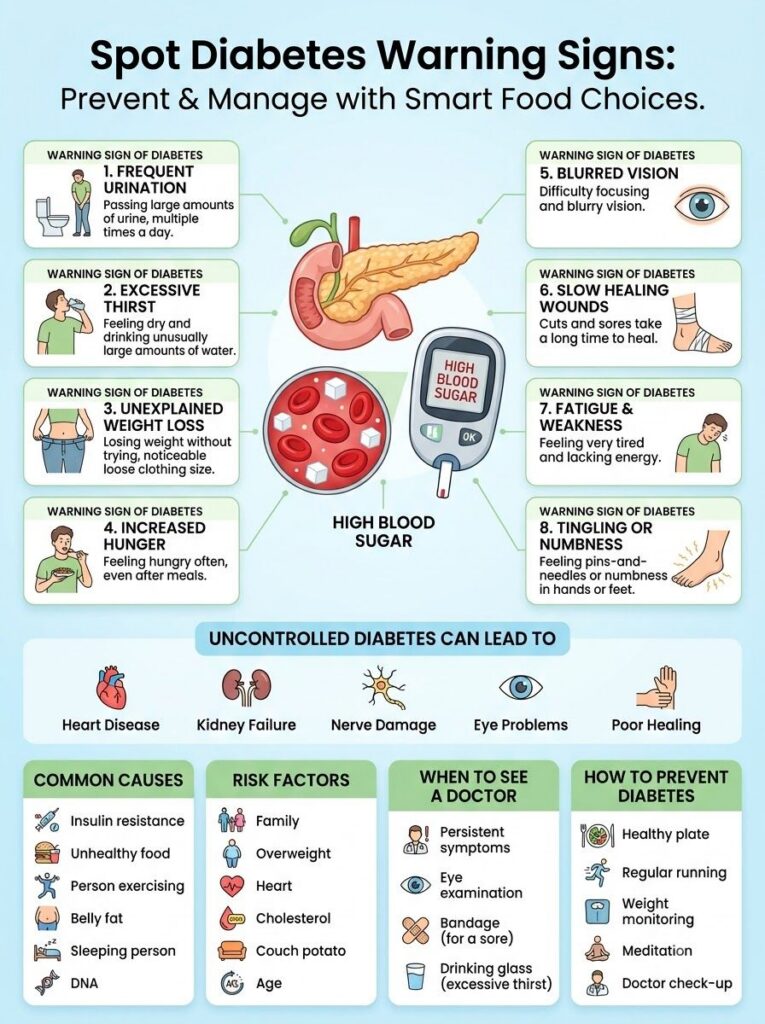
8 Key Warning Signs of Diabetes to Look Out For
Early detection of diabetes is crucial for effective management and preventing complications. Pay attention to these common warning signs:
- Frequent Urination: When blood sugar is high, your kidneys try to remove the excess sugar, leading to increased urine production.
- Increased Thirst: Excessive urination can cause dehydration, making you feel constantly thirsty.
- Unexplained Weight Loss: Despite eating normally, your body might not be getting enough energy from food, leading to weight loss.
- Increased Hunger: Your cells aren’t getting glucose for energy, so your body signals that it needs more food.
- Blurred Vision: High blood sugar can pull fluid from the lenses of your eyes, affecting your ability to focus.
- Slow-Healing Sores or Frequent Infections: High blood sugar impairs your immune system and affects blood flow, making it harder for wounds to heal and increasing susceptibility to infections.
- Fatigue: Lack of glucose in cells means a lack of energy, leading to persistent tiredness.
- Tingling or Numbness: High blood sugar can damage nerves, particularly in the hands and feet.
The Serious Consequences of Uncontrolled Diabetes
Ignoring the warning signs and leaving diabetes uncontrolled can lead to severe and potentially life-threatening health complications. These include:
- Heart Disease: Diabetes significantly increases the risk of heart attack, stroke, and other cardiovascular problems.
- Kidney Failure: High blood sugar can damage the small blood vessels in your kidneys, leading to kidney disease or even failure.
- Nerve Damage (Neuropathy): This can cause pain, tingling, numbness, and weakness, often starting in the feet.
- Eye Problems (Retinopathy): Diabetes can damage the blood vessels in the retina, potentially leading to vision loss and blindness.
- Poor Healing & Amputations: Impaired circulation and nerve damage, especially in the feet, can lead to slow-healing wounds and, in severe cases, amputations.
Common Causes and Risk Factors
Common Causes
While the exact cause varies between type 1 and type 2 diabetes, general causes include:
- Insulin Resistance: Your body’s cells don’t respond normally to insulin.
- Insufficient Insulin Production: Your pancreas doesn’t make enough insulin.
- Genetic Predisposition: A family history of diabetes increases your risk.
Risk Factors
Several factors can increase your likelihood of developing type 2 diabetes:
- Obesity or Overweight: Especially excess abdominal fat.
- Physical Inactivity: Lack of regular exercise.
- Unhealthy Diet: High intake of processed foods, sugary drinks, and unhealthy fats.
- Age: Risk increases after age 45.
- Ethnicity: Certain ethnic groups have a higher risk.
- History of Gestational Diabetes: Developing diabetes during pregnancy increases future risk.
- Polycystic Ovary Syndrome (PCOS): A common risk factor for women.
When to See a Doctor
If you experience any of the warning signs mentioned above, or if you have several risk factors, it’s crucial to consult a healthcare professional. Early diagnosis allows for timely intervention and better management of the condition, preventing or delaying severe complications. Don’t wait for symptoms to worsen.
How to Prevent and Manage Diabetes with Smart Food Choices
Adopting a healthy lifestyle, particularly through smart food choices, is one of the most powerful tools you have against diabetes, both for prevention and management.
For Prevention: Building a Foundation of Health
- Embrace Whole Foods: Prioritize whole, unprocessed foods like fruits, vegetables, whole grains, lean proteins, and healthy fats. These foods provide essential nutrients and fiber, which help regulate blood sugar.
- Limit Added Sugars and Refined Carbs: Cut back on sugary drinks, candies, pastries, and white bread. These cause rapid spikes in blood sugar.
- Control Portion Sizes: Eating appropriate portions helps manage calorie intake and prevents overeating, which can contribute to weight gain.
- Stay Hydrated: Drink plenty of water throughout the day. Sugary beverages contribute to weight gain and increase diabetes risk.
- Increase Fiber Intake: Foods rich in fiber (e.g., oats, beans, leafy greens, berries) slow down sugar absorption, helping to stabilize blood glucose levels.
- Choose Healthy Fats: Incorporate monounsaturated and polyunsaturated fats from sources like avocados, nuts, seeds, and olive oil.
For Management: Nutritional Strategies for Stable Blood Sugar
If you’ve been diagnosed with diabetes, these dietary principles become even more vital:
- Consistent Meal Times: Eating meals and snacks at regular intervals can help stabilize blood sugar levels.
- Carbohydrate Counting: Work with a registered dietitian to learn how to count carbohydrates, which is essential for managing insulin doses if you’re on insulin.
- Glycemic Index Awareness: Choose foods with a lower glycemic index (GI), which cause a slower, more gradual rise in blood sugar.
- Lean Protein Sources: Include lean proteins like fish, chicken, tofu, and legumes in your meals to help with satiety and blood sugar control.
- Monitor Blood Glucose: Regularly check your blood sugar levels as recommended by your doctor to understand how different foods affect you.
- Mindful Eating: Pay attention to your body’s hunger and fullness cues to avoid overeating.
Take Control of Your Health Journey
Understanding diabetes warning signs and implementing smart food choices are not just about managing a condition; they are about embracing a proactive lifestyle that fosters overall well-being. By being informed, making conscious dietary decisions, and seeking medical advice when needed, you can significantly impact your health trajectory. Your body deserves the best care, and empowering yourself with knowledge is the first step on that journey. Stay curious, stay informed, and always prioritize your health!