Have you ever eaten leftovers and thought, “It tastes different, but it’s probably the same nutritionally”?
That assumption is not always true.
Some foods change their structure, nutrient availability, and metabolic impact within just 24 hours after cooking, cooling, or cutting. Interestingly, a few actually become better for your gut and blood sugar, while others lose valuable vitamins faster than most people realize.
Why 24 Hours Matters More Than You Think
Once food is cooked or cut, several processes begin:
- Starch molecules reorganize
- Vitamins oxidize when exposed to air
- Flavor compounds intensify
- Blood sugar impact can shift
So “fresh” is not always best — and “leftovers” are not always bad.
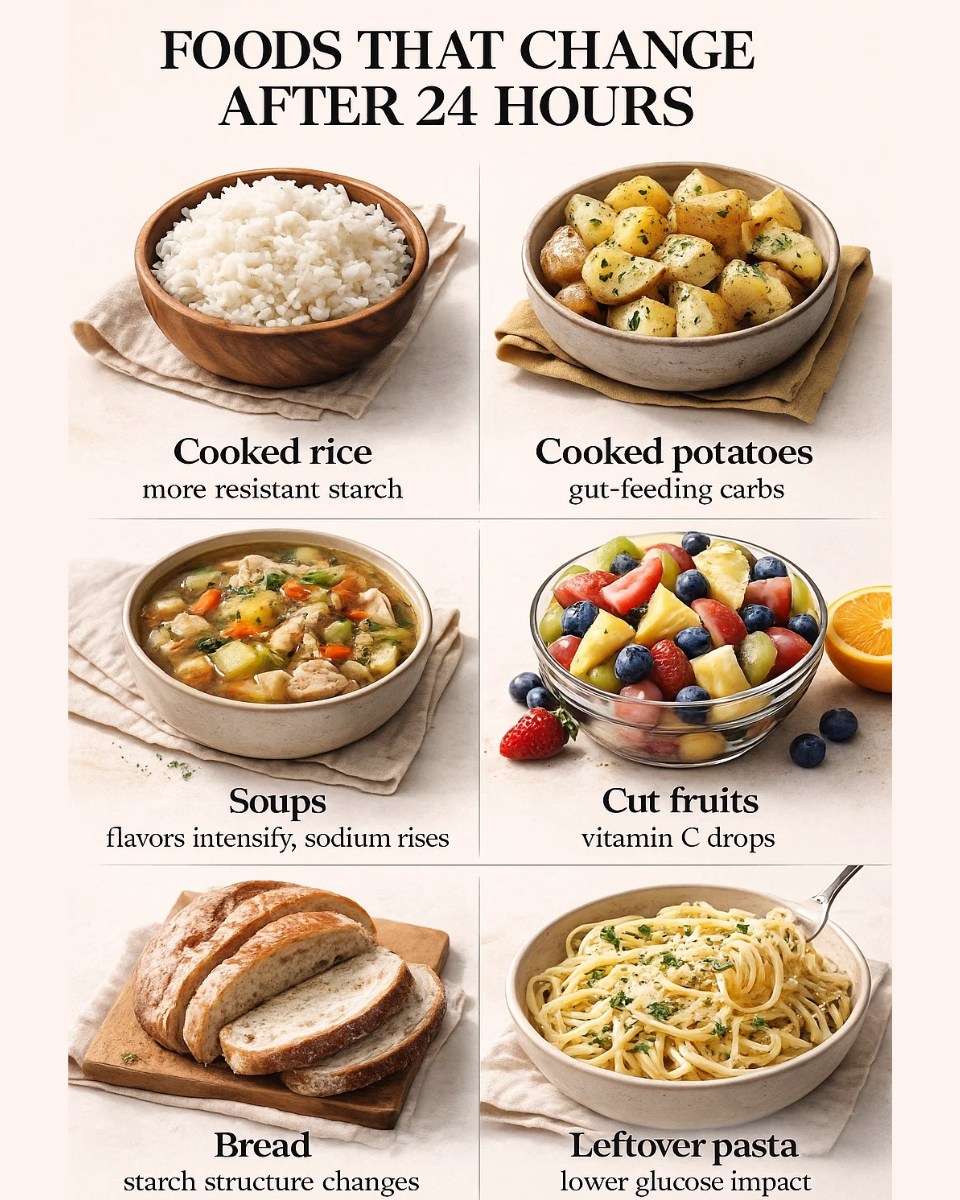
6 Foods That Change After 24 Hours
1. Cooked Rice – More Resistant Starch
When cooked rice is cooled and stored for 24 hours, part of its starch turns into resistant starch.
This matters because resistant starch:
- Feeds beneficial gut bacteria
- Slows glucose absorption
- Helps you feel full longer
Best way to use it:
Let rice cool completely, refrigerate it, then gently reheat before eating. It keeps the benefits while improving texture.
2. Cooked Potatoes – Gut-Feeding Carbs
Cooked potatoes undergo a similar transformation after cooling.
After 24 hours, they contain more gut-supporting resistant starch, which:
- Supports digestion
- Reduces blood sugar spikes
- Improves insulin response
Best choice:
Boiled or steamed potatoes cooled overnight. Avoid deep frying if your goal is metabolic balance.
3. Soups – Stronger Flavor, Higher Sodium Impact
Soups often taste better the next day because flavors meld and intensify.
However:
- Sodium concentration may increase
- Seasonings penetrate deeper into ingredients
This is great for taste, but not ideal if you are sensitive to salt or prone to water retention.
Smart tip:
Season lightly when cooking. Adjust flavor after reheating instead of over-salting upfront.
4. Cut Fruits – Vitamin C Drops Quickly
Cut fruits are the biggest nutritional losers after 24 hours.
Vitamin C:
- Is highly sensitive to air and light
- Begins degrading soon after cutting
Even when refrigerated, cut fruits can lose a significant portion of their vitamin C within a day.
Best practice:
Cut fruit right before eating. If storing, keep it airtight and consume the same day.
5. Bread – Starch Structure Changes
Bread undergoes starch retrogradation as it sits.
After 24 hours:
- Texture becomes firmer
- Starch behaves differently in digestion
- Blood sugar response may change depending on the type of bread
This does not make bread “bad,” but it does make it different.
Helpful trick:
Lightly toasting bread improves texture and palatability.
6. Leftover Pasta – Lower Glucose Impact
This one surprises many people.
Cooked pasta that is cooled and eaten after 24 hours often has a lower blood sugar impact than freshly cooked pasta.
Why?
- Some starch becomes resistant
- Digestion slows slightly
- Energy release becomes steadier
Best use:
Cool pasta fully, refrigerate, then reheat gently. Avoid overheating, which reverses some benefits.

How to Build Smarter Meals Using This Knowledge
You do not need to eat “old food” on purpose. Just use timing wisely.
- Prepare rice, potatoes, or pasta ahead of time
- Store them safely in the refrigerator
- Pair them with protein and vegetables
- Limit how long cut fruits are stored
Understanding food behavior helps you work with your body, not against it.
When You’ll Notice the Difference
Most people report:
- Within days: smoother digestion
- Within 1–2 weeks: more stable energy levels
- Over time: improved gut comfort and blood sugar control
Consistency matters more than perfection.
Safety Notes You Should Not Skip
- Never eat food with signs of spoilage
- Store leftovers below 4°C (40°F)
- Consume within 24–48 hours
- Reheat thoroughly but gently
- Extra caution for pregnant individuals or weakened immunity
Final Takeaway
Not all leftovers are equal.
Some foods quietly become more gut-friendly after 24 hours, while others lose fragile nutrients like vitamin C very quickly. When you understand these changes, you can reduce waste, improve digestion, and make everyday meals work better for your body.
Save this guide if you meal prep or eat leftovers often.