As summer gently begins its transition towards autumn, August offers a prime opportunity to savor the peak flavors of your herb garden. This is a crucial time for harvesting, not only to enjoy fresh herbs in your late-summer cooking but also to encourage more vigorous growth and prepare for preservation. Whether you’re a seasoned gardener or just starting out, knowing when and how to pick your herbs can make all the difference in their flavor, potency, and the overall health of your plants.
Imagine stepping into your garden, scissors in hand, to gather fragrant basil for a fresh pesto or snipping a sprig of rosemary for a savory roast. This guide will walk you through the essential techniques for harvesting ten popular aromatic herbs that thrive this time of year, ensuring your culinary creations are infused with the freshest, most vibrant tastes. Get ready to transform your garden’s bounty into delicious dishes and lasting flavor for months to come!
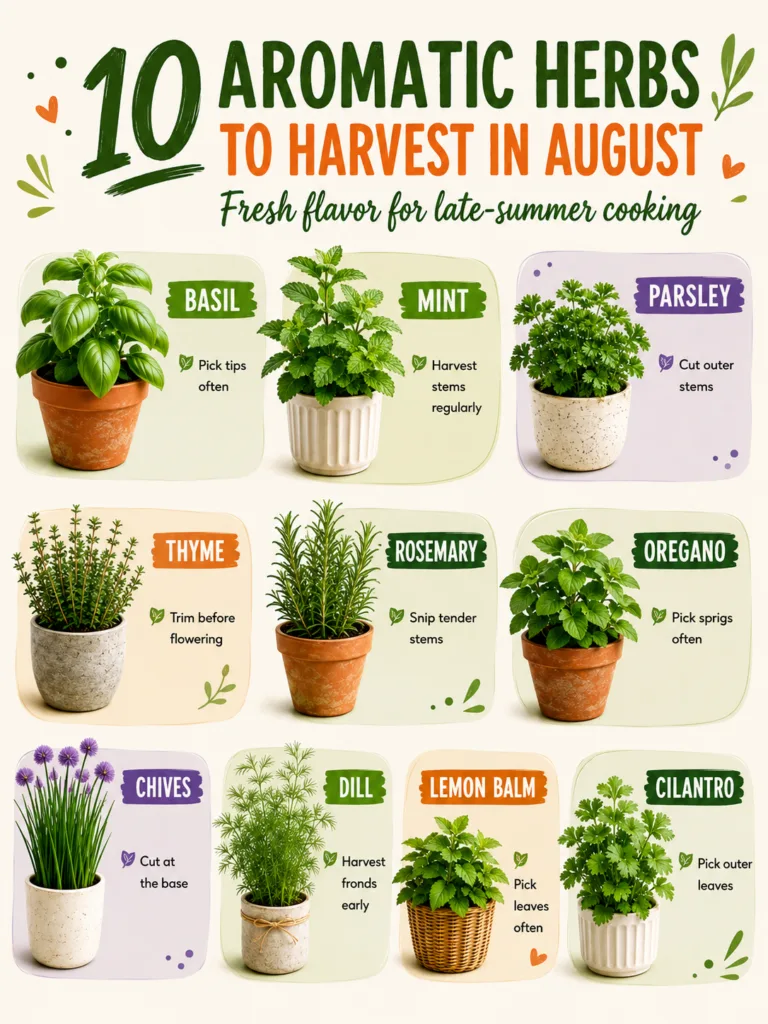 Unlock peak flavor by harvesting these ten aromatic herbs in August.
The Art of August Herb Harvesting: More Than Just Picking
August is a generous month in the herb garden. Warm days and usually sufficient moisture mean many herbs are at their most fragrant and flavorful, often just before they begin to flower. Harvesting at the right time not only provides you with superior ingredients but also acts as a form of pruning, encouraging the plant to produce more foliage rather than putting all its energy into seed production. Regular harvesting prevents plants from ‘bolting’ (going to seed prematurely), which can make leafy herbs like basil and parsley bitter.
General Harvesting Principles for Bountiful Herbs
- Timing is Key: The best time to harvest most herbs is in the morning, after the dew has dried but before the sun gets too intense. This is when their essential oils are most concentrated.
- Use Clean Tools: Always use sharp, clean scissors or pruning shears to make clean cuts. This minimizes damage to the plant and prevents disease.
- Don’t Over-Harvest: Never remove more than one-third of a plant’s foliage at a time, especially from young or less vigorous plants. This allows the plant to continue photosynthesizing and recover quickly.
- Pinch vs. Cut: For leafy herbs, ‘pinching’ (removing individual leaves or tender stems) encourages bushier growth. For woody herbs, ‘cutting’ (removing longer stems) is often necessary for shaping and stimulating new growth.
- Watch for Flowers: For many herbs grown for their leaves, harvesting just before they flower will yield the best flavor. Once a plant flowers, its energy shifts, and leaf flavor can diminish.
Your Guide to Harvesting 10 Aromatic Herbs in August
Let’s dive into the specifics for each of these garden favorites:
Basil (Ocimum basilicum)
Basil thrives in the heat of late summer. Regular harvesting is essential to keep it producing those wonderfully aromatic leaves and to prevent it from flowering (bolting), which can make the leaves bitter.
- Hardiness: Annual (sensitive to cold)
- Plant type: Herb
- Exposure: Full sun (at least 6 hours direct sunlight)
- Height: 18-24 inches
- Spread: 12-18 inches
- Harvesting Tip: Harvest before flowering to keep leaves coming. Pinch off individual leaves or, for larger harvests, cut whole stems just above a leaf node. This encourages two new shoots to emerge, making your plant bushier.
- Practical Care: Basil loves consistent moisture and rich, well-draining soil. Consider succession planting every 3-4 weeks for a continuous supply.
Chives (Allium schoenoprasum)
A delightful perennial, chives offer a mild onion flavor that enhances many dishes. August is a great time to give them a good haircut.
- Hardiness: Perennial (USDA Zones 3-9)
- Plant type: Herb
- Exposure: Full sun to partial shade
- Height: 12-18 inches
- Spread: 6-12 inches
- Harvesting Tip: Cut about 2 inches from the ground, leaving enough for regrowth. Snip flowers for a milder onion flavor – they’re edible and beautiful! Regular cutting stimulates new growth.
- Practical Care: Chives prefer moist, well-draining soil. They can be divided every 3-4 years to maintain vigor and spread their bounty.
Dill (Anethum graveolens)
Dill’s feathery fronds are perfect for pickles, salads, and fish. In August, you can harvest both the foliage and begin to look for seeds.
- Hardiness: Annual/Biennial (self-seeds readily)
- Plant type: Herb
- Exposure: Full sun
- Height: 2-4 feet
- Spread: 1-2 feet
- Harvesting Tip: Harvest outer fronds from the plant. For seeds, allow some flower heads to mature; pick seeds when they are dry and brown.
- Practical Care: Dill requires well-draining soil and can benefit from staking if it gets tall. Plant in succession for a continuous supply of fresh fronds.
Marjoram (Origanum majorana)
Sweet and delicate, marjoram is a Mediterranean herb that thrives in warm conditions. August is an ideal time to harvest its flavorful leaves.
- Hardiness: Tender Perennial (USDA Zones 7-10), often grown as an annual
- Plant type: Herb
- Exposure: Full sun
- Height: 12-24 inches
- Spread: 12-18 inches
- Harvesting Tip: Snip stems above a leaf node once flowers begin to appear. The leaves are best fresh, but can also be dried. Harvest before it flowers for the most intense flavor.
- Practical Care: Marjoram prefers well-draining, slightly sandy soil. It’s drought-tolerant once established but benefits from occasional watering during dry spells.
Mint (Mentha spp.)
Mint is a vigorous grower, and August is a great time for a generous harvest. Remember, its assertive nature means it’s often best grown in containers.
- Hardiness: Perennial (USDA Zones 3-11, depending on species)
- Plant type: Herb
- Exposure: Full sun to partial shade
- Height: 12-24 inches
- Spread: Spreading habit, can be aggressive
- Harvesting Tip: Cut sprigs above a leaf node for continuous growth. Pinch off flowers to prolong leaf production and maintain flavor.
- Practical Care: Mint loves moist soil and can tolerate a range of light conditions. Grow in pots to prevent it from taking over your garden beds.
Oregano (Origanum vulgare)
A staple in Mediterranean cuisine, oregano is robust and flavorful. Harvest it frequently in late summer to encourage new growth and preserve its potency.
- Hardiness: Perennial (USDA Zones 4-10)
- Plant type: Herb
- Exposure: Full sun
- Height: 1-2 feet
- Spread: 1-2 feet
- Harvesting Tip: Harvest whole stems, leaving about 2-3 inches for regrowth. The best flavor is just before flowering.
- Practical Care: Oregano thrives in well-draining soil and tolerates dry conditions once established. A good shearing in mid-summer encourages a flush of new, tender growth.
Parsley (Petroselinum crispum)
Parsley is a biennial, often grown as an annual, and is a workhorse in the kitchen. August is prime time for its lush green leaves.
- Hardiness: Biennial (often grown as annual), USDA Zones 4-9
- Plant type: Herb
- Exposure: Full sun to partial shade
- Height: 1-2 feet
- Spread: 6-12 inches
- Harvesting Tip: Cut outer stems near the base, allowing inner leaves to mature. Harvest frequently for more growth, encouraging the plant to put out new foliage.
- Practical Care: Parsley prefers consistently moist, rich, well-draining soil. It can benefit from some afternoon shade in hot climates.
Rosemary (Salvia rosmarinus)
This woody evergreen perennial adds a piney, savory note to dishes. August harvesting focuses on tender new growth.
- Hardiness: Tender Perennial (USDA Zones 7-10) or container plant elsewhere
- Plant type: Shrubby herb
- Exposure: Full sun
- Height: 2-6 feet (can be smaller in containers)
- Spread: 2-4 feet
- Harvesting Tip: Snip woody stems with sharp shears, leaving green growth. Harvest lightly for young plants to ensure they establish well. Focus on new, tender growth for cooking.
- Practical Care: Rosemary needs excellent drainage and prefers slightly sandy, alkaline soil. Avoid overwatering, especially in cooler months.
Sage (Salvia officinalis)
Sage is a robust, fuzzy-leaved perennial that offers earthy, aromatic notes. Harvest from mature plants to ensure their long-term health.
- Hardiness: Perennial (USDA Zones 4-9)
- Plant type: Herbaceous shrub
- Exposure: Full sun
- Height: 1-3 feet
- Spread: 1-3 feet
- Harvesting Tip: Harvest leaves from mature plants (at least a year old). Cut back stems, leaving a few inches for regrowth. Avoid heavy pruning in late autumn, as new growth might not harden off before winter.
- Practical Care: Sage thrives in well-draining soil and full sun. It’s drought-tolerant once established and generally low-maintenance.
Thyme (Thymus vulgaris)
Delicate yet potent, thyme is another woody perennial that benefits from regular trimming. August is a great time to gather its tiny, fragrant leaves.
- Hardiness: Perennial (USDA Zones 4-9)
- Plant type: Herbaceous sub-shrub
- Exposure: Full sun
- Height: 6-12 inches
- Spread: 12-18 inches
- Harvesting Tip: Snip stems, leaving the woody base and some foliage for regrowth. Best flavor just before flowering.
- Practical Care: Thyme requires excellent drainage and thrives in full sun. It’s very drought-tolerant and can be easily propagated from cuttings.
Maximizing Your Late-Summer Herb Bounty
Beyond individual plant care, understanding broader gardening principles ensures your August harvest is a success.
Common Harvesting Mistakes to Avoid
- Harvesting Too Much Too Soon: Patience is a virtue. Allow young plants to establish a strong root system and sufficient foliage before taking large harvests.
- Ignoring Bolt-Prone Herbs: Letting basil or cilantro go to seed will quickly diminish their leaf quality. Regular pinching and harvesting prevents this.
- Using Dull Tools: Ragged cuts can stress plants and make them more susceptible to disease. Always use sharp, clean scissors or pruners.
- Forgetting to Water: While some herbs are drought-tolerant, consistent, even moisture (especially in pots) helps them produce lush foliage, particularly during active harvesting periods.
- Harvesting in Mid-Day Sun: The heat can cause herbs to wilt quickly and reduces their essential oil content. Early morning is always best.
Regional Harvesting Considerations Across the U.S.
August’s growing conditions vary significantly across the United States. Your local climate will influence how you approach your late-summer herb harvest:
- Northern Climates (USDA Zones 3-5): August may be one of your last big harvests before cooler temperatures begin in September. Focus on harvesting leafy annuals like basil for pesto or drying, as their season is nearing its end.
- Mid-Atlantic and Midwest (USDA Zones 6-8): August is a peak month, but keep an eye on extended heat waves. Provide afternoon shade for tender herbs and ensure consistent watering. You may get several more harvests before frost.
- Southern and Western Warm Climates (USDA Zones 9-11): Many herbs will continue to thrive well into fall and even winter. You might need to protect some herbs from intense afternoon sun, and consistent watering during dry spells is crucial. Consider a final, larger harvest in late August/early September for drying and preserving.
Always check your local extension service for specific advice tailored to your microclimate and average first frost dates. This will help you plan your final harvests and decide which herbs to bring indoors as houseplants for continued enjoyment.
Embrace Your August Herb Garden
August harvesting isn’t just a chore; it’s a celebration of your gardening efforts and the bounty of the season. By understanding the specific needs of each herb and applying a few core harvesting principles, you can ensure your plants remain healthy and productive, providing you with an abundance of fresh, aromatic flavors. So, grab your shears, step into your garden, and enjoy the delicious rewards of your late-summer herb patch. Whether you’re making a vibrant pesto, infusing oils, or simply garnishing your dinner, these herbs are ready to elevate your culinary experience.