Raccoons. For many home gardeners and small farm enthusiasts, the name alone can conjure images of raided corn patches, overturned compost bins, and vanished pet food. These masked bandits are notorious for their ability to circumvent seemingly foolproof deterrents, making them one of the most persistent and perplexing challenges in urban and rural gardens alike. But what makes these creatures so remarkably effective at their nocturnal missions?
It’s not just luck; it’s a fascinating blend of highly evolved senses, sharp cognitive abilities, and incredible adaptability. Understanding the specific traits that make raccoons so clever isn’t just a matter of curiosity; it’s a crucial step in developing more effective, humane, and sustainable strategies to protect your cherished plants and harvests. By peeling back the layers of their intelligence, we can move beyond frustration and equip ourselves with practical knowledge to better coexist with these resourceful neighbors.
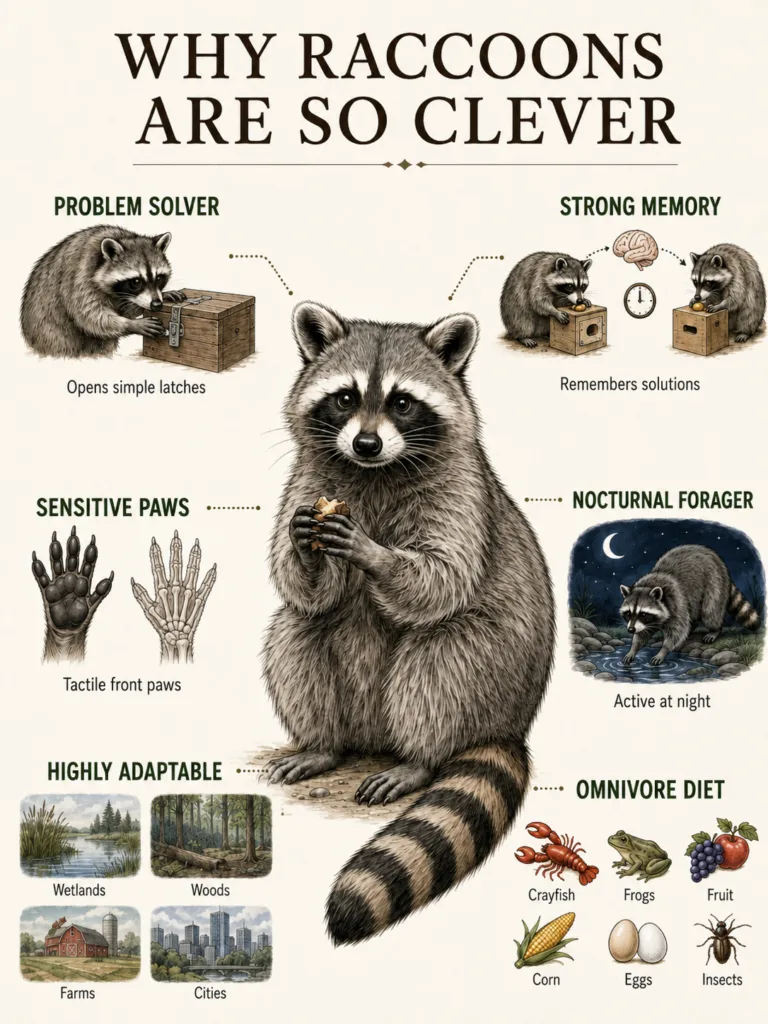 Understanding a raccoon’s unique skills is the first step in protecting your garden.
The Core of Raccoon Cleverness: A Survival Masterclass
At their heart, raccoons are survivors. Every aspect of their intelligence and physical makeup is honed for finding food, shelter, and avoiding danger in a constantly changing world. For gardeners, this means facing an opponent that learns, remembers, and adapts. Simply putting up a fence or securing a lid once isn’t enough; raccoons are constantly testing boundaries and refining their methods.
Let’s dive into the specific traits that make these animals the cunning garden visitors we often encounter:
1. Exceptional Sense of Touch: Their Paws Are Their Eyes
Perhaps their most remarkable sensory ability, a raccoon’s front paws are packed with highly sensitive nerve endings. Unlike most mammals, their tactile receptors become even more sensitive when wet. This allows them to effectively ‘see’ with their hands, identifying objects, textures, and even the subtle contours of food sources in complete darkness or murky water.
- Gardening Tip: This incredible sense means they can easily feel for weaknesses in fences, find gaps, and manipulate latches that might feel secure to us. Smooth, hard surfaces are harder for them to grip and explore than textured ones.
2. Superb Memory: Learning from Every Encounter
Raccoons possess an impressive long-term memory. Studies have shown they can remember solutions to complex problems, like navigating a maze or opening a tricky latch, for extended periods, even after months of not encountering the problem. This means a raccoon that successfully raids your compost bin once will likely remember how to do it again.
- Gardening Tip: Consistent deterrence is key. If a raccoon learns a path to food, it will revisit it. Changing your approach or fortifying defenses after an initial breach is essential. Don’t assume they’ll forget.
3. High Intelligence: Problem-Solvers Extraordinaire
Raccoons are often compared to primates in their problem-solving capabilities. They can assess situations, learn from trial and error, and even use tools in rudimentary ways. This high intelligence allows them to adapt quickly to new challenges, whether it’s figuring out how to open a cooler or dismantling a bird feeder.
- Gardening Tip: Simple barriers are rarely enough. Raccoons will observe, test, and strategize. If one method fails, they’ll often try another. This requires gardeners to think a step ahead and use multiple layers of defense.
4. Nimble Fingers: Dexterity Beyond Belief
Their front paws are uncannily similar to human hands, complete with five distinct, unwebbed digits. This dexterity allows them to grasp, twist, pull, and manipulate objects with remarkable precision. They can unlatch gates, unscrew jars, and peel back covers with ease, making many standard