As temperatures drop and winter approaches, the threat of frost looms large for many gardeners. A sudden cold snap can turn your vibrant garden into a sad, wilted landscape overnight if you’re not prepared. Protecting your plants from frost is crucial for their survival and ensuring a thriving garden come spring. But even with the best intentions, it’s easy to make mistakes that could leave your beloved plants vulnerable. Don’t worry, you’re not alone!
Here at Garden – L. Quyên, we want to help you keep your plants happy and healthy through every season. We’ve compiled a list of the 10 most common frost protection mistakes gardeners make, along with simple solutions to help you safeguard your green friends.
Mistake #1: Waiting Until the Last Minute
The Mistake:
Many gardeners wait until they hear the frost warning on the news or feel the chill in the air before scrambling to protect their plants. This often leaves them unprepared, rushing to gather materials, and possibly missing vital steps.
The Solution:
Be proactive! Start monitoring weather forecasts as autumn progresses, especially when nighttime temperatures begin to consistently dip below 45°F (7°C). Have your frost protection materials ready well in advance: old sheets, blankets, burlap, stakes, and watering cans. This way, when a frost warning is issued, you can act quickly and efficiently.
Mistake #2: Not Watering Plants Before a Freeze
The Mistake:
It might seem counterintuitive, but dry soil freezes faster and deeper than moist soil. Plants in dry soil are more susceptible to root damage from frost.
The Solution:
Deeply water your garden beds and potted plants thoroughly a day or two before a predicted frost. Moist soil retains heat better than dry soil, releasing it slowly overnight, which can raise the ambient temperature around your plants by a few degrees. Ensure good drainage to prevent waterlogging.
Mistake #3: Using Plastic Directly on Plants
The Mistake:
While plastic sheets seem like a quick fix, direct contact between plastic and plant foliage can be detrimental. Where plastic touches the leaves, it can transfer cold, causing frost damage. It also traps moisture, which can lead to fungal issues.
The Solution:
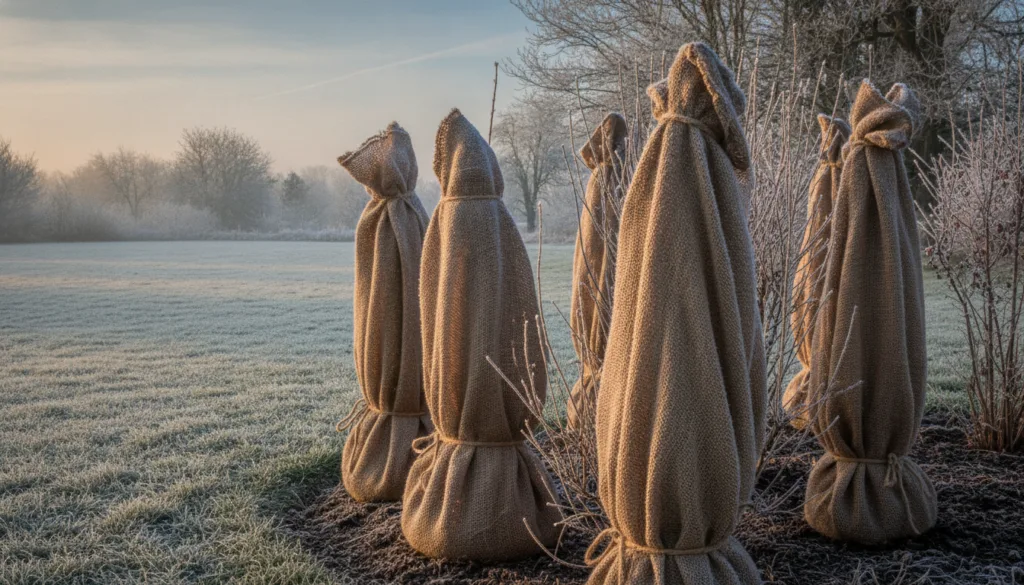
If using plastic, ensure it doesn’t touch the plant. Use stakes, hoops, or cages to create a mini-tent over your plants, allowing an air gap between the plastic and the foliage. Better yet, opt for breathable materials like burlap, old blankets, or frost cloths that allow some air circulation while providing insulation.
Mistake #4: Forgetting About Potted Plants
The Mistake:
It’s easy to focus on in-ground garden beds and overlook the vulnerability of potted plants, especially those on patios or balconies. Containers offer less insulation for roots than the ground, making them more susceptible to freezing temperatures.
The Solution:
Move potted plants indoors to a garage, shed, or even a sheltered porch if a hard frost is expected. If they’re too large to move, cluster them together to create a microclimate and wrap the pots with burlap, bubble wrap, or blankets to insulate the roots. Elevating pots off cold concrete can also help.
Mistake #5: Not Covering Adequately (or at all!)
The Mistake:
Sometimes, gardeners underestimate the severity of the cold or simply don’t cover their plants thoroughly, leaving parts exposed to the elements.
The Solution:
Ensure your coverings extend all the way to the ground, trapping warmth from the soil. Secure them with bricks, rocks, or soil to prevent wind from blowing them away. For taller plants or shrubs, creating a temporary ‘roof’ or using sturdy supports for your covers can be very effective.
Mistake #6: Leaving Covers On Too Long
The Mistake:
While protection is key, plants need sunlight and air circulation. Leaving covers on during the day after the frost danger has passed can create a hot, humid environment, which can stress plants, encourage fungal growth, and even cook them!
The Solution:
Remove covers once temperatures rise above freezing and the risk of frost has passed, typically in the late morning or early afternoon. This allows plants to breathe, photosynthesize, and prevents overheating. Remember to put them back on if evening frost is still a threat.
Mistake #7: Ignoring the Microclimate
The Mistake:
Gardens are rarely uniform. Different areas can have varying temperatures due to structures, trees, or elevation, yet gardeners often apply a one-size-fits-all approach.
The Solution:
Observe your garden’s microclimates. Areas near a south-facing wall or under the eaves of your house will often be warmer. Position your most tender plants in these sheltered spots. Conversely, open, low-lying areas might be ‘frost pockets’ and require extra protection.
Mistake #8: Pruning Before the Last Frost
The Mistake:
Pruning encourages new, tender growth that is extremely vulnerable to frost damage. Pruning too early in fall or winter can stimulate this growth, setting your plants up for failure.
The Solution:
Hold off on major pruning until late winter or early spring, after the danger of the last frost has completely passed. Dead or damaged branches can be removed at any time, but avoid anything that encourages new shoots until warmer weather is consistently here.
Mistake #9: Relying Solely on Overhead Sprinklers
The Mistake:
While overhead irrigation can be used for frost protection in certain agricultural settings (by continuously spraying water which releases latent heat as it freezes), doing this incorrectly in a home garden can actually do more harm than good, leading to ice buildup and broken branches.
The Solution:
For home gardeners, sticking to deep watering of the soil a day or two before the frost is much safer and more effective. If you’re not equipped for continuous, fine-mist irrigation (which is very specific), avoid overhead watering as a frost protection method.
Mistake #10: Not Understanding Your Plants’ Hardiness Zones
The Mistake:
Planting species that are not suited for your local climate’s minimum winter temperatures is a common and often costly mistake.
The Solution:
Always check the USDA Plant Hardiness Zone for your area and select plants that are hardy to at least one zone colder than yours if you want them to reliably survive winter outdoors with minimal protection. For tender plants you truly love, be prepared to provide significant winter protection or grow them in containers to bring indoors.
Keep Your Garden Thriving!
By avoiding these common frost protection mistakes, you can significantly improve the chances of your garden surviving the cold season. A little planning and preparation go a long way in ensuring your plants return strong and beautiful when spring arrives.
Do you have any tried-and-true frost protection tips? Share them with us in the comments below! And don’t forget to follow Garden – L. Quyên for more friendly gardening advice all year round.