Pregnancy is one of those seasons where “normal” food choices suddenly come with extra rules. It can feel confusing, especially when you are tired, hungry, and just trying to eat something that stays down.
Here’s the helpful truth. Most pregnancy food warnings are not about fear. They are about reducing avoidable risks, especially from foodborne germs (like Listeria and Salmonella) and a few nutrients that can be harmful in excess.
Most people never realize this works because food safety in pregnancy is often less about “healthy vs. unhealthy” and more about how food is handled, stored, and cooked.
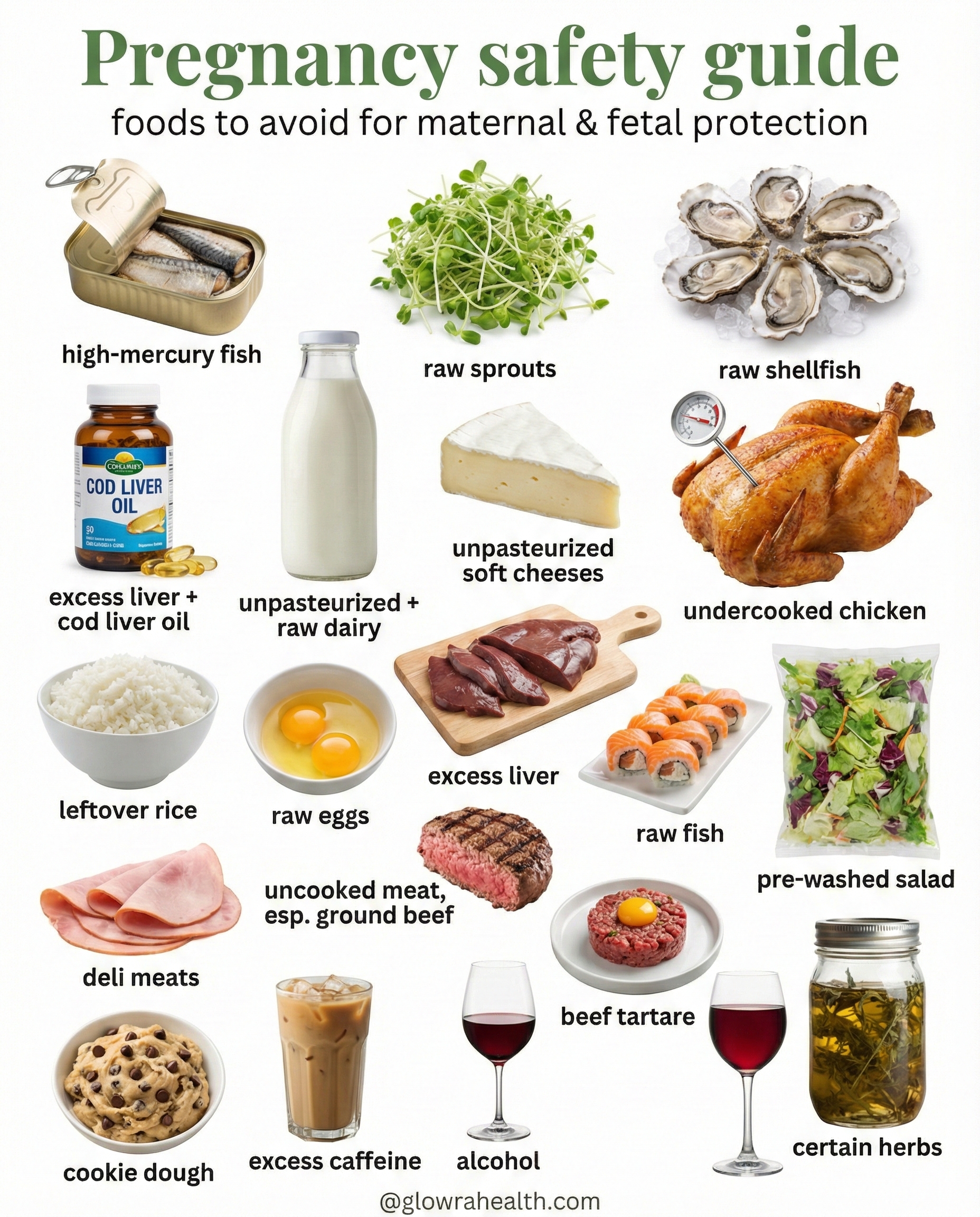
High-mercury fish
Mercury can affect a baby’s developing brain and nervous system, so pregnancy guidelines focus on limiting higher-mercury seafood and choosing lower-mercury options instead.
Raw sprouts
Raw sprouts are higher risk because bacteria can grow in the warm, humid conditions used to sprout them. Cooking makes them safer.
Raw shellfish
Raw shellfish can carry harmful germs and viruses. During pregnancy, it is safest to skip anything raw and choose thoroughly cooked versions.
Excess liver + cod liver oil
These are high in vitamin A (retinol). Too much retinol in pregnancy can harm fetal development, so many public health sources advise avoiding liver and cod liver oil unless specifically told otherwise by your clinician.
Unpasteurized + raw dairy
Unpasteurized dairy has a higher chance of carrying Listeria. Pregnancy increases vulnerability to listeriosis, so pasteurized options are preferred.
Unpasteurized soft cheeses
Soft cheeses made from unpasteurized milk are a classic listeria risk. The key word to look for is pasteurized on the label.
Undercooked chicken
Chicken must be cooked thoroughly to reduce Salmonella and Campylobacter risk. When in doubt, reheat until steaming hot and ensure the center is fully cooked.
Leftover rice
Leftover rice can be linked with Bacillus cereus if it sits too long at room temperature. Cool it quickly, refrigerate promptly, and reheat properly.
Raw eggs
Raw or undercooked eggs can carry Salmonella. This includes foods made with raw egg mixtures (some sauces and desserts).
Excess liver
Same reason as above. Liver is nutrient-dense, but too much retinol can be the issue during pregnancy.
Raw fish
Raw fish (including sushi made with raw seafood) can carry parasites and bacteria. Choosing cooked versions lowers risk.
Pre-washed salad
Bagged greens are convenient, but they have been linked to outbreaks in general populations, and pregnancy is a time to be extra cautious. Consider washing again and choosing freshly prepared produce when possible.
Deli meats
Deli meats can carry Listeria even when refrigerated. If you want them, many guidelines suggest reheating until steaming to reduce risk.
Uncooked meat, esp. ground beef
Undercooked meat can expose you to harmful germs. Ground meat is higher risk because bacteria can be mixed throughout, so it needs thorough cooking.
Beef tartare
This is raw beef, so it carries the same concerns as other raw/undercooked meats—just more directly.
Cookie dough
Cookie dough often contains raw egg and/or raw flour, both of which can carry harmful germs. It is best to avoid eating it raw.
Excess caffeine
Most guidance recommends staying under 200 mg caffeine per day during pregnancy. This can also help with sleep, nausea, and jitteriness.
Alcohol
Multiple health authorities recommend avoiding alcohol entirely during pregnancy, because there is no known safe level.
Certain herbs
“Natural” does not automatically mean pregnancy-safe. Many herbal products are not well studied in pregnancy, may be contaminated, or may interact with medications, so it is smart to check with your OB/midwife first.
How to Build a Safer Daily Plate (Without Feeling Restricted)
- Choose fully cooked proteins (well-cooked poultry, eggs, and meats).
- Pick pasteurized dairy and check labels for the word “pasteurized.”
- Wash produce carefully, and be thoughtful with bagged/pre-washed greens.
- If you eat seafood, focus on lower-mercury choices and variety (and keep everything properly cooked if you prefer maximum safety).
When You’ll Notice Changes (A Realistic Timeline)
- Right away (today): You lower exposure to the highest-risk germs and mercury sources simply by switching cooking and storage habits.
- Within 2–7 days: If you reduce excess caffeine, many people notice improved sleep quality and fewer jitters (though some feel mild withdrawal headaches for a day or two).
- Over the pregnancy: Consistent food safety habits reduce the chance of severe foodborne illness, which is the main goal.
Quick Safety Notes (Please Read)
- This guide is for general education. If you are immunocompromised, have a high-risk pregnancy, or have specific medical conditions, ask your prenatal provider for personalized food guidance.
- If you think you may have a foodborne illness (fever, severe vomiting/diarrhea, dehydration), contact a clinician promptly – pregnancy can change risk and treatment decisions.
Final Takeaway
You do not need a “perfect” pregnancy diet. You just need a few smart guardrails. By avoiding the 19 items above—or handling them with extra care – you reduce some of the most preventable risks while still eating nourishing, satisfying meals.
Related Source Science (Trusted References)
- CDC: Safer food choices for pregnant women (CDC)
- ACOG: Listeria and pregnancy (acog.org)
- FDA/EPA: Advice about eating fish (mercury guidance) (U.S. Food and Drug Administration)
- ACOG: Caffeine guidance in pregnancy (200 mg/day) (acog.org)
- NHS: Vitamin A (retinol), liver, and cod liver oil caution (nhs.uk)
- NHS/NICE: Alcohol avoidance guidance in pregnancy (nhs.uk)