If you sit for work most days, your body is doing a lot of quiet “holding.” Your hips stay flexed, your joint, spine compresses, and your connective tissue has to stabilize you even when you are not moving much.
Here’s the part most people miss: your joints and fascia are not only affected by posture. They are also influenced by hydration, minerals, protein intake, and inflammation load – and food can help.
Most people never realize this works because they chase the perfect stretch routine, but forget that tissues still need raw materials to repair and stay resilient.
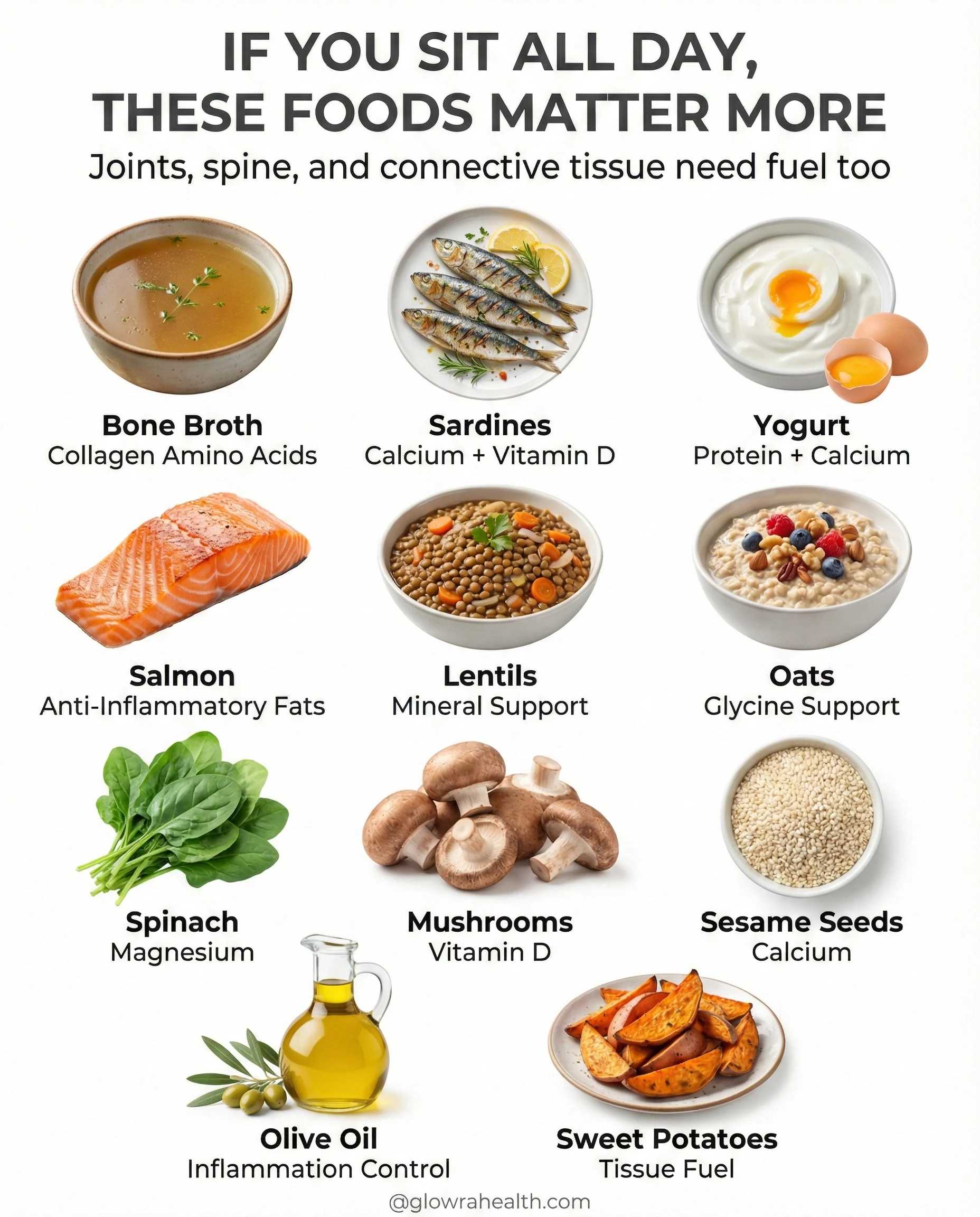
1. Bone Broth (Collagen Amino Acids)
Bone broth is often used as a “comfort food with benefits.” It supplies amino acids that support connective tissue building blocks.
How to use it
- Sip 1 mug mid-morning or afternoon.
- Use it as a base for soups with spinach, mushrooms, and lentils.
Quick note
Bone broth is not a miracle collagen fix, but it can be a simple way to increase protein and hydration when appetite is low.
2. Sardines (Calcium + Vitamin D)
Sardines are a small fish with a big nutrient profile, especially if you eat the soft bones. They support bone strength, which matters when sitting all day contributes to stiffness and reduced loading of the skeleton.
How to add sardines
- Mash on toast with olive oil and lemon.
- Add to rice bowls with spinach and a spoon of yogurt.
Taste tip
Try them with herbs, mustard, or a squeeze of citrus to mellow the flavor.
3. Yogurt (Protein + Calcium)
Yogurt is an easy “desk-friendly” protein. Protein supports muscle maintenance, which helps your joints feel supported—especially if you are not moving much.
How to use it
- Breakfast bowl with oats and sesame seeds.
- Savory yogurt sauce with olive oil, garlic, and salt (great with sweet potatoes).
If dairy bothers you
Choose lactose-free yogurt and keep the same routine.
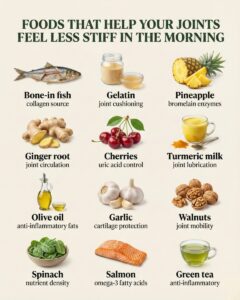
4. Salmon (Anti-Inflammatory Fats)
Salmon is best known for omega-3 fats, which many people use to support a calmer inflammation response. When you sit a lot, inflammation and stiffness can feel more noticeable – especially in the low back, neck, and shoulders.
How to eat it
- Bake once, then use leftovers in salads or bowls.
- Pair with roasted sweet potatoes and sautéed mushrooms.
Simple win
Two servings per week is already a meaningful habit for many people.
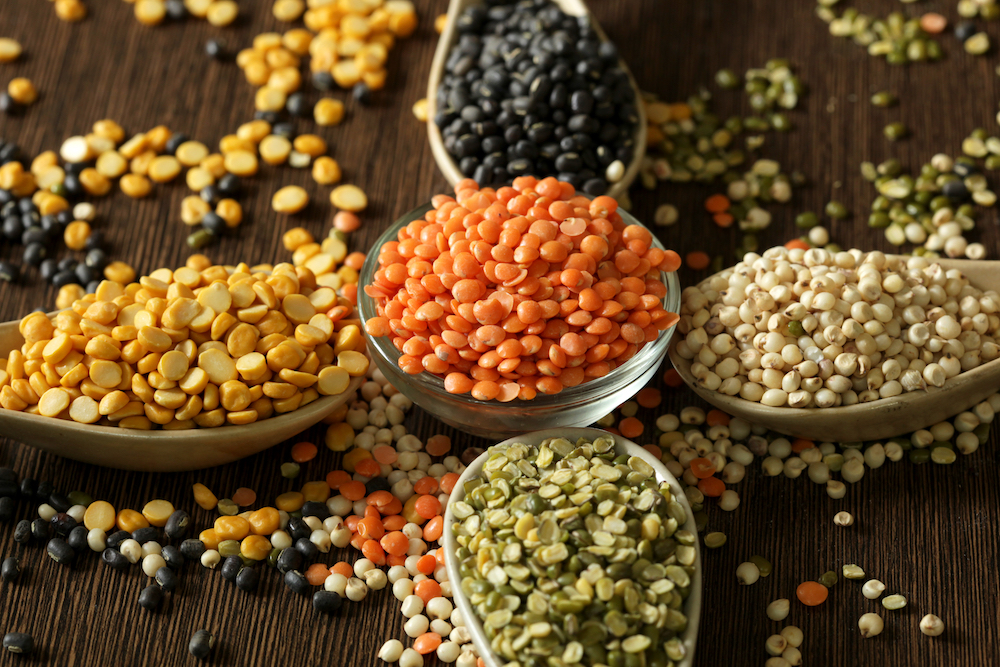
5. Lentils (Mineral Support)
Lentils are a “quiet hero” food: fiber, plant protein, and minerals that support energy and tissue repair.
How to use them
- Lentil soup with bone broth as the base.
- Warm lentil bowls with olive oil and spinach.
Digestion tip
If lentils cause gas, start with small portions and increase gradually.
6. Oats (Glycine Support)
Oats are a grounding breakfast choice that supports steady energy. When you sit all day, energy dips often lead to more coffee, more sugar cravings, and less movement—so a stabilizing breakfast can actually reduce stiffness indirectly.
How to eat oats
- Cooked oats with yogurt and sesame seeds.
- Overnight oats for a zero-prep workweek option.
Best pairing
Add protein (yogurt) and healthy fat (olive oil-based toppings or seeds) to stay full longer.
7. Spinach (Magnesium)
Spinach is known for magnesium, a mineral many people associate with muscle relaxation and tension support. If you sit all day and feel tight shoulders or cramps, magnesium-rich foods can be a helpful piece of the puzzle.
How to use it
- Toss into soups, eggs, or lentils at the end of cooking.
- Blend into smoothies if you prefer it hidden.
Quick cooking tip
Spinach cooks down fast. Keep frozen spinach on hand for convenience.
8. Mushrooms (Vitamin D)
Mushrooms are often included in “sit-all-day” food lists because vitamin D is linked to bone and muscle function. If you spend most of your day indoors, food sources feel more relevant.
How to eat them
- Sauté with olive oil and add to rice, pasta, or eggs.
- Roast mushrooms on a tray for easy meal prep.
Extra tip
Some mushrooms are UV-exposed and contain more vitamin D, so check labels if that matters to you.

9. Sesame Seeds (Calcium)
Sesame seeds are tiny, but they add minerals and healthy fats quickly – without requiring a recipe.
How to use them
- Sprinkle on oats, yogurt, salads, or roasted sweet potatoes.
- Use tahini (sesame paste) as a creamy dressing.
Portion tip
A little goes a long way. Think “nutrition seasoning,” not a huge serving.
10. Olive Oil (Inflammation Control)
Olive oil helps meals feel satisfying and supports a more anti-inflammatory eating pattern overall. It also helps you absorb fat-soluble nutrients from foods like spinach.
How to use it
- Drizzle on cooked vegetables and lentils.
- Mix into yogurt for a simple sauce.
- Use as your default cooking fat for low-heat sautéing.
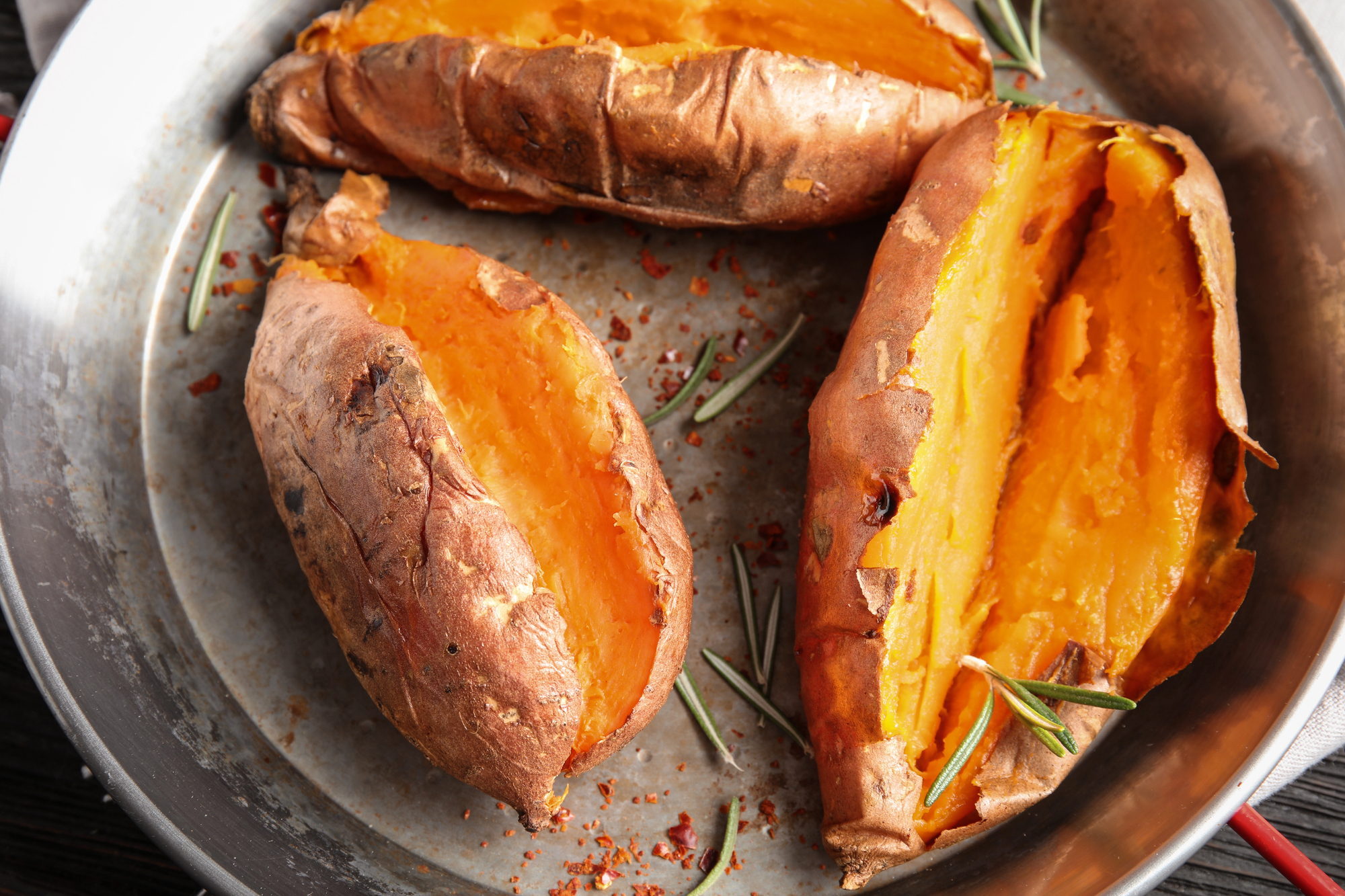
11. Sweet Potatoes (Tissue Fuel)
Sweet potatoes are a steady carb that supports energy and recovery. When your muscles are underused (common with long sitting), consistent nourishment helps you feel less “drained and tight.”
How to use them
- Roast wedges for the week.
- Mash and top with yogurt + olive oil + sesame seeds.
Why they’re practical
They reheat well and pair with almost every protein.
How to Build a “Sitting Day” Plate Using These Foods
If you want something simple, use this mix-and-match formula:
- Breakfast: oats + yogurt + sesame seeds
- Lunch: lentils + spinach + olive oil (add sardines if you want protein)
- Dinner: salmon + mushrooms + sweet potatoes
- Bonus: bone broth as a warm afternoon “reset”
When You’ll Notice Relief (Realistic Timeline)
- In 1–3 days: Many people notice steadier energy and less “snack stiffness” when breakfast has more protein and fiber.
- In 1–2 weeks: If you eat omega-3-rich fish and use olive oil consistently, you may feel less puffy or achy.
- In 4–8 weeks: Connective tissue support is slow. This is the window where people often notice more resilient joints—especially when food habits are paired with short movement breaks.
Quick Notes and Safety
- If you have kidney disease, are on blood thinners, or have mineral restrictions, ask your clinician before increasing high-mineral foods or supplements.
- If you are pregnant or breastfeeding, fish choices matter. Choose options that fit lower-mercury guidance in your region.
- Food helps, but sitting still all day still matters. Even 2–5 minute “movement snacks” can amplify the benefits.
Final Takeaway
If you sit all day, your body needs more than posture tips. It needs protein, minerals, healthy fats, and steady carbs to keep joints, spine, and connective tissue supported. Start with one easy upgrade—like oats + yogurt in the morning or salmon + sweet potatoes at dinner—and build from there.
Related Source Science
Nutrition research consistently links:
- Adequate protein with muscle maintenance and structural support
- Omega-3 fats with healthier inflammation balance
- Calcium, vitamin D, and magnesium with bone and muscle function
- Fiber-rich carbs with steadier energy and better recovery habits