Most people think bone health is only about calcium. But bones are living tissue. They constantly rebuild, and that rebuilding depends on a bigger team: vitamin D, vitamin K, magnesium, protein, and supportive minerals – plus anti-inflammatory eating patterns that help your body use those nutrients well.
The good news is you do not need a “perfect” bone diet. You just need a few repeatable foods you can rotate each week.
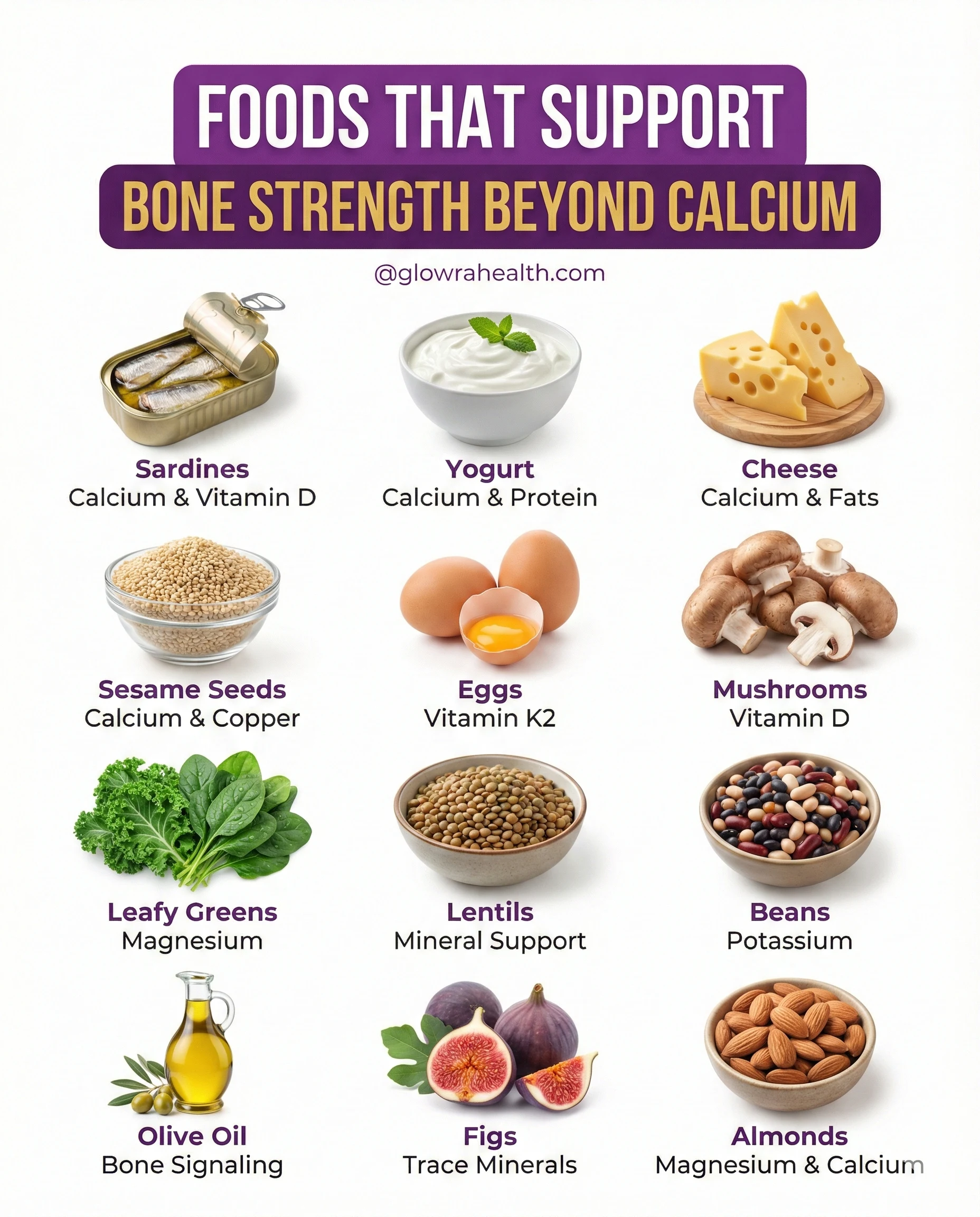
1) Sardines (Calcium & Vitamin D)
Sardines can provide calcium (especially if you eat the soft bones) and vitamin D, which helps the body absorb and use calcium.
Easy ways to eat: mash on toast with olive oil and lemon, or add to rice bowls.
2) Yogurt (Calcium & Protein)
Yogurt gives calcium plus protein—important because protein helps maintain bone and muscle, and muscle supports your frame as you age.
Easy ways to eat: snack cup, breakfast bowl with fruit, or savory yogurt sauce.
3) Cheese (Calcium & Fats)
Cheese is a concentrated calcium food, and the fat content can help you feel satisfied, making meals easier to stick with long-term.
Easy ways to eat: add to eggs, soups, or a snack plate with figs.
4) Sesame Seeds (Calcium & Copper)
Sesame seeds are tiny but mineral-dense. They are an easy “nutrition seasoning” to add across meals.
Easy ways to eat: sprinkle on oats, yogurt, roasted vegetables, or use tahini in dressings.
5) Eggs (Vitamin K2)
Vitamin K supports healthy bones (it helps activate proteins involved in bone metabolism).
Easy ways to eat: boiled eggs for snacks, or eggs with leafy greens for breakfast.
Note: The image says “Vitamin K2.” Eggs contain vitamin K (and some K2 in certain forms), but K2 levels vary depending on diet and type of egg. For a simple blog message, the main point is: vitamin K matters for bone health.
6) Mushrooms (Vitamin D)
Mushrooms are one of the few non-animal foods that can provide vitamin D (especially UV-exposed mushrooms), supporting bone and muscle function.
Easy ways to eat: sauté with olive oil, add to soups, eggs, or grain bowls.
7) Leafy Greens (Magnesium)
Magnesium supports healthy bones, and higher magnesium intake is linked with better bone mineral density in population studies.
Easy ways to eat: cook spinach/kale into soups, lentils, or eggs.
8) Lentils (Mineral Support)
Lentils provide plant protein, fiber, and minerals—helpful for bone and muscle maintenance as part of an overall balanced pattern.
Easy ways to eat: lentil soup, lentil bowls, or lentil salad.
9) Beans (Potassium)
Beans bring potassium and fiber. Potassium-rich diets are often discussed in the context of bone health patterns because they support overall mineral balance.
Easy ways to eat: add to rice bowls, soups, or mash into spreads.
10) Olive Oil (Bone Signaling)
Olive oil supports an overall anti-inflammatory eating pattern (often Mediterranean-style), which is repeatedly linked with healthier aging patterns.
Easy ways to eat: drizzle on cooked vegetables/beans, or mix into yogurt-based sauces.
11) Figs (Trace Minerals)
Figs contain small amounts of minerals and can be a helpful “sweet” choice that pairs well with calcium foods like yogurt or cheese.
Easy ways to eat: chop into oatmeal, eat with yogurt, or add to snack plates.
12) Almonds (Magnesium & Calcium)
Almonds are a convenient combo of magnesium, some calcium, and healthy fats—helpful for people who want bone support in snack form.
Easy ways to eat: small handful snack, almond topping on yogurt/oats, or almond butter on toast.
How to Build a Daily Plate Using These Foods
A simple, realistic “bone plate” looks like this:
- Breakfast: yogurt + figs + almonds (or oats + yogurt + sesame seeds)
- Lunch: lentils/beans + leafy greens + olive oil
- Dinner: mushrooms + greens + sardines (or eggs)
- Snack option: cheese + figs, or boiled eggs
This keeps calcium in the mix, but also supports protein + vitamin D + magnesium + vitamin K—the real bone team.
When You’ll Notice Changes
- 1–7 days: steadier energy and better meal satisfaction when protein is more consistent.
- 2–6 weeks: better routine consistency (less skipped meals), which indirectly supports bone habits.
- 3–6+ months: bone density changes are slow. The “win” is building habits that stay for years, not days.
Quick Notes and Safety
- If you take warfarin (Coumadin), keep vitamin K intake consistent and follow your clinician’s guidance.
- If you are indoors most days, vitamin D status can be worth checking with your clinician, since vitamin D supports calcium absorption and bone strength.
- If beans/lentils bloat you, start small and increase gradually.
Final Takeaway
Calcium matters – but bones need more than calcium. If you want a simple plan, aim for one vitamin D food, one protein-rich food, and one magnesium-rich food daily. Rotate sardines, yogurt, eggs, mushrooms, greens, lentils, beans, and nuts, and you will naturally cover the “bone team” nutrients.
Related Source Science
- NIAMS (NIH): Calcium and Vitamin D for bone health
https://www.niams.nih.gov/health-topics/calcium-and-vitamin-d-important-bone-health (niams.nih.gov) - NIH ODS: Vitamin D Fact Sheet (helps body absorb calcium)
https://ods.od.nih.gov/factsheets/VitaminD-HealthProfessional/ (ods.od.nih.gov) - NIH ODS: Vitamin K Fact Sheet (vitamin K is important for healthy bones; warfarin caution)
https://ods.od.nih.gov/factsheets/vitaminK-consumer/ (ods.od.nih.gov) - NIH ODS: Magnesium Fact Sheet (magnesium supports bone health)
https://ods.od.nih.gov/factsheets/magnesium-healthprofessional/ (ods.od.nih.gov) - International Osteoporosis Foundation: Protein and bone health
https://www.osteoporosis.foundation/health-professionals/prevention/nutrition/protein-and-other-nutrients (osteoporosis.foundation) - Bone Health & Osteoporosis Foundation: Nutrition for bone health (food patterns)
https://www.bonehealthandosteoporosis.org/patients/treatment/nutrition/ (Bone Health & Osteoporosis Foundation)