If you have ever been told to “watch your cholesterol,” you probably heard it as a restriction. Less of this. Avoid that. No fun foods.
But cholesterol-friendly eating is often more effective when you add the right staples foods that bring soluble fiber, unsaturated fats, and plant compounds that support healthier LDL (“bad”) cholesterol levels over time.
Most people never realize this works because they focus on single ingredients, instead of building repeatable patterns: swap saturated fats for unsaturated fats, and get soluble fiber daily.
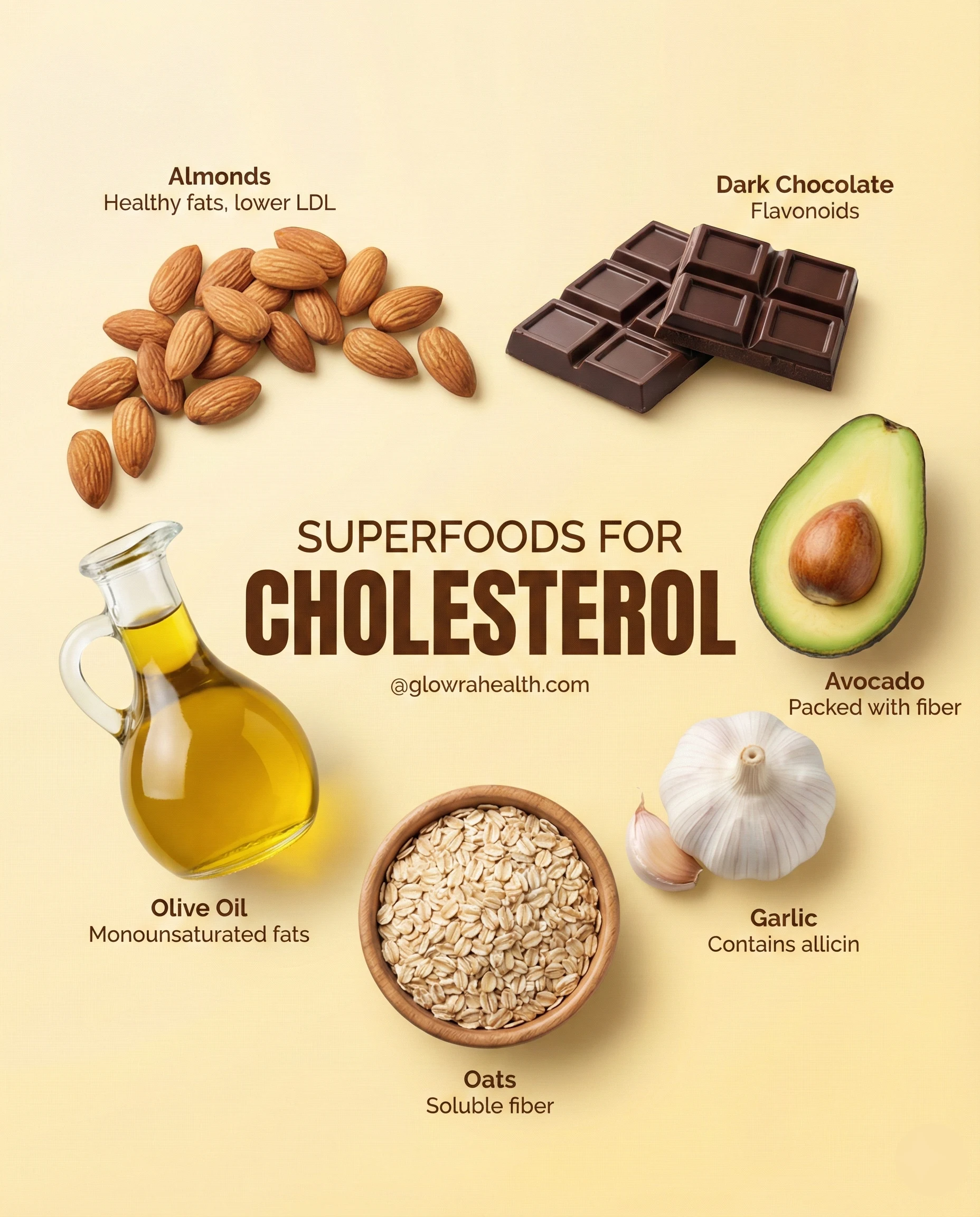
1) Almonds (Healthy fats, lower LDL)
Almonds are rich in unsaturated fats and have strong evidence in research reviews showing improvements in blood lipid profiles when eaten regularly in reasonable portions. (ScienceDirect)
How to eat them (easy)
- Add a small handful to oatmeal.
- Pair almonds with fruit as an afternoon snack.
- Use almond butter on toast instead of butter.
Quick tip: Keep portions realistic. Think “handful,” not “bowl.”
2) Dark Chocolate (Flavonoids)
Dark chocolate contains cocoa flavanols, which have been studied for cardiovascular effects. Some systematic reviews and clinical trials suggest modest improvements in lipid markers, depending on the product and dose.
How to eat it (without turning it into candy habits)
- Choose a small square after meals, not as a stand-alone snack.
- Pair with almonds to feel satisfied sooner.
Safety note: Many chocolate bars are high in sugar and calories. “More” is not better here.
.png)
3) Avocado (Packed with fiber)
Avocados combine fiber + monounsaturated fats, a duo that supports more stable appetite and heart-friendly fat swaps. Reviews and controlled feeding trials show avocado intake can improve LDL-related markers in some people.
How to eat it
- Add sliced avocado to eggs or a rice bowl.
- Blend into a creamy dressing with lemon and herbs.
- Use avocado instead of mayo in sandwiches.
Simple swap idea: If avocado replaces a saturated-fat spread, the “cholesterol win” tends to be stronger.
4) Olive Oil (Monounsaturated fats)
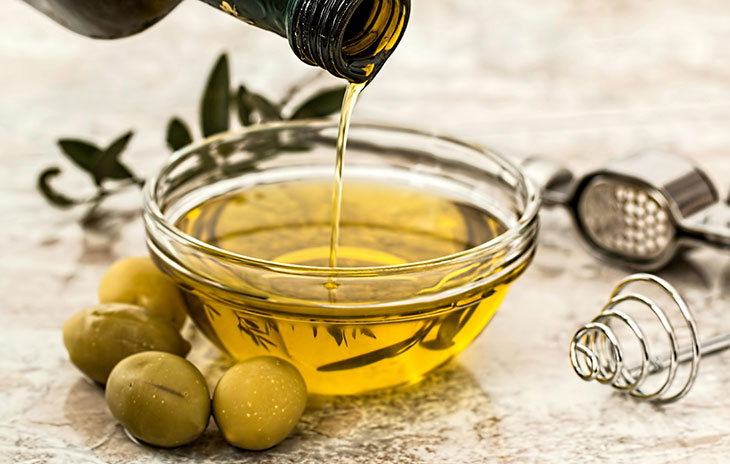
Olive oil is a core part of Mediterranean-style eating patterns. When used in place of saturated fats, monounsaturated fats help improve LDL cholesterol, and olive oil’s plant compounds may add extra cardiovascular support.
How to use it
- Drizzle on vegetables and beans.
- Use for low-heat sautéing.
- Make a simple dressing: olive oil + lemon + garlic + salt.
Quick note: Olive oil helps most when it replaces butter, cream, or other saturated fats—not when it’s simply added on top of an already high-calorie day.
5) Oats (Soluble fiber)
Oats are one of the most reliable “cholesterol foods” because they contain beta-glucan, a soluble fiber shown in meta-analyses to lower LDL cholesterol when consumed consistently (often around 3 g beta-glucan/day).
How to eat oats
- Classic warm oatmeal.
- Overnight oats (great for busy mornings).
- Savory oats cooked with broth and topped with an egg.
Best practice: Consistency beats intensity. You do not need extreme oat “resets” to benefit.
6) Garlic (Contains allicin)
Garlic contains sulfur compounds (including allicin). Updated meta-analyses suggest garlic can have a modest lipid-lowering effect, though results vary across studies and forms (food vs. supplement).
How to use it
- Add garlic to olive-oil sautéed vegetables.
- Stir into soups, beans, and sauces.
- Crush/chop and let it sit a few minutes before cooking (a common kitchen practice to support compound formation).
Safety note: If you use blood thinners or have surgery planned, talk to your clinician about concentrated garlic supplements.
How to Build a Simple Cholesterol-Friendly Day With These Foods
You do not need a perfect diet. Try this easy structure:
- Breakfast: oats + a few almonds + optional fruit
- Lunch: bean or grain bowl with olive oil + garlic dressing + avocado
- Dinner: your usual meal, but swap butter/cream sauces for olive oil–based flavor
- Treat: 1–2 squares dark chocolate after dinner
This works because it quietly hits the big levers: soluble fiber + unsaturated fats, and reduces saturated-fat dependence without feeling like a “diet.”
When You’ll Notice Changes (Realistic Timeline)
- 3–7 days: Many people notice better fullness and fewer cravings when breakfast includes oats + healthy fats.
- 2–4 weeks: LDL changes can begin to show with consistent soluble fiber intake and fat swaps.
- 8–12+ weeks: This is where lab trends are often clearer, especially if changes are steady and paired with movement and sleep.
Quick Safety Notes
- If you have diabetes or are insulin resistant, keep dark chocolate portions small and choose lower-sugar options.
- If you have nut allergies, skip almonds and use other unsaturated fat sources instead.
- If your cholesterol is very high, or you have a strong family history, food helps – but you may also need medical treatment. Use nutrition as a foundation, not a replacement for care.
Final Takeaway
If you want a simple cholesterol routine, start with oats daily and swap one saturated fat per day for olive oil or avocado. Add almonds for convenience, garlic for flavor, and a small amount of dark chocolate for sustainability. Small, repeatable choices are what move labs.
Related Source Science (Health.pricable-style)
- American Heart Association – Unsaturated fats help improve cholesterol when used in place of saturated/trans fats. (www.heart.org)
- U.S. eCFR (FDA regulation) – Soluble fiber can help lower total and LDL cholesterol as part of a low saturated-fat diet. (ecfr.gov)
- Meta-analysis – Oat beta-glucan (≥3 g/day) lowers LDL and total cholesterol. (ScienceDirect)
- Mayo Clinic – Nuts (including almonds) can help lower cholesterol as part of a heart-healthy diet. (Mayo Clinic)
- Systematic review/meta-analysis – Avocado consumption and cardiometabolic markers including LDL outcomes. (ScienceDirect)
- Harvard Health – Olive oil and monounsaturated fats, LDL-lowering when replacing saturated fat. (Harvard Health)
- Updated meta-analyses – Garlic and lipid parameters / CVD risk factors (results vary, generally modest). (OUP Academic)
- Systematic review/meta-analysis – Cocoa/dark chocolate intake and lipid profile. (MDPI)