Berberine is having a moment in the wellness world – and for once, the hype isn’t totally baseless.
berberine isn’t a miracle pill, and it’s not a replacement for medication. But research (including multiple meta-analyses of randomized trials) suggests it can modestly support metabolic markers, especially in people already working on diet, movement, and sleep.
Most people never realize why berberine “works” for some and not for others because they take it randomly, too late in the day, or without changing the habits that drive blood sugar and cholesterol in the first place.
What Berberine Is
Berberine is a plant compound (alkaloid) found in several herbs (like barberry and goldenseal). It’s been used traditionally, and modern studies focus on its potential effects on metabolism-related pathways, including AMPK (often described as a “metabolic switch”). (TIME)
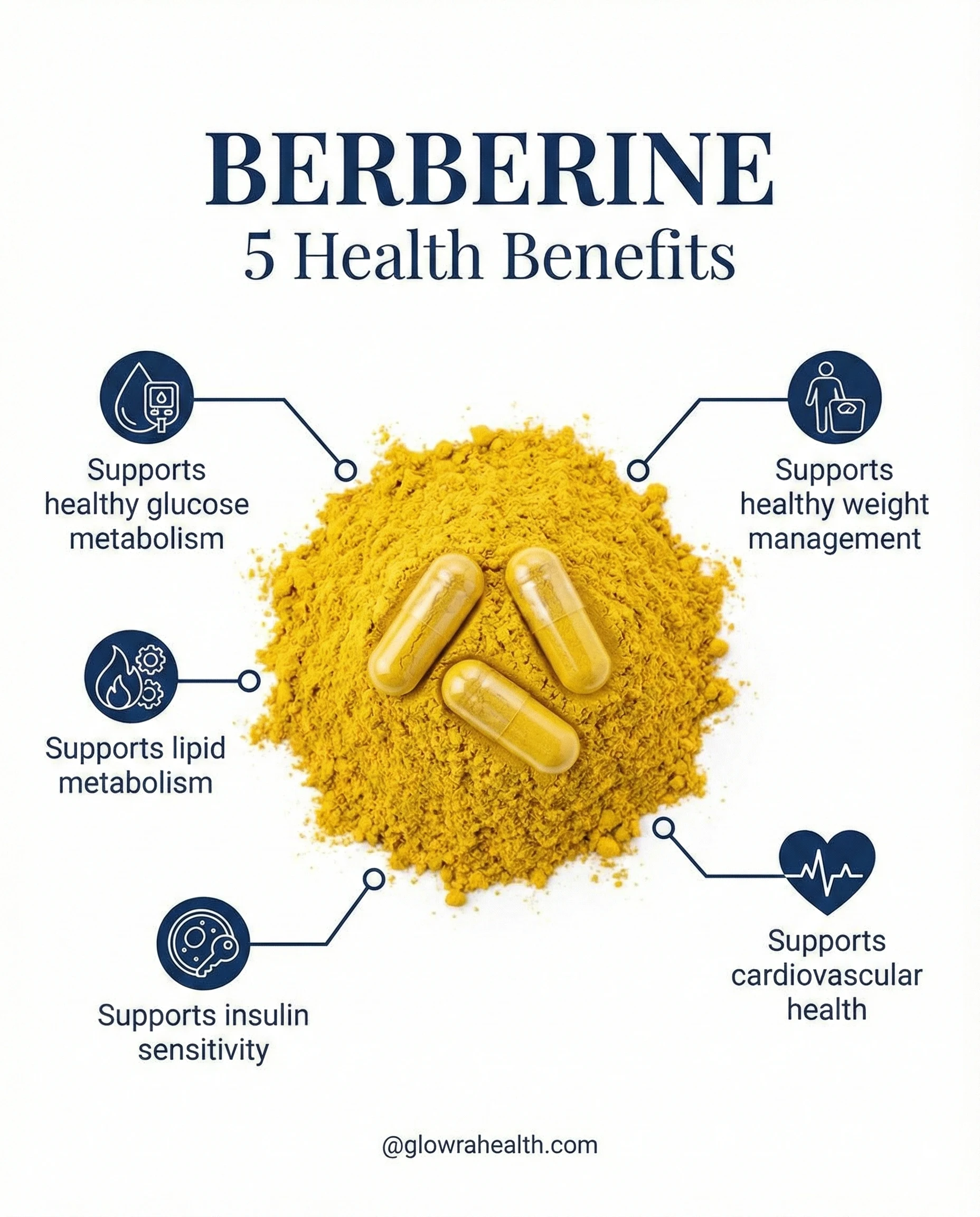
1) Supports healthy glucose metabolism
Research summaries and meta-analyses report that berberine supplementation can reduce markers like fasting blood glucose and HbA1c in some adults (often studied in metabolic syndrome or type 2 diabetes settings). Effects vary, and study quality differs, so think “support,” not “cure.”
Easy way to use it: Pair berberine with the basics that actually move blood sugar:
- a protein-forward breakfast
- 10–15 minute walk after meals
- lower sugary drinks
2) Supports insulin sensitivity
Several evidence reviews report improvements in insulin resistance markers (like HOMA-IR) in some groups. This is one reason berberine gets compared to metformin online — but the effects are not identical, and the evidence does not make it a medication substitute.
Pro tip: If you’re already on glucose-lowering medication, adding berberine can increase hypoglycemia risk. Always check first.
3) Supports lipid metabolism
There’s stronger consistency here: meta-analyses in people with dyslipidemia show berberine may lower total cholesterol, LDL-C, and triglycerides, sometimes with small HDL improvements.
How to make it work better: Lipids respond best when berberine is not doing “all the work.” Combine it with:
- more soluble fiber (oats, beans)
- less added sugar
- less ultra-processed snacking
4) Supports healthy weight management
This is where online claims often go too far. The most responsible takeaway from research: berberine may support modest changes in weight-related measures (BMI, waist circumference) in some people, especially when lifestyle changes are present. It is not “nature’s Ozempic.”
What it can help with: cravings and appetite rhythm for some people (likely through glucose stability and gut signaling).
What it won’t do: override a high-calorie, low-sleep routine.
5) Supports cardiovascular health
This benefit is mostly indirect in the evidence base: if berberine helps improve glucose and lipid markers, that can support overall cardiometabolic risk management. Some meta-analyses also discuss effects on metabolic syndrome components more broadly.
How to Take Berberine (Practical + Gentle)
Many trials use divided dosing because berberine has a relatively short time in the bloodstream.
A commonly used approach is:
- 500 mg, 2–3 times daily, taken with meals (to reduce stomach upset and match post-meal glucose rises).
Start lower if you’re sensitive:
- 500 mg once daily for 3–4 days, then build up.
When You’ll Notice Changes (Realistic Timeline)
- 1–7 days: Some people notice digestive changes (good or bad) and steadier cravings.
- 2–6 weeks: If it’s working, you may see shifts in fasting glucose trends or appetite rhythm.
- 8–12 weeks: This is a common window for re-checking HbA1c and lipids with your clinician.
How to Choose a Quality Berberine Supplement
When shopping, look for:
✔ Berberine HCl clearly listed
✔ 500 mg per capsule (industry standard)
✔ Third-party testing (USP, NSF, or independent labs)
✔ Minimal fillers (no artificial dyes or unnecessary sweeteners)
✔ Capsules over tablets (better tolerance for many people)
Popular & Trusted Berberine Brands (Widely Used)
(Examples — not medical endorsements)
Budget-Friendly & Widely Available
-
NOW Foods – Berberine Glucose Support
-
Doctor’s Best – Berberine HCl
-
Swanson – Berberine Complex
Premium / Clinician-Preferred
-
Thorne – Berberine-500
-
Pure Encapsulations – Berberine
-
Designs for Health – Berberine Synergy
Sustained-Release Options
-
Integrative Therapeutics – Berberine Complex
-
Endurance Products – Berberine SR
Tip: More expensive does not always mean more effective — consistency and quality matter more than brand hype.
Where to Buy Berberine Safely
Online Retailers
-
Amazon (verify seller + reviews)
-
iHerb
-
Vitacost
-
Thrive Market
Health Stores
-
Whole Foods
-
Sprouts
-
Local supplement shops
Practitioner Sources
-
Functional medicine clinics
-
Integrative pharmacies
-
Practitioner-only supplement websites
Price Range (Typical)
-
$15–25 USD → basic berberine HCl
-
$30–45 USD → premium or sustained-release formulas
A bottle usually lasts 30–60 days, depending on dosing.
Storage & Quality Tips
-
Store in a cool, dry place
-
Avoid products with a strong chemical smell
-
Yellow color is normal — brown or clumpy powder is not
Safety Notes (Must Read)
Berberine can cause GI side effects like diarrhea, constipation, nausea, and abdominal pain.
Avoid berberine if you are:
- pregnant or breastfeeding
- giving supplements to infants/children (berberine may worsen newborn jaundice risks)
Be extra cautious (and get medical advice) if you take:
- diabetes meds (hypoglycemia risk)
- blood pressure meds (hypotension risk)
- anticoagulants/blood thinners
- immunosuppressants (higher interaction concern)
Final Takeaway
Berberine is best viewed as a metabolic support tool, not a shortcut. If you’re consistent with meals, movement, and sleep, berberine may help nudge glucose, insulin sensitivity, lipids, weight markers, and overall cardiovascular risk support in a favorable direction — modestly, not magically.
Related Source Science
- NCCIH: safety notes, side effects, and who should avoid berberine (NCCIH)
- Meta-analysis on glucose-lowering effects in type 2 diabetes contexts (Frontiers)
- Meta-analysis on dyslipidemia (LDL, TG, total cholesterol) (ScienceDirect)
- Meta-analysis on metabolic syndrome components (glucose + lipids + waist) (Frontiers)
- Amazon.com