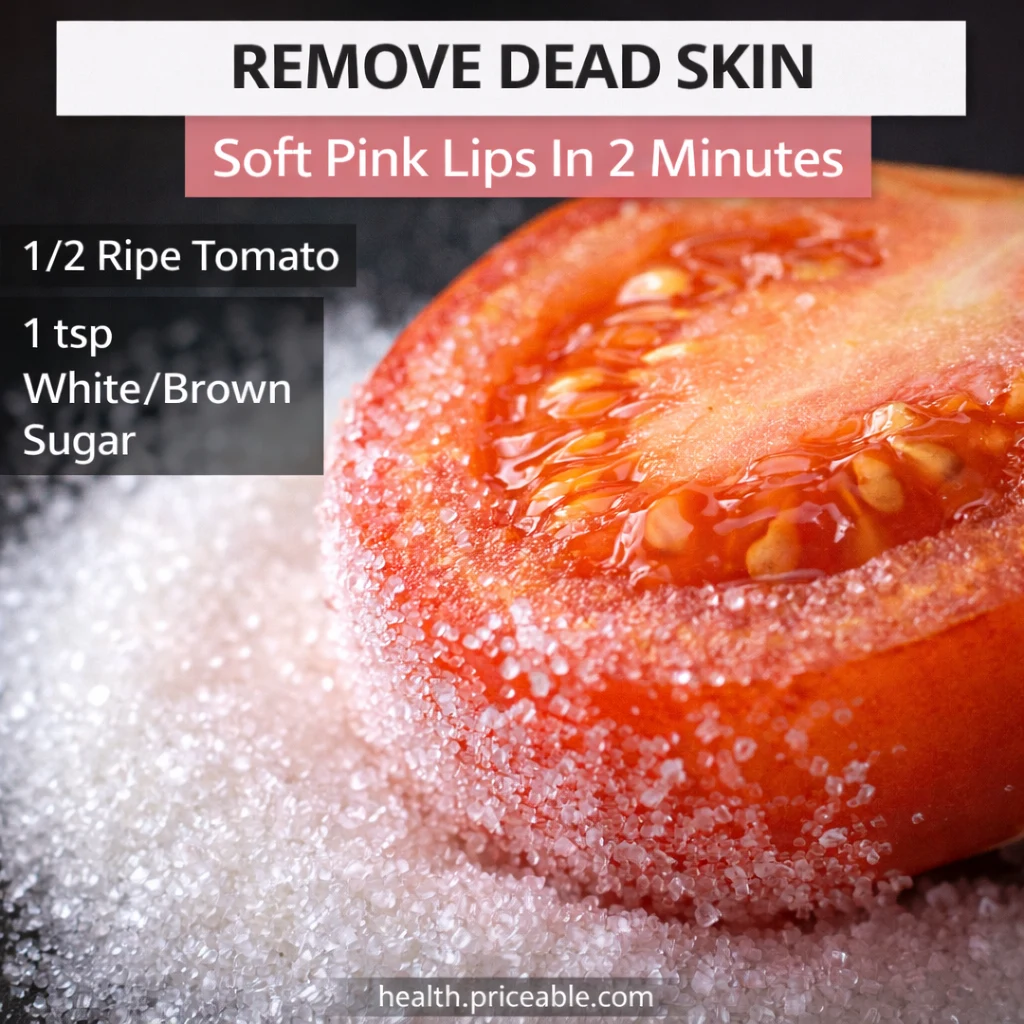
If your lips look rough, patchy, or flaky no matter how much balm you use, gentle exfoliation can help. This tomato sugar lip scrub is a simple DIY option you can make in minutes with two basic ingredients.
The goal isn’t to “bleach” or dramatically change your natural lip color. It’s to lift loose, dead skin so your lips look smoother and feel softer, and so your lip balm (or lipstick) goes on more evenly.
Why lips get dry and flaky so fast
Lips don’t have oil glands like the rest of your skin, so they dry out quickly. Common triggers include:
-
Cold or windy weather
-
Indoor heat and low humidity
-
Licking your lips (it actually dries them more)
-
Long-wear lipstick that clings to dry patches
-
Not using a thicker, protective lip product at night
A gentle lip exfoliator once or twice a week can remove the buildup that makes lips look dull and feel rough.
Tomato sugar lip scrub recipe (about 2 minutes)
This method uses sugar for gentle physical exfoliation and tomato for a watery, slightly acidic base that helps loosen flaky skin.
Ingredients
-
1/2 ripe tomato
-
1 teaspoon white sugar or brown sugar
Optional tools
-
Small bowl
-
Spoon or fork
-
Soft washcloth
-
Clean fingertip or silicone lip brush (gentler than a gritty scrubber)
Step-by-step (quick timing)
-
Mash the tomato. Scoop out the juicy pulp from 1/2 ripe tomato into a small bowl and mash it into a wet paste.
-
Add sugar. Mix in 1 teaspoon sugar until you have a slushy scrub.
-
Apply gently. Put a small amount on clean lips. Massage with light, circular motions for 30–45 seconds. No heavy pressure.
-
Short rest (optional). Let it sit for 15–30 seconds if it feels comfortable.
-
Rinse and pat dry. Use lukewarm water, then pat (don’t rub) with a soft towel.
-
Seal it in immediately. Apply a hydrating lip balm or a thin layer of petroleum jelly to lock in moisture.
Tip: If you’re choosing sugar, brown sugar is often a little softer than coarse white sugar crystals.
How often to use it (and what to do after)
-
Frequency: 1–2 times per week is plenty for most people.
-
Aftercare: This is the step that actually makes lips feel better. Follow with a fragrance-free lip balm, shea butter balm, or an overnight lip mask before bed.
-
Daytime: If you’ll be outdoors, finish with an SPF lip balm (especially if your lips are prone to dryness).
Common mistakes (and easy fixes)
-
Scrubbing too hard
Fix: Use a lighter touch and shorten the massage to 20–30 seconds. -
Using coarse sugar crystals
Fix: Choose finer sugar (or lightly crush the sugar in a bag first). -
Doing it on cracked or bleeding lips
Fix: Skip exfoliation. Use a thicker occlusive balm for 2–3 days first. -
Leaving the tomato on too long
Fix: Keep it brief. Tomato is acidic and can irritate sensitive lips if it sits. -
Not moisturizing right after
Fix: Apply balm immediately, then reapply again 10 minutes later.
Safety notes (please read)
This DIY scrub is not for everyone, and that’s okay.
-
Patch test first: Try a tiny amount on the skin near the corner of your mouth. Wait 10–15 minutes.
-
Skip if you’re irritated: Avoid if you have cuts, open cracks, cold sores, or active irritation.
-
Sensitive skin warning: Tomato can sting on very sensitive lips. If it burns, rinse right away and switch to a gentler option below.
-
Keep it clean: Use fresh tomato and a clean bowl. Don’t store leftovers—make a small batch and toss the rest.
Buying guide: what to look for in a lip scrub and lip balm
If DIY isn’t your thing (or you want something more consistent), shopping for the right products can make a big difference.
Choosing a lip scrub (store-bought)
Look for:
-
Fine exfoliating particles (sugar that feels smooth, not sharp)
-
Emollient base like coconut oil, shea butter, or castor oil
-
Simple ingredient list if you’re sensitive
Be cautious with:
-
Strong fragrance, peppermint, menthol, cinnamon, or “plumping” formulas if you’re prone to irritation
-
Very gritty formulas that feel like sandpaper
Choosing a lip balm that actually helps
For daytime:
-
A protective balm with SPF 30 if you spend time outside
-
Comfortable texture that you’ll reapply (a balm you hate won’t get used)
For nighttime:
-
A thicker option like petroleum jelly, lanolin (if tolerated), or a rich lip sleeping mask
-
Bonus ingredients some people like: vitamin E, ceramides, or hyaluronic acid lip treatment layered under an occlusive balm
What price range is realistic?
-
Basic drugstore lip balm: usually low-cost and perfectly effective
-
Premium lip masks and treatment balms: cost more, but can be worth it if you need extra cushioning or prefer certain textures
-
Lip scrub pots: often mid-range, and a small jar typically lasts a long time if used 1–2 times weekly
Where to buy
You can usually find a good lip scrub and SPF lip balm at drugstores, big-box retailers, beauty stores, and online marketplaces. When comparing options, prioritize fine grains and low-irritant formulas over trendy “tingly” effects.
Gentle upgrades and alternatives
If tomato feels too strong, try one of these softer swaps:
-
Honey + sugar: Mix 1 teaspoon honey with 1 teaspoon fine sugar for a more soothing scrub.
-
Sugar + oil: Combine 1 teaspoon sugar with a few drops of olive oil or coconut oil for extra slip.
-
Washcloth method: After a warm shower, use a soft, damp washcloth to buff lightly for 10–15 seconds, then apply balm.
FAQ
Does a tomato sugar lip scrub change your lip color?
It can make lips look brighter by removing flaky buildup, but it won’t permanently change your natural lip pigment.
Can I do this every day?
Not recommended. Over-exfoliating can cause more dryness and irritation. Stick to 1–2 times per week.
Should I use white sugar or brown sugar?
Either works, but many people find brown sugar feels gentler because it’s often finer and softer.
What should I put on after exfoliating?
A thick, protective balm is best. Try a fragrance-free lip balm, shea butter balm, or a thin layer of petroleum jelly.
What if it stings?
Rinse immediately. Your lips may be too sensitive for tomato. Switch to honey-based scrub or the washcloth method.
Can I store the leftover scrub?
No. Because it uses fresh tomato, it’s best to make a small amount and discard the rest.
What’s the best lip balm for daytime dryness?
Many people do well with a comfortable balm they’ll reapply often, ideally with SPF if they’re outside. If you’re sensitive, choose a simple, fragrance-free formula.