Flour seems simple, but it can quietly change how you feel after a meal. Some flours digest fast and spike blood sugar quickly. Others digest slower, keep you fuller, and work better for certain dietary needs like gluten-free baking.
Most people never realize this because flour labels look similar. But the type of flour you choose can affect energy, cravings, bloating, and even how steady your mood feels after eating.
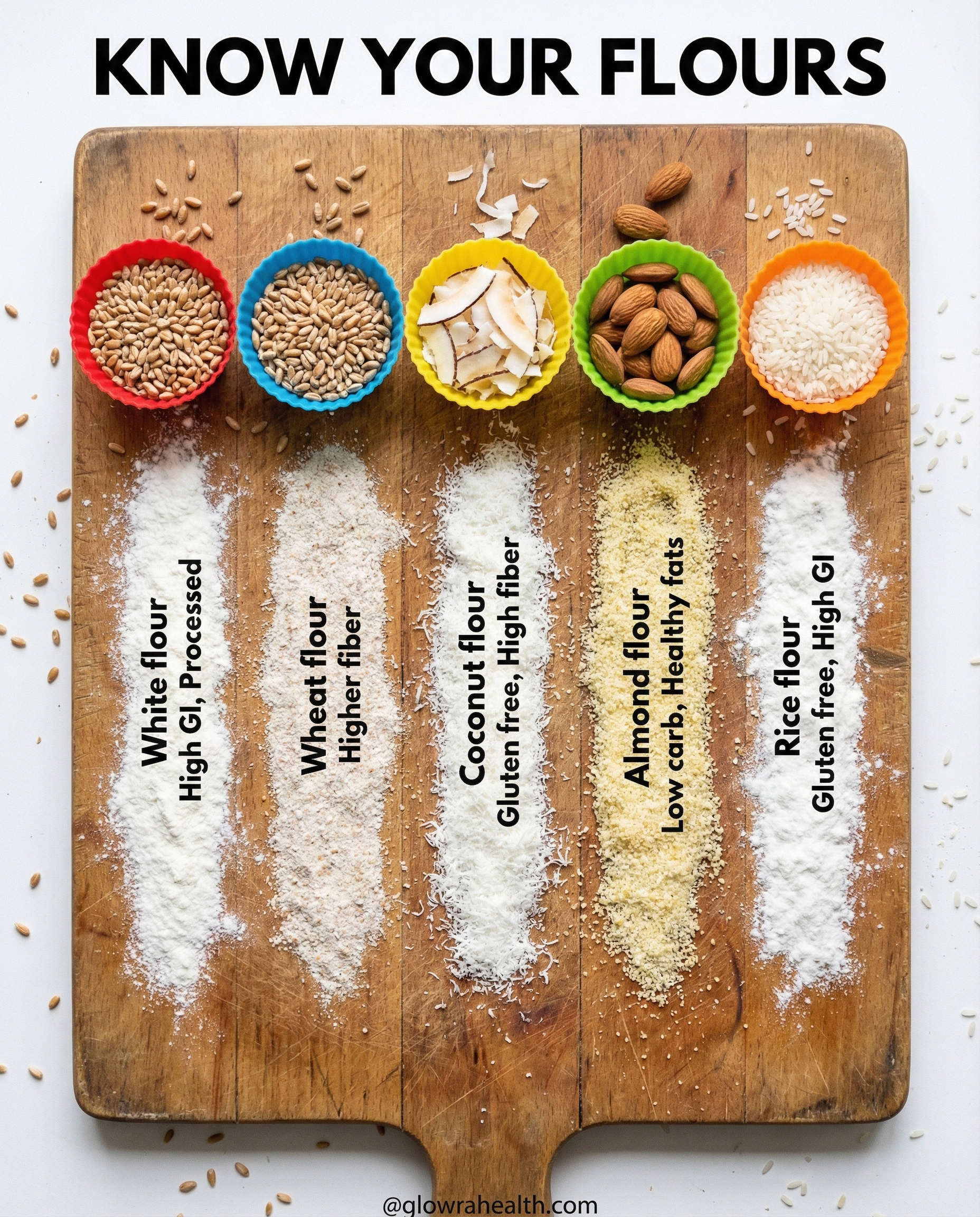
Know Your Flours: Quick Snapshot
- White flour: High GI, processed
- Wheat flour: Higher fiber
- Coconut flour: Gluten free, high fiber
- Almond flour: Low carb, healthy fats
- Rice flour: Gluten free, high GI
Now let’s turn that into practical, everyday choices.
1. White Flour (High GI, Processed)
White flour is heavily refined. That means most of the fiber and nutrients are removed, leaving starch that breaks down quickly.
What that can mean for your body
- Faster digestion and quicker blood sugar rise
- Hunger returning sooner after eating
- More cravings for sweets or snacks later in the day (for many people)
Best ways to use it
White flour is common in soft breads, pastries, and classic baked goods. If you love those foods, you do not have to “ban” it. It just helps to use it more intentionally.
Simple swap idea
- Mix white flour with wheat flour for more fiber
- Pair white-flour foods with protein and fat (eggs, yogurt, nuts) to slow the blood sugar rise
2. Wheat Flour (Higher Fiber)
Wheat flour typically contains more fiber than white flour, especially when it is less refined. Fiber slows digestion and supports a steadier release of energy.
Why it matters
- More fiber can support gut regularity
- Often keeps you feeling full longer
- Helps create steadier energy after meals
How to use it
- Pancakes, muffins, quick breads
- Homemade tortillas or flatbreads
- Thickening soups or sauces (small amounts)
Helpful note
If you are sensitive to gluten, wheat flour may not be a good option. For gluten-free needs, coconut flour, almond flour, and rice flour are more relevant.
3. Coconut Flour (Gluten Free, High Fiber)
Coconut flour is gluten-free and very high in fiber. It also absorbs a lot of liquid, which is why recipes using coconut flour often need more eggs or moisture.
Why people like it
- Supports fullness due to high fiber
- Often gentler for those avoiding gluten
- Can be helpful for people trying to reduce blood sugar swings (because fiber slows digestion)
How to use it without frustration
Coconut flour is not a 1:1 replacement for wheat flour.
Try using it in:
- Pancakes or waffles
- Muffins
- Protein-style baked goods where eggs are part of the structure
Simple baking tip
Start small. Use coconut flour as part of a blend rather than the only flour until you know how it behaves.
4. Almond Flour (Low Carb, Healthy Fats)
Almond flour is made from ground almonds. It is naturally gluten-free, lower in carbs, and contains healthy fats that help you feel satisfied.
Why it matters
- Low carb compared to grain-based flours
- Healthy fats can help stabilize hunger
- Often makes baked goods moist and rich
How to use it
- Cookies, muffins, and cakes
- Breaded coatings (for chicken or fish)
- Pancakes
Important safety note
Almond flour is not suitable for people with nut allergies. Also, it is calorie-dense, so portions matter if weight management is a goal.
5. Rice Flour (Gluten Free, High GI)
Rice flour is gluten-free, but it is often higher GI. That means it can digest quickly, especially when used in refined baked goods.
Why it matters
- Good option for gluten-free baking texture
- May cause quicker blood sugar rise for some people
- Often works best when combined with fiber-rich ingredients
How to use it
- Gluten-free noodles and wrappers
- Light, crisp coatings for frying or baking
- Gluten-free baking blends
Smart pairing
If you use rice flour often, try pairing it with:
- Protein (eggs, fish, chicken)
- Healthy fats (olive oil, avocado)
- Fiber-rich add-ins (seeds, coconut flour blends)
How to Build a “Better Flour” Routine
If your goal is steadier energy and fewer cravings, you do not need perfection. Try this simple approach:
- Use white flour as an occasional choice, not your default
- Choose wheat flour when you want more fiber and traditional baking texture
- Use coconut flour when you want high fiber and gluten-free support
- Use almond flour for low-carb baking and satisfying healthy fats
- Use rice flour for gluten-free texture, but balance it with protein and fiber
When You’ll Notice Changes
Flour swaps can make a difference faster than people expect.
- Within 1–3 days: Many people notice fewer cravings and steadier energy when they reduce high-GI flour meals.
- Within 1–2 weeks: Digestion often improves if fiber intake increases gradually.
- Within 3–4 weeks: More consistent blood sugar stability and appetite regulation may show up with repeated choices.
Small changes, repeated daily, matter most.
Quick Notes and Safety
- Increase fiber slowly, especially with coconut flour, to avoid bloating.
- If you have diabetes or insulin resistance, high-GI flours like white flour and rice flour may impact blood sugar more strongly.
- Gluten-free does not automatically mean “blood sugar friendly.”
- Almond flour is not safe for nut allergies.
- If you have IBS or sensitive digestion, some high-fiber flours can cause gas at first. Start with small portions.
Final Takeaway
The best flour is not one “perfect” flour.
It is the flour that matches your body, your goals, and the meal you are making.
Use this as your simple guide:
- White flour and rice flour digest faster (high GI)
- Wheat flour, coconut flour, and almond flour tend to support more steady fullness in different ways