If you have ever stood in your kitchen holding ginger in one hand and turmeric in the other, you are not alone.
Both roots are “wellness staples,” but they do not work the same way. One tends to feel fast and soothing, especially for the stomach. The other is better known for inflammation support, which can show up in joints and skin over time.
Most people never realize this because they take them randomly and expect the same results. The secret is matching the root to the symptom you actually want to improve.
Ginger Benefits
Ginger is the better pick when you want support that feels noticeable sooner, especially in the gut.
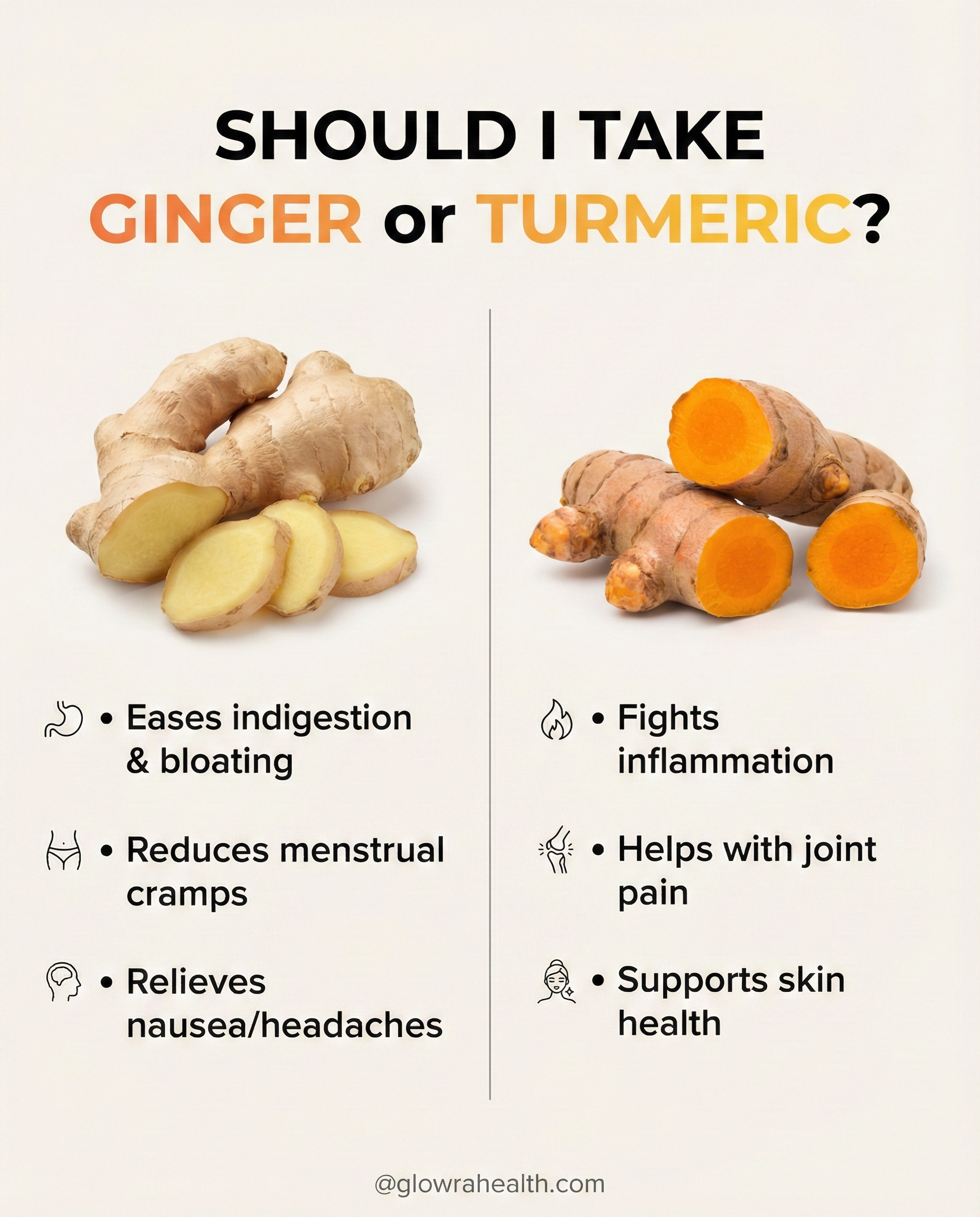
According to the image, ginger can help with:
Eases indigestion & bloating
Ginger is known for supporting stomach comfort and digestive motility. Many people reach for it after a heavy meal because it can help food feel like it is moving through more smoothly.
Easy ways to use it
- Fresh ginger tea after meals
- Grated ginger stirred into warm water
- Ginger added to soups, stir-fries, or smoothies
Reduces menstrual cramps
Ginger is often used during the first days of a cycle when cramps and inflammation feel strongest. It can be a gentle option for people who want a food-based approach alongside other care.
Easy ways to use it
- Ginger tea 1 to 2 times per day during cramps
- Fresh ginger in warm lemon water
- Ginger added to meals when appetite is low
Relieves nausea/headaches
Ginger is one of the most common natural options people try for nausea. Some people also find it helpful when headaches are linked to digestion, dehydration, or that “queasy” feeling.
Easy ways to use it
- Ginger tea sipped slowly
- Ginger chews or ginger slices in warm water
- Small amounts, taken consistently, instead of one large serving
Turmeric Benefits
Turmeric tends to be the better choice when your goal is longer-term inflammation balance and recovery support.
According to the image, turmeric can help with:
Fights inflammation
Turmeric contains curcumin and related compounds that are widely studied for their role in inflammation pathways. This is why turmeric is often used as a daily routine rather than a quick fix.
Easy ways to use it
- Turmeric stirred into warm water or tea
- Added to soups, curries, and rice dishes
- Mixed into smoothies in small amounts
Helps with joint pain
Because joints often feel worse when inflammation is high, turmeric is a popular choice for stiffness, soreness, and that “creaky” feeling, especially after workouts or with aging.
Easy ways to use it
- Daily turmeric tea routine
- Cooking with turmeric several times per week
- Pairing turmeric with a meal that contains healthy fats
Supports skin health
Skin concerns can be driven by inflammation, oxidative stress, and gut imbalance. Turmeric is often used as part of a broader routine that supports skin from the inside, especially when paired with hydration and balanced meals.
Easy ways to use it
- Small daily intake in food
- Warm turmeric drink in the evening
- Consistent use for several weeks
How to Choose Between Ginger and Turmeric
Use this simple “match the symptom” guide.
Choose ginger if you want support for:
- Indigestion and bloating
- Menstrual cramps
- Nausea and headaches
Choose turmeric if you want support for:
- Inflammation
- Joint pain
- Skin health
If you relate to both sides, you can use both, but keep the amounts modest and start slowly.
How to Take Ginger or Turmeric
You do not need complicated supplements to benefit. Food forms work well for many people.
Simple ginger tea
- Slice a 1-inch piece of ginger
- Simmer in hot water for 5 to 10 minutes
- Sip after meals or when nausea hits
Simple turmeric drink
- Use a small piece of fresh turmeric or a small spoon of turmeric powder
- Stir into warm water or tea
- Take with food if your stomach is sensitive
Tip: Turmeric can stain, so use a dedicated spoon and rinse cups quickly.
Quick Relief Timeline
Set realistic expectations so you do not quit too soon.
Ginger timeline
- Some people notice digestive relief within 30 to 60 minutes
- Cramp support often feels more noticeable within 1 to 2 days of consistent use
- Nausea support can feel quick, especially when sipped slowly
Turmeric timeline
- Turmeric is usually slower. Many people notice joint or skin support after 2 to 4 weeks of regular intake
- Some may feel subtle improvements earlier, but long-term consistency matters most
Safety Notes and Who Should Be Careful
Natural does not always mean risk-free.
Be cautious with ginger if:
- You have frequent acid reflux or a sensitive stomach
- You take blood thinners and bruise easily
- You are preparing for surgery
Be cautious with turmeric if:
- You have gallbladder problems or bile duct issues
- You take blood thinners
- You are prone to kidney stones and use high-dose turmeric often
If you are pregnant, breastfeeding, or managing a medical condition, it is smart to check with a clinician before using concentrated daily doses.
Stop if you notice burning, nausea, or worsening reflux.
Final Takeaway
If your main issue is your stomach, ginger is often the more noticeable choice.
If your main issue is inflammation, joints, or skin, turmeric is often the better long-term partner.
You can use both, but the best results usually come from consistency, small portions, and pairing them with balanced meals.