Beans are one of the most underrated “body support” foods.
They are affordable, easy to store, and naturally packed with two things that help many health goals at once: protein and fiber. That combo matters because it helps you feel full longer, supports steadier blood sugar, and feeds the gut bacteria that influence digestion and inflammation.
Most people never realize how powerful beans are because they think of them as “just carbs.”
But when you look closer, beans are actually a protein + fiber powerhouse, which is why they show up in so many heart-healthy and weight-friendly eating patterns.
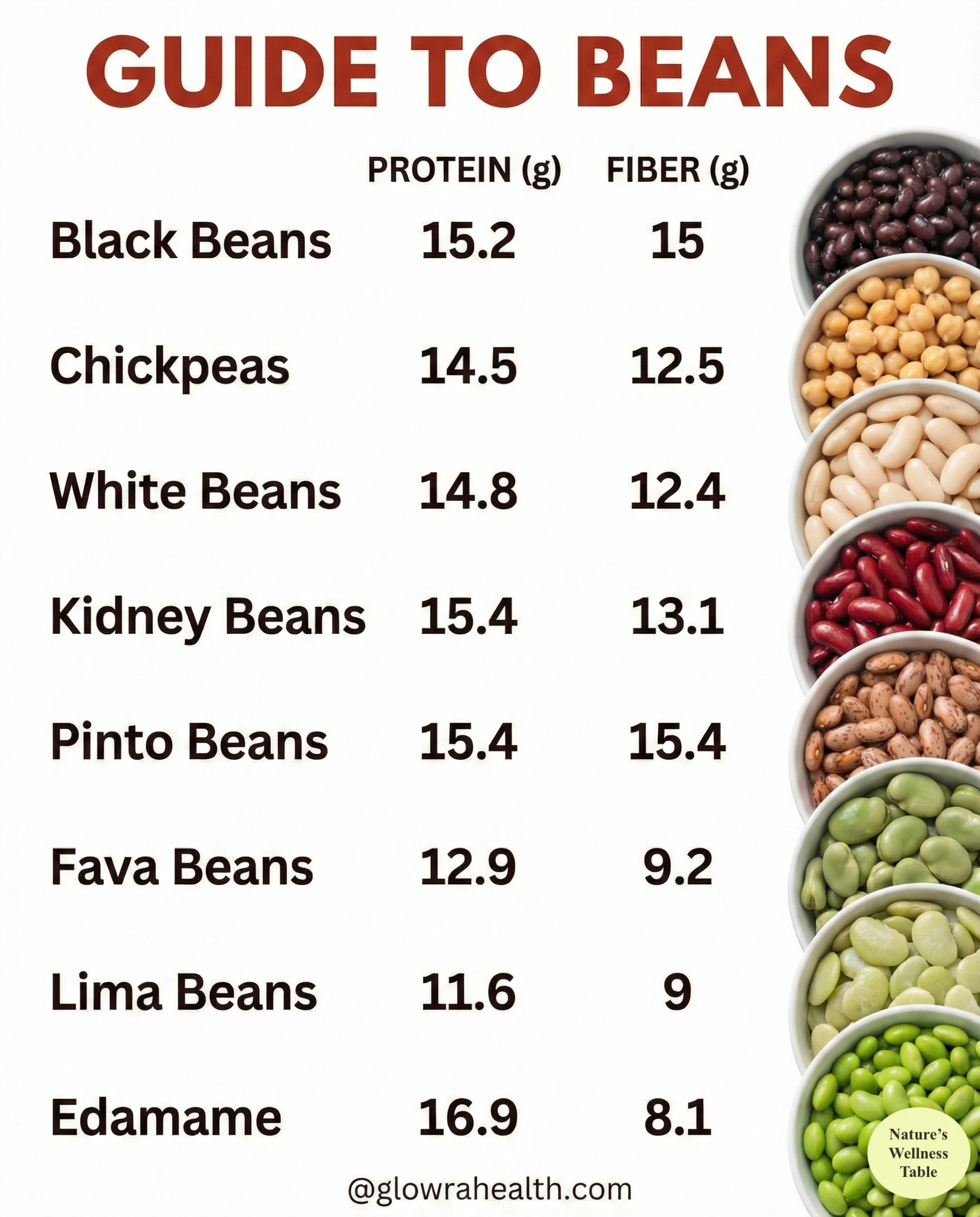
Guide to Beans (Protein + Fiber)
1. Black Beans (15.2 g protein | 15 g fiber)
Black beans are one of the most balanced options when you want fullness and digestion support.
Why they’re helpful
- High fiber supports regularity and gut comfort
- Protein supports muscle maintenance and appetite control
- Great for steadier energy because fiber slows digestion
Easy ways to use
- Add to tacos, burrito bowls, soups
- Mash into spreads or patties
- Toss into salads for a protein boost
2. Chickpeas (14.5 g protein | 12.5 g fiber)
Chickpeas are mild, versatile, and easy to use in many cuisines.
Why they’re helpful
- Fiber supports gut health and can reduce snack cravings
- Protein helps make plant-based meals more satisfying
- Works well hot or cold, which makes meal prep easier
Easy ways to use
- Roast for crunchy snacks
- Add to salads, wraps, or grain bowls
- Blend into dips or sauces
3. White Beans (14.8 g protein | 12.4 g fiber)
White beans are soft and creamy, which makes them great for comfort meals.
Why they’re helpful
- Creamy texture helps you replace heavy cream in recipes
- Fiber supports digestion and a steadier appetite
- Gentle flavor pairs well with herbs, garlic, and olive oil
Easy ways to use
- Blend into soups to make them thicker
- Add to pasta, stews, or casseroles
- Mash with olive oil and garlic as a spread
4. Kidney Beans (15.4 g protein | 13.1 g fiber)
Kidney beans are hearty and hold their shape well.
Why they’re helpful
- High protein supports fullness and stable hunger
- Fiber helps slow carb digestion
- Great for building “real meals” that keep you full for hours
Easy ways to use
- Chili, stews, and curries
- Rice and beans meals
- Toss into salads for a dense, satisfying bite
5. Pinto Beans (15.4 g protein | 15.4 g fiber)
Pinto beans are the fiber star in this list, and they are extremely filling.
Why they’re helpful
- High fiber helps support gut bacteria and digestion
- Great for appetite control due to the protein-fiber combo
- Often feels comforting and easy on the stomach when cooked well
Easy ways to use
- Mash for burritos or bowls
- Add to soups and slow-cooker meals
- Mix into scrambled eggs or veggie skillets
6. Fava Beans (12.9 g protein | 9.2 g fiber)
Fava beans have a unique taste and are popular in Mediterranean-style meals.
Why they’re helpful
- Provides plant protein and moderate fiber
- Can add variety if you are bored of the same beans
- Pairs well with lemon, herbs, and garlic
Easy ways to use
- Add to salads or warm grain bowls
- Mash into dips
- Toss into sautéed vegetable mixes
7. Lima Beans (11.6 g protein | 9 g fiber)
Lima beans are softer and can feel very comforting.
Why they’re helpful
- Moderate protein and fiber can support fullness
- Works well in soups and stews because of texture
- Good option if you want a gentler bean flavor
Easy ways to use
- Add to soups, casseroles, or veggie stews
- Mix into rice dishes
- Blend into creamy soups for thickness
8. Edamame (16.9 g protein | 8.1 g fiber)
Edamame is the highest protein option on this list.
Why they’re helpful
- Strong protein content supports muscle and satiety
- Great post-workout plant option
- Easy snack that can replace chips or crackers
Easy ways to use
- Steam and sprinkle lightly with salt
- Toss into salads and stir-fries
- Add to noodle bowls
How to Build a Daily Plate Using These Beans
If your goal is weight loss, heart health, or better digestion, beans work best when they are part of a balanced plate.
Try this simple pattern:
- ½ plate vegetables
- ¼ plate protein (beans can count here, especially with larger portions)
- ¼ plate carbs (whole grains or starchy vegetables)
- Add healthy fat (olive oil, avocado, nuts) in small amounts
A simple trick is to replace part of your meat portion with beans instead of trying to go fully plant-based overnight.
Tips to Combine Beans Effectively
- Rinse canned beans to reduce sodium and improve digestion
- Pair beans with vitamin C foods (tomatoes, citrus) for better iron absorption
- Add herbs and spices for flavor without excess sugar or heavy sauces
- Increase portions gradually to avoid gas and bloating
Safety Notes
- If you have IBS or very sensitive digestion, beans can cause gas at first. Start with small servings and increase slowly.
- People with kidney disease may need to monitor potassium and phosphorus intake. Ask a clinician for personalized guidance.
- Some people with soy sensitivity should be cautious with edamame.
Final Takeaway
Beans are one of the simplest upgrades you can make for fullness, digestion, and long-term health.
If you want the biggest “protein + fiber” impact from this list:
- Pinto beans stand out for fiber
- Edamame stands out for protein
- Black beans and kidney beans offer a strong balance