Calcium is a vital mineral your body can’t make on its own, yet it plays many essential roles beyond just strong bones and teeth — including muscle function, nerve signaling, hormone release, and even heart rhythm.
Most adults need around 1,000 mg of calcium per day (higher for older adults and women over 50). (Harvard Health)
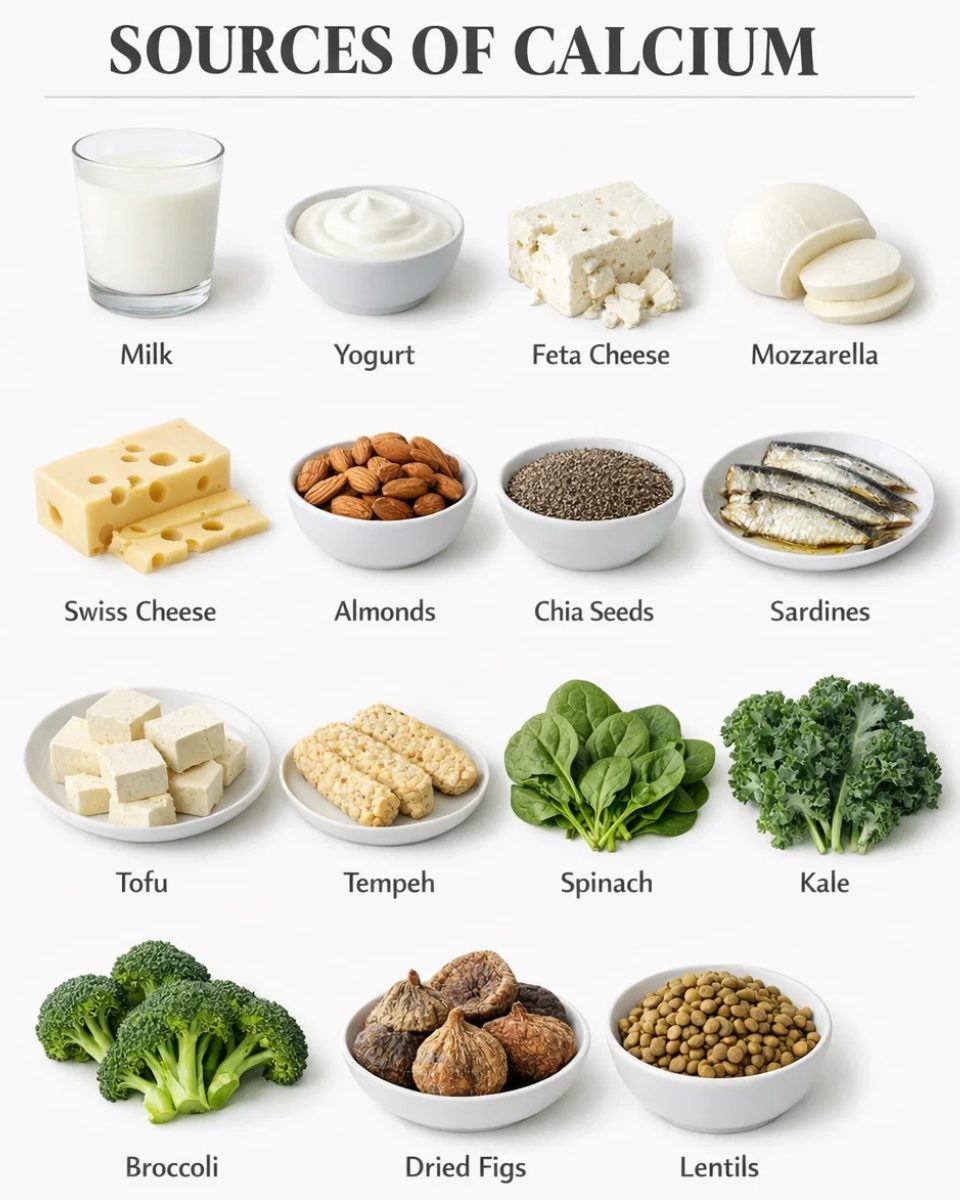
The image you shared highlights a variety of foods that help you meet those needs, both from dairy and plant-based sources.
🥛 Dairy Sources: Classic Calcium Powerhouses
Milk
Milk is one of the most well-absorbed sources of dietary calcium.
One cup (237 mL) of cow’s milk has 306–325mg, depending on whether it’s whole or nonfat milk. The calcium in dairy is also absorbed very well.
Additionally, milk is a good source of protein, vitamin A, and vitamin D. Goat’s milk is another excellent source of calcium, providing 327 mg per cup(237 mL).
How to use:
- Drink a glass with meals
- Use in cereals, smoothies, or soups
Yogurt
Yogurt often contains as much or more calcium than milk, and can also provide probiotics for gut health.
Yogurt is an excellent source of calcium. Many types of yogurt are also rich in probiotics, a type of beneficial bacteria that can promote immune function, improve heart health, and enhance nutrient absorption.
One cup (245 grams) of plain, whole milk yogurt contains 30% of the DV for calcium, as well as a hearty dose of phosphorus, potassium, and vitamins B2 and B12. Plain, low-fat yogurt may be even higher in calcium, with 31% of the DV in 1 cup (245 grams).
How to use:
- Breakfast base with fruit and granola
- Smoothies or savory bowls
- Replace sour cream in recipes
Cheeses (Feta, Mozzarella, Swiss)
Cheese is calcium-rich and portable. Harder cheeses tend to be higher in calcium per ounce, but all contribute.
Most cheeses are excellent sources of calcium. Parmesan cheese has the most, with 242 mg — or 24% of the DV — per ounce (28 grams). Softer cheeses tend to have less. For instance, 1 ounce (28 grams) of Brie only delivers 52 mg, or 5% of the DV.
As a bonus, your body absorbs the calcium in dairy products more easily than that from plant sources. Cheese also delivers protein. Cottage cheese has 23 grams of protein per cup.
What’s more, aged, hard cheeses are naturally low in lactose, making them easier to digest for people with lactose intolerance.
How to use:
- Add to salads or omelets
- Snack on cubes with fruit
- Use in cooked dishes
🐟 Seafood: Bones You Can Eat = Calcium You Absorb
Sardines
Canned sardines with bones are a standout non-dairy source — often providing over 300 mg calcium per serving.
Sardines are loaded with calcium, thanks to their edible bones. A 3.75-ounce (92-gram) can of sardines packs 35% of the DV, and 3 ounces (85 grams) of canned pink salmon with bones has 18%.
These oily fish also provide high quality protein and omega-3 fatty acids, which can support the health of your heart, brain, and skin.
How to use:
- Toss on salads
- Mix into whole-grain toast
- Combine with greens for nutrient density
🌱 Plant-Based Calcium Sources
Almonds
Of all nuts, almonds are among the highest in calcium. Just 1 ounce (28 grams) of almonds, or about 23 nuts, delivers 8% of the DV.
Almonds also provide 3.5 grams of fiber per ounce (28 grams), as well as healthy fats and protein. In addition, they’re an excellent source of magnesium, manganese, and vitamin E.
Eating nuts may also help lower blood pressure, body fat, and multiple other risk factors for metabolic disease.
How to use:
- Snack on a small handful
- Add chopped to salads or oatmeal
- Use almond butter on toast
Chia Seeds
Tiny but potent, chia seeds pack calcium along with fiber and omega-3s.
How to use:
- Stir into yogurt or smoothies
- Make chia pudding with fortified milk
- Sprinkle on salads
Spinach & Kale
Leafy greens are calcium sources, though absorption varies by type (spinach contains compounds that bind calcium, reducing how much your body can use). Kale’s calcium is more bioavailable.
For instance, 1 cup (190 grams) of cooked collard greens has 268 mg of calcium, or about 27% of the amount that you need in a day.
Note that some varieties, such as spinach, are high in oxalates, which are naturally occurring compounds that bind to calcium and impair its absorption.
Therefore, although spinach is rich in calcium, it’s not absorbed as well as other calcium-rich greens that are low in oxalates, such as kale and collard greens.
How to use:
- Sauté with garlic and olive oil
- Add raw to salads or smoothies
- Use cooked in soups and stews
Broccoli
Broccoli contributes calcium and other micronutrients (vitamin C, vitamin K, folate).
How to use:
- Steam or roast as a side
- Add to stir-fries or pasta dishes
Tofu & Tempeh
Soy products like tofu and tempeh can be excellent calcium sources — especially when made with calcium salts.
Edamame beans are young soybeans, often sold while still encased in the pod. One cup (155 grams) of cooked edamame packs 8% of the DV for calcium. It’s also a good source of protein and delivers all of your daily folate in a single serving.
Tofu that has been prepared with calcium also has exceptionally high amounts, with over 86% of the DV for calcium in just half a cup (126 grams).
How to use:
- Bake or sauté with your favorite seasonings
- Add to noodle bowls or grain salads
- Use tofu in place of meat in many dishes
Lentils
While not as high as dairy, lentils still contribute calcium alongside fiber and protein.
Beans and lentils are high in fiber, protein, and micronutrients, including iron, zinc, folate, magnesium, and potassium.
Some varieties also have decent amounts of calcium, including winged beans, which supply 244 mg, or 24% of the DV, in a single cooked cup (172 grams).
White beans are also a good source, with 1 cup (179 grams) of cooked white beans providing 19% of the DV. Other varieties of beans and lentils have less, ranging from around 4-5% of the DV per cup (175 grams).
How to use:
- Add to soups and stews
- Make lentil salads
- Use in taco or taco-meat substitutes
Dried Figs
Dried figs contain calcium and fiber — and are an easy sweet addition to meals.
How to use:
- Add to oatmeal or yogurt
- Snack on a couple with nuts
- Chop into baked goods
🍽️ How to Build a High-Calcium Plate
To maximize both calcium intake and absorption:
Pair calcium sources with foods high in vitamin D (like fortified milk, eggs, and sunlight exposure) — vitamin D helps your body absorb calcium more effectively.
Combine plant calcium sources with non-oxalate greens like kale or collard greens for better uptake.
Spread calcium-rich foods throughout the day rather than all at once.
🧠 Calcium Fact Check & Sources
Here’s what research and nutrition authorities confirm:
- Dairy products like milk, yogurt, and cheese are among the most concentrated, well-absorbed sources of calcium.
- Many plant foods, including greens, seeds, soy foods, and nuts, contribute meaningful calcium too — and can help meet daily needs without dairy.
- Some plant foods (e.g., spinach) contain oxalates that reduce absorption, so variety matters.
- Calcium works best when combined with vitamin D, protein, and healthy fats in meals.
🏆 Bottom Line
You don’t need supplements if you eat a balance of high-calcium foods throughout your day. From dairy favorites like milk and yogurt to nutrient-packed plant options like almonds, chia seeds, kale, tofu, and sardines — there’s a calcium-rich choice for nearly every diet style.