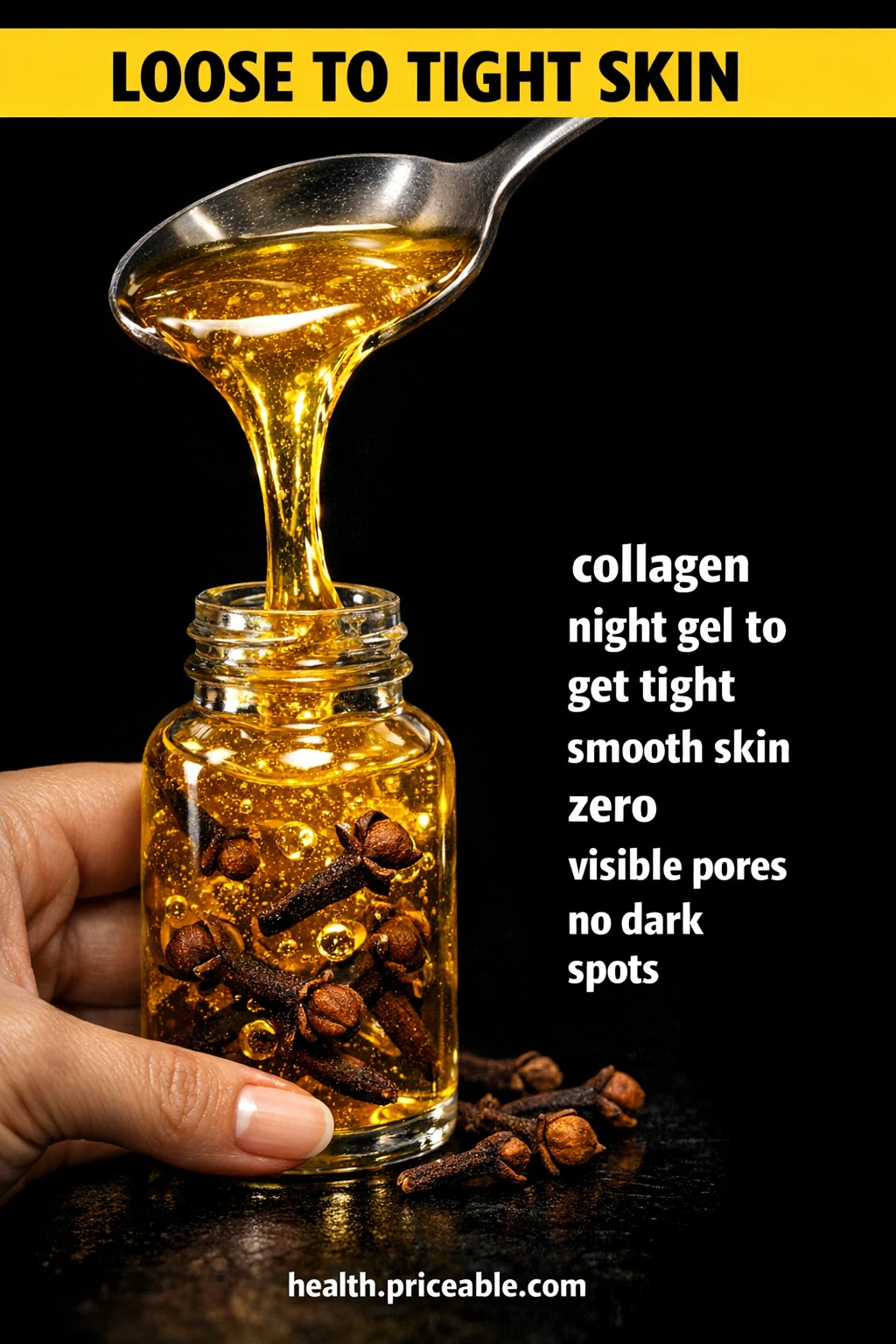
If your skin is starting to feel a little looser or less “springy,” a collagen night gel can be a simple add-on to your evening routine.
This DIY version uses aloe vera gel + unflavored gelatin (which creates a temporary smoothing film) and a very mild clove infusion for a fresh, spa-like feel. It won’t “erase” pores or spots overnight, but many people find it leaves skin looking more hydrated and smoother by morning.
What a “Collagen Night Gel” Can (and Can’t) Do
Let’s set expectations in a skin-friendly way.
What it may help with
-
Skin that looks dull or feels dry
-
A temporary “tight” feel from a light gel film
-
A smoother-looking surface (especially before bed)
What it can’t promise
-
“Zero pores” (pores don’t disappear, but their appearance can look smaller)
-
Permanent lifting or wrinkle removal
-
Instant dark spot removal
Collagen Night Gel Recipe (Clove + Aloe)
This makes a small batch so it stays fresh.
You’ll need
-
1/2 cup distilled water
-
8–10 whole cloves
-
1 tsp unflavored gelatin (plain, no flavor/sweeteners)
-
2 tbsp aloe vera gel (look for alcohol-free if possible)
-
1/2 tsp vegetable glycerin (optional, for extra slip)
-
1 vitamin E capsule (optional)
Step 1: Make a mild clove infusion
-
Bring 1/2 cup distilled water to a near-boil.
-
Add 8–10 whole cloves, cover, and steep 10 minutes.
-
Strain well and let it cool until warm (not hot).
Step 2: Turn it into a gel
-
Measure 2 tbsp of the clove infusion into a small bowl.
-
Sprinkle 1 tsp gelatin over the liquid and let it “bloom” for 1 minute.
-
Warm it gently (microwave 8–12 seconds or a warm-water bath) until fully smooth.
-
Stir in 2 tbsp aloe vera gel.
-
Add glycerin and/or the vitamin E from 1 capsule if using.
-
Let it cool. It should thicken into a light gel.
Step 3: Store it safely
-
Put it in a clean glass jar or glass dropper bottle.
-
Refrigerate and use within 5–7 days.
How to Use It at Night (Without the Sticky Feeling)
Option A: 15-minute “night gel mask” (best for most people)
-
Cleanse and pat skin dry.
-
Apply a thin layer (avoid eyelids and corners of nose/mouth).
-
Leave on 10–15 minutes.
-
Rinse with lukewarm water.
-
Finish with a fragrance-free moisturizer.
Option B: Super-thin sleeping layer (only if your skin tolerates it)
-
Apply a very small amount over moisturizer.
-
If it feels tight or starts to flake, switch back to Option A.
How often?
-
Start 2 nights per week.
-
If your skin stays calm, you can go up to 3–4 nights per week.
Common Mistakes (and Quick Fixes)
Using clove essential oil
Clove essential oil is extremely strong and can irritate skin.
Fix: Stick with a mild clove infusion using whole cloves only.
Making it too hot
Heat can make aloe feel less pleasant and can cause clumps.
Fix: Mix when the gelatin is warm, not hot.
Using too much gelatin
Too much can create a stiff mask that flakes.
Fix: Keep it at 1 tsp gelatin per batch.
Not straining the cloves well
Tiny bits can scratch or irritate.
Fix: Strain through a fine mesh (or even a coffee filter).
Skipping sunscreen the next day
If you’re working on uneven tone, sun protection matters.
Fix: Use a daily broad-spectrum SPF 30+.
Safety Notes (Please Don’t Skip)
-
Patch test first: Apply a small amount to the jawline/inner arm and wait 24 hours.
-
Avoid if you have very sensitive skin, eczema flares, or a known clove/spice allergy.
-
Keep away from eyes and broken skin.
-
Stop if you feel burning, strong redness, or itching.
Buying Guide: What to Look For (If You DIY or Buy Instead)
If you’re making this at home, ingredient quality matters more than fancy packaging.
For DIY ingredients
-
Unflavored gelatin: plain, no flavors, no sweeteners
-
Aloe vera gel: ideally alcohol-free and fragrance-free
-
Glycerin: vegetable glycerin, simple ingredient list
-
Container: a small glass jar or glass dropper bottle (easier to keep clean)
If you’d rather buy a ready-made option
Look for products labeled:
-
peptide night cream or collagen sleeping mask
-
fragrance-free (especially if you’re sensitive)
-
supportive ingredients like hyaluronic acid, niacinamide, or ceramides
If you’re comparing price, most solid nighttime gels and sleeping masks fall into a budget-to-midrange bracket, and the best value is usually the one you’ll use consistently (and that doesn’t irritate your skin).
Simple Night Routine Pairing (So It Actually Fits Real Life)
Try this basic setup:
-
Gentle cleanser
-
Collagen night gel mask (10–15 minutes)
-
Moisturizer
-
Optional: a targeted serum you already tolerate (like niacinamide)
Consistency beats complicated routines.
FAQ: Collagen Night Gel Questions People Actually Ask
Does a collagen night gel really tighten skin?
It can feel tighter temporarily because gels can form a light film and reduce the look of dryness. Long-term firmness usually depends on hydration, barrier care, and sun protection.
Can this help with visible pores?
Pores don’t disappear, but hydrated skin can look smoother, and pores may look less noticeable.
Is clove safe for face skin?
Whole-clove infusion can be okay for some people at a mild strength, but clove is a common irritant. Patch testing is important, and avoid clove essential oil.
Can I use collagen peptides instead of gelatin?
Collagen peptides usually don’t “gel” the same way. If you want the gel texture, unflavored gelatin works better.
How long does the DIY gel last?
Without preservatives, it’s best used within 5–7 days in the refrigerator.
Can I leave it on overnight?
Some people can with a very thin layer over moisturizer, but many find it gets tight or flakes. Start with the 10–15 minute mask method.
What should I avoid mixing with it?
If your skin is reactive, don’t stack it the same night as strong acids or retinoids. Keep it simple and see how your skin responds.
What’s the best moisturizer to use after?
A fragrance-free moisturizer with ceramides or glycerin is a safe pairing for most skin types.